
Whale Sharks (Rhincodon typus) are the largest fish in the world. They are calm, slow-moving, and entirely dependent on healthy ocean systems. Indonesia, located at the heart of the Indo-Pacific, is not merely a place to observe Whale Sharks, but an ecologically important home that supports key phases of this species’ life cycle. This article invites you to understand where Whale Sharks are found in Indonesia, why they occur there, and why their protection is critical.
Why Indonesia Matters for Whale Sharks Globally
Indonesia lies within a region of high ocean productivity and extraordinary biodiversity. Globally, Whale Sharks are known to migrate across ocean basins. Yet, tagging studies and photo-identification research show that Indonesian waters function as aggregation sites, residency areas, and possibly important habitats for juvenile life stages. The interaction of ocean currents, upwelling processes, and plankton availability makes this region a biological magnet for Whale Sharks.
From a conservation perspective, Indonesia occupies a strategic position because events occurring in these waters affect populations across the Indo-Pacific. In other words, protecting Whale Sharks in Indonesia means safeguarding a vital component of the global population.
Understanding Whale Sharks
Behaviour
Whale Sharks are filter feeders that consume plankton, fish eggs, and small organisms. They are often observed swimming near the surface when food concentrations are high. Behavioural studies show that Whale Sharks are sensitive to disturbance. Changes in approach distance, vessel speed, and crowd size can affect feeding duration and swimming patterns.
Habitat
In terms of habitat, Whale Sharks do not appear randomly. They tend to occur in areas with high primary productivity, often driven by upwelling or traditional fishing activities that increase food availability. Semi-enclosed bays and certain coastal waters in Indonesia meet these conditions.
Seasonal Patterns
Seasonal whale shark presence is linked to oceanographic variables, including sea surface temperature, chlorophyll as an indicator of plankton abundance, and currents. In some Indonesian locations, Whale Sharks may appear almost year-round, while in others their presence is seasonal and follows peaks in productivity.
Whale Sharks’ Different Appearances
The perception that Whale Sharks have different “types” generally arises from variations in appearance rather than from actual species differences. Scientifically, only one whale shark species is recognised, and the differences observed in the field reflect individual variation and life stages. Several factors commonly contribute to this misunderstanding:
Spot pattern
Each whale shark has a unique pattern of spots, comparable to a human fingerprint. This pattern is influenced by genetic factors and changes as the animal grows. It is not an indicator of a separate type or species.
Body size
Size differences between juvenile and adult individuals can be striking. In many locations in Indonesia, whale shark sightings are dominated by juveniles, which are often mistaken for a different “type” when compared with the much larger adult Whale Sharks seen elsewhere.
Behaviour and habitat
Some Whale Sharks are more frequently observed near the surface, while others are more commonly recorded in offshore waters. These variations reflect differences in life stage, environmental conditions, and feeding strategies, rather than separate biological classifications.
Where to Find Whale Sharks in Indonesia
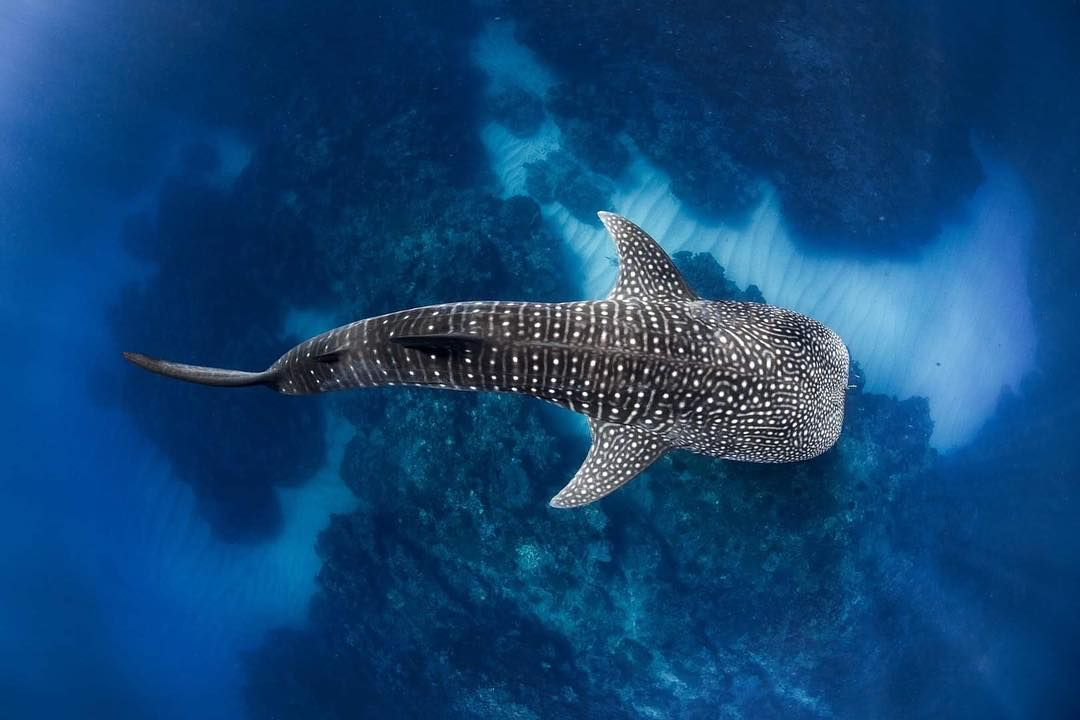
Cenderawasih Bay, West Papua: A Rare Year-Round Aggregation
Cenderawasih Bay in West Papua is widely recognised as one of the few locations with year-round whale shark aggregations. Long-term photo-identification research shows that the same individuals repeatedly return, indicating residency. Associations with traditional fishing platforms known as bagan increase the availability of small fish, unintentionally creating feeding opportunities for Whale Sharks.
The scientific value of Cenderawasih Bay is extremely high. Residency data allow researchers to study growth, feeding behaviour, and human–whale shark interactions in detail.
Saleh Bay, Sumbawa: A Crucial Habitat for Juvenile Whale Sharks
In Saleh Bay, Sumbawa, research has identified a dominance of juvenile individuals. Their relatively small body size suggests that the bay may function as an early developmental habitat.
Experience Whale Sharks as Part of the Beyond Komodo Journey
Along the Beyond Komodo route, encounters with Whale Sharks in Saleh Bay are merged into a journey linking Sumbawa and Komodo island. In the calm waters of Saleh Bay, Whale Sharks are often seen around traditional fishing platforms, offering rare opportunities to observe their feeding behaviour in relatively controlled and tranquil conditions. From there, the journey continues through contrasting seascapes. Active volcanic reefs around Sangeang, strong currents in Komodo, and known manta ray aggregation areas combine to create an experience that feels layered and complete.
This journey is offered by La Galigo Liveaboard, which designs the Beyond Komodo route with an unhurried pace, a strong focus on safety, and an approach that respects marine life. By integrating whale shark encounters into a longer expedition, the experience becomes not just about seeing an iconic species but about truly experiencing the Indonesian ocean in its most natural context.
Triton Bay and Eastern Indonesia: Emerging Insights from Recent Research
Triton Bay in West Papua and other eastern Indonesian waters are beginning to yield new findings. Although data remain limited, indications of high productivity and plankton diversity highlight the need for further research. These areas reinforce the conclusion that the map of important whale shark habitats in Indonesia continues to evolve.
When Do Seasonal Ocean Conditions and Experience Come Together?
Rather than focusing on a single “best month”, science shows that the likelihood of encountering Whale Sharks increases when key environmental conditions align. Whale shark appearances are most frequent when waters are productive, characterised by:
- increased chlorophyll a levels, reflecting abundant plankton as a food source,
- ideal sea surface temperatures that encourage Whale Sharks to feed near the surface,
- ocean currents that transport nutrients and create zones of high productivity in coastal waters.
In Indonesia, these conditions most commonly occur from the transitional season through the early southeast monsoon, roughly from May to October. During this period, regional oceanographic patterns typically include:
- more consistent southeast winds,
- increased upwelling in parts of eastern Indonesia,
- rising chlorophyll-a concentrations,
- greater plankton availability,
- more frequent whale shark appearances at several key locations.
Beyond seasonal factors, crew experience plays a crucial role in maximising encounter opportunities. Crews that have operated in this region for many years develop a deep understanding of local dynamics, including:
- reading changes in currents and sea conditions in real time,
- recognising areas that consistently attract Whale Sharks,
- adjusting timing and routes to follow natural animal movements.
The combination of scientific knowledge about seasonal patterns and the crew’s proven field experience makes this period the most suitable time to plan a journey, when ocean conditions are at their best, and opportunities to encounter Whale Sharks feel genuinely attainable.
Responsible Encounters with Whale Sharks
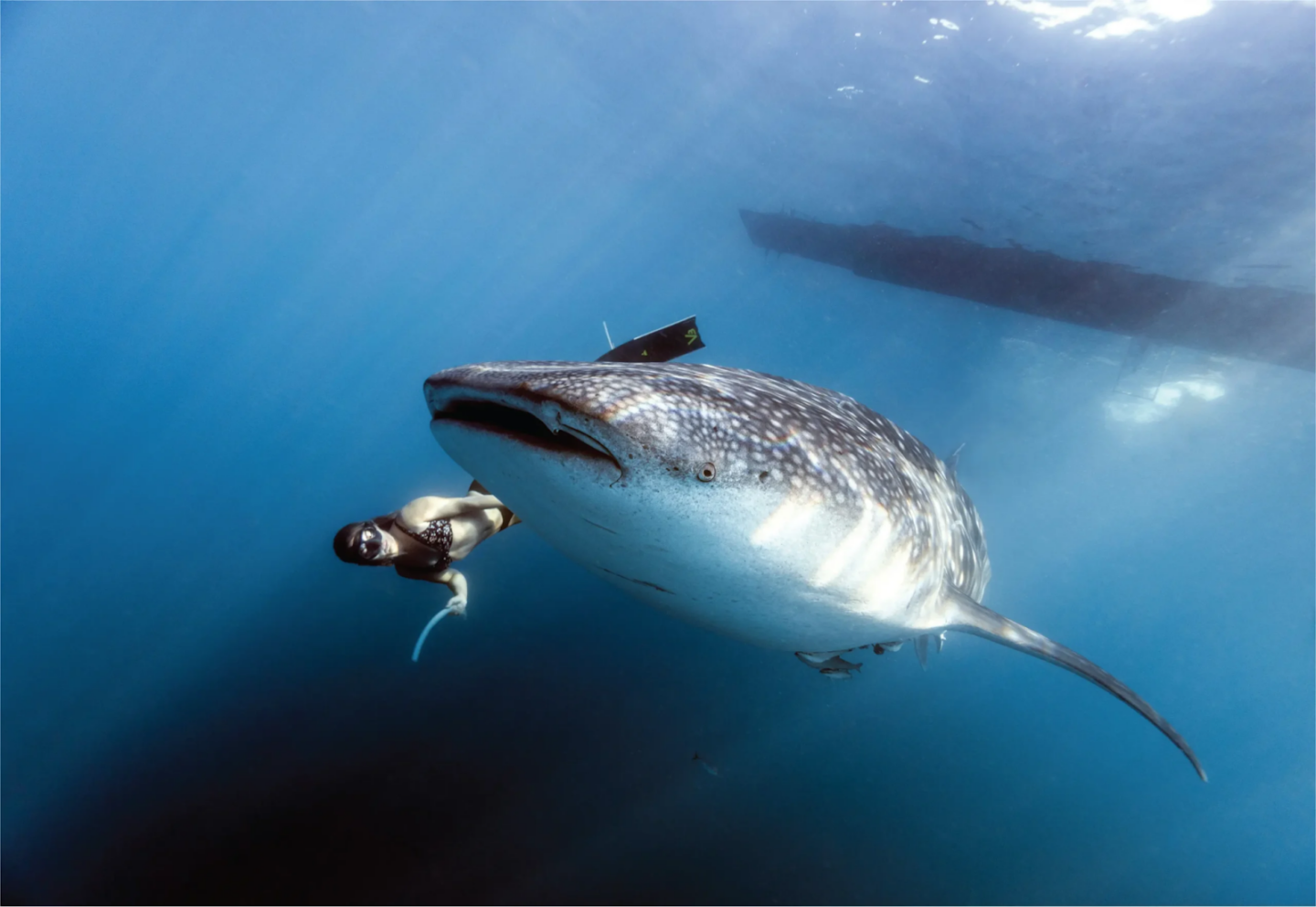
Responsible interactions are not only about being ethical; they are science-based. Research shows that:
- maintaining safe distances reduces stress,
- low vessel speeds prevent injury,
- limiting the number of swimmers preserves natural behaviour.
This approach ensures that human experiences do not compromise whale shark welfare.
Why Whale Shark Protection in Indonesia Is Critical
Global Population Declines and What the Science Shows
Globally, whale shark populations have declined significantly due to direct and indirect fishing, vessel strikes, and habitat degradation. International conservation status reflects these risks. In this context, Indonesia functions as a last stronghold for many important aggregations.
Local Threats: From Boat Traffic to Climate Change
At the local level, threats include:
- vessel traffic,
- plastic pollution,
- climate change is affecting ocean productivity.
Small, persistent changes can shift whale shark occurrence patterns, with long-term consequences for populations.
Seeing Whale Sharks as Part of the Beyond Komodo Experience
Encountering a whale shark is one of the most powerful moments the ocean can offer. It is an experience that feels rare, personal, and deeply humbling. When we understand why Whale Sharks appear in certain places and how thoughtful human presence can shape such encounters, the experience moves beyond spectacle and becomes a meaningful connection with the marine environment. Indonesia stands out globally for offering these moments in natural and biologically important settings.
For travellers seeking a responsible experience, the context of the journey matters. Rather than pursuing a single encounter in isolation, the Beyond Komodo itinerary integrates whale shark encounters into a longer expedition connecting Sumbawa, Saleh Bay, Sangeang, and Komodo. Along this route, whale shark sightings, particularly in Saleh Bay, unfold naturally within a broader exploration of diverse ecosystems, allowing the encounter to follow the ocean’s rhythm rather than being forced as a highlight.
This philosophy is reflected in journeys offered by La Galigo Liveaboard, where the Beyond Komodo route is designed with an unhurried pace, an experienced crew, and a strong emphasis on safety and comfort. By combining long-range exploration with moments of extraordinary wildlife interaction, the experience allows guests to focus on the ocean itself. Its scale, its diversity, and the rare privilege of sharing space with one of its most iconic species.
For those interested in learning more about the vessel and the Beyond Komodo journey, further information is available here:
Exploring Beyond Komodo with La Galigo Liveaboard
FAQ
Are Whale Sharks dangerous to humans?
No. Whale Sharks are gentle filter feeders that consume plankton, fish eggs, and other microscopic organisms by filtering large volumes of seawater. Their throat size is small relative to their body, making it physically impossible for them to swallow a human. There is no scientific evidence of Whale Sharks intentionally harming people. Any reported incidents are extremely rare and typically involve accidental contact, such as a diver being brushed by a tail or body when approaching too closely. When observed calmly and respectfully, Whale Sharks pose no inherent danger to humans.
Why is Indonesia such an important habitat for Whale Sharks?
Indonesia sits at the centre of the Indo-Pacific, where nutrient-rich currents, high plankton productivity, and sheltered coastal areas create ideal feeding and development conditions for Whale Sharks. Scientific research shows Indonesian waters function as aggregation sites, residency areas, and key juvenile habitats, making them globally important for the species’ survival.
Are Whale Sharks in Indonesia present year-round?
It depends on the location. Some areas, such as Cenderawasih Bay, have near year-round whale shark presence, while other regions are seasonal. Sightings are strongly influenced by food availability and ocean conditions, not fixed calendars.
Why are most Whale Sharks seen in Indonesia juveniles?
Many Indonesian sites are dominated by juvenile Whale Sharks, likely because these areas provide abundant food and relatively calm conditions suitable for early life stages. Larger adults, especially females, tend to spend more time offshore and are encountered less frequently worldwide.
Where in Indonesia can you see Whale Sharks?
Well-documented whale shark locations include:
- Cenderawasih Bay known for year-round aggregations
- Saleh Bay dominated by juvenile Whale Sharks
- Triton Bay an emerging area of scientific interest
Is it ethical to swim with Whale Sharks in Indonesia?
Swimming with Whale Sharks can be ethical when conducted under well-defined and strictly enforced guidelines. Ethical encounters prioritise the animal’s well-being by maintaining an appropriate distance, limiting the number of people in the water, controlling boat movements, and avoiding physical contact. Research shows that repeated disturbance, crowding, or chasing can alter whale shark behaviour and feeding patterns. Responsible practices ensure that interactions remain brief, low-stress, and guided by observation rather than pursuit, allowing Whale Sharks to continue their natural routines uninterrupted.
Why do Whale Sharks often appear near fishing platforms or boats?
Whale Sharks are attracted to areas where food is abundant. Traditional fishing platforms and certain fishing activities can unintentionally concentrate small fish, fish eggs, and plankton in the surrounding water. These conditions create feeding opportunities that elicit natural responses in Whale Sharks. Importantly, this behaviour reflects opportunistic feeding rather than dependency. Whale Sharks are not drawn to boats themselves, but to the ecological conditions that increase food availability in their vicinity.
Are Whale Sharks protected in Indonesia?
Yes. Whale Sharks are fully protected under Indonesian national law, which prohibits the capture, harm, or trade of Whale Sharks. This legal protection recognises Indonesia’s importance as a key habitat for the species. However, effective protection extends beyond legislation. It relies on consistent enforcement, education of local stakeholders, and the implementation of responsible tourism practices in areas where human–whale shark interactions occur. Protection is most successful when laws are supported by on-the-ground monitoring and community involvement.
Can whale shark tourism help conservation?
When carefully managed, whale shark tourism can play a positive role in conservation. Responsible tourism can generate funding for scientific research, long-term monitoring, and local conservation initiatives. It can also provide economic incentives for coastal communities to prioritise the value of living Whale Sharks over extractive uses. Crucially, the benefits of tourism depend on regulation and management. Without clear guidelines and limits, tourism can place additional pressure on Whale Sharks. When done right, however, it can help align conservation goals with local livelihoods.
References
Cagua, E. F., Collins, N., Hancock, J., & Rees, R. (2014). Whale shark economics: A valuation of wildlife tourism in South Ari Atoll, Maldives. PeerJ, 2, e515.
FAO. (2016). Report of the FAO expert workshop on the status of the world’s marine fisheries resources. Food and Agriculture Organisation of the United Nations.
Hearn, A. R., Green, J. R., Román, M. H., Acuña, D., Espinoza, E., & Klimley, A. P. (2016). Adult female Whale Sharks make long-distance movements past Darwin Island (Galapagos, Ecuador). Marine Biology, 163, 214.
IUCN. (2016). Rhincodon typus. The IUCN Red List of Threatened Species 2016: e.T19488A2365291.
Meekan, M. G., Bradshaw, C. J. A., Press, M., McLean, C., Richards, A., Quasnichka, S., & Taylor, J. G. (2006). Population size and structure of Whale Sharks Rhincodon typus at Ningaloo Reef, Western Australia. Marine Ecology Progress Series, 319, 275–285.
Norman, B. M., & Stevens, J. D. (2007). Size and maturity status of the whale shark (Rhincodon typus) at Ningaloo Reef in Western Australia. Fisheries Research, 84(1), 81–86.
Pierce, S. J., Norman, B., Bennett, M. B., & Marshall, A. D. (2016). Tracking the world’s largest fish: The ecological significance of whale shark movements. Frontiers in Marine Science, 3, 1–9.
Rohner, C. A., Pierce, S. J., Marshall, A. D., Weeks, S. J., Bennett, M. B., & Richardson, A. J. (2013). Trends in sightings and environmental influences on a coastal aggregation of Whale Sharks, Rhincodon typus. Marine Ecology Progress Series, 482, 215–226.
Stewart, B. S., Wilson, S. G., Meekan, M. G., Bennett, M. B., & Bradshaw, C. J. A. (2013). Spatial and temporal patterns in whale shark abundance at Ningaloo Reef. Marine Ecology Progress Series, 481, 295–312.