
When people hear the name Raja Ampat, most divers immediately imagine giant manta rays, massive schooling fish, and colourful reef walls. All of that is true, and it is undeniably spectacular.
But for those willing to slow down, move closer, and truly observe, Raja Ampat reveals another world that is just as extraordinary: macro life.
This article explores what you can expect to see. At the same time, macro diving in Raja Ampat, why this region is so special for detailed underwater exploration, and how to enjoy it to the fullest.
Raja Ampat Is a World-Class Macro Diving Destination
Raja Ampat is frequently described as the global centre of marine biodiversity. This is not a tourism slogan, but a scientific reality. Hundreds of hard coral species, thousands of fish species, and a continuously growing list of invertebrates have been recorded here.
Yet this richness is often associated only with large animals or dramatic wide-angle scenery. Raja Ampat reveals different dimensions depending on how you choose to observe it. At a smaller scale, intricate ecological details become visible. In coral crevices, on sandy patches, behind sea fans, and in areas that may initially appear unremarkable, the reef shows its most intricate details.
Macro Diving in Raja Ampat
Consistent currents that deliver nutrients, extreme habitat variation from shallow lagoons to deep walls, and relatively low human pressure create ideal conditions for micro life to thrive stably.
This is where macro diving becomes relevant. Macro diving is not a smaller version of reef diving. It is a fundamentally different approach to experiencing the underwater world.
If reef diving usually involves:
- Focusing on the wide scenery
- Moving relatively quickly
- Chasing dramatic moments
Macro diving is the opposite:
- Moving slowly
- Stopping frequently
- Observing a single area for extended periods
Small Details That Support a Large Ecosystem
In macro diving, a single square metre of sand can tell more stories than a vast coral wall. It requires patience, curiosity, and the ability to forgo immediate visual gratification.
Raja Ampat strongly supports this approach because macro life thrives in conditions such as:
- Healthy environments with minimal disturbance
- Complex habitats for hiding and camouflage
- Consistent food availability
As a result, Raja Ampat is not just a place to see small creatures, but a place to understand how large ecosystems function through their smallest components. Many sites that appear calm or unremarkable to big-animal seekers transform into discovery zones for divers who slow down and look closely.
Iconic Macro Life You Can Find in Raja Ampat
Nudibranchs and Sea Slugs
Nudibranchs are icons of macro diving worldwide, and Raja Ampat is one of their finest habitats. Striking colours, unique patterns, and wide species variation make every dive feel different. Some species appear only in specific habitats or seasons, making each encounter feel special.
Commonly encountered nudibranchs and sea slugs include:
- Chromodoris species with a strong colour contrast
- Phyllidia species with rough textures and bold colours
- Nembrotha species in vivid green or red tones
- Aeolid nudibranchs with translucent cerata
- Brightly coloured flatworms are often mistaken for nudibranchs.
Photographers are ideal subjects. For natural observers, they are proof that underwater beauty does not depend on size.
Pygmy Seahorses
Tiny, almost motionless, and completely dependent on specific hosts, pygmy seahorses are true symbols of macro diving. In Raja Ampat, several species live attached to particular sea fans or soft corals, blending almost perfectly with their surroundings.
Species that may be encountered include:
- Bargibant’s pygmy seahorse
- Denise’s pygmy seahorse
- Hippocampus pontohi in specific habitats
Without experienced guides and patient observation, they are easily missed. Finding a pygmy seahorse is not about luck, but about attention to detail and a willingness to slow down.
Shrimps and Crabs
Macro crustaceans in Raja Ampat display complex symbiotic relationships. Some act as cleaners, others live in close association with host organisms, and many are masters of camouflage.
Frequently sought-after species include:
- Cleaner shrimp in anemones or small cleaning stations
- Transparent anemone shrimp
- Orangutan crabs in bubble coral
- Porcelain crabs living within anemones
- Coleman shrimp on sea urchins or fire urchins
Many of these creatures are visible only:
- Under specific lighting
- From the correct angle
- At very close range
They illustrate an important lesson. Marine life does not always seek attention. It invites understanding through careful observation.
Frogfish and Other Masters of Disguise
Frogfish are perfect examples of creatures that do not want to be found. They resemble sponges, rocks, or dead coral, remain almost motionless, and move slowly. In Raja Ampat, frogfish are often found in areas that appear insignificant, such as rubble, sand, or plain reef structures.
Species and similar camouflaged fish include:
- Painted frogfish in a wide range of colours
- Giant frogfish in structured reef areas
- Hairy frogfish with algae-like textures
- Ghost pipefish that resemble leaves or twigs
Without patience, these areas look empty. Once the trained eye recognises their shapes, perception changes immediately.
Rare and Endemic Critters
Beyond well-known species, Raja Ampat also hosts many rare and endemic critters, some of which are still under scientific study and not fully documented.
Occasionally encountered rarities include:
- Juvenile fish with unique colour phases
- Small pipefish in seagrass or rubble areas
- Endemic gobies and blennies
- Small cephalopods such as bobtail squid
This is the essence of macro diving in high-biodiversity regions. Even experienced divers may encounter something entirely new.
Where Macro Life Usually Hides
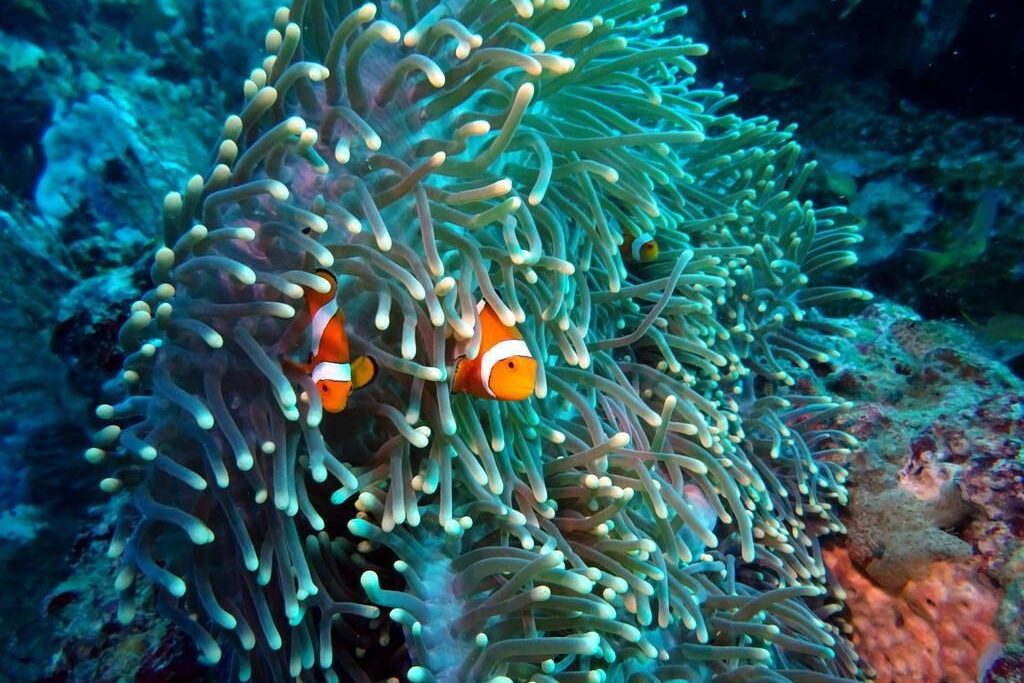
One of the main challenges of macro diving is knowing where to look.
Coral Rubble and Sandy Slopes
Areas often considered uninteresting are frequently home to rich macro life. Rubble offers shelter, while sand provides opportunities for hunting and camouflage. Many critters choose these zones because they are relatively safe from large predators.
Soft Corals, Sea Fans, and Sponges
These structures provide ideal homes for pygmy seahorses, shrimp, and many small organisms. Their colours and textures offer exceptional natural camouflage. The key is to observe them closely, not from a distance.
Shallow Reefs and Deeper Walls
Macro life is not restricted to a single depth range. In Raja Ampat:
- Shallow reefs often host juveniles and daytime-active species
- Deeper walls may reveal rarer, light-sensitive critters.
Both are equally valuable, but offer different characters.
Read Also: Raja Ampat’s Hidden Treasures Dirt Diving and Mud Dives on a Liveaboard Adventure
Macro Diving for Experienced Divers
Macro diving is less about high certification and more about comfort in the water, stable buoyancy, and controlled movement.
Patience and body control allow them to observe details without damaging fragile habitats. In Raja Ampat, this is especially important, as many macro environments are delicate.
Macro diving is not about technical difficulty, but about a shift in attention. Choosing to slow down and explore the smaller stories happening beneath the surface.
Macro Diving for Photographers
For underwater photographers, macro diving in Raja Ampat offers more than visually appealing subjects. High biodiversity enables photographers to work methodically within a small area without constantly relocating to find subjects.
The slow pace of macro diving supports photography by allowing time to:
- Adjust framing without rushing
- Maintain a safe distance from the subject.
- Observe natural behaviour before taking an image.s
Dense marine life also enables photographers to spend extended time in one location, making image capture more efficient and consistent, while reducing environmental disturbance.
Many of the strongest macro images come not from rare subjects, but from recognising visual potential in seemingly ordinary habitats. With this approach, every dive becomes an opportunity to create accurate, natural, and ecologically meaningful underwater documentation.
Macro Diving vs Big Fish Dives in Raja Ampat
| Aspect | Macro Diving | Big Fish and Schooling Dives |
| Main focus | Small details and micro interactions | Large animals and fish formations |
| Visual scale | Intimate and narrow | Wide and dramatic |
| Dive rhythm | Slow, stable, observational | Dynamic and current-driven |
| Dive area | Small area foran extended time | Large areas with active movement |
| Condition dependency | Relatively stable | Highly dependent on current and timing |
| Experience | Quiet, detailed, contemplative | High energy and immediate impact |
| Diver approach | Slow diving and close observation | Wide-angle viewing and fast response |
| Ecosystem insight | Understanding small-scale roles | Understanding large-scale dynamics |
| Best suited for | Experienced divers and macro photographers | Big-animal seekers |
How to Get the Most Out of a Macro Dive in Raja Ampat
Dive slowly and stay neutral
The slower you move, the more you will see. Stable buoyancy allows observation without contact.
Trust your guide’s eyes.
Local guides have exceptional experience with macro life. Learn from how they observe and interpret the reef.
Look closer, not farther.
Macro diving is about depth of observation, not distance covered.
Raja Ampat Liveaboard Trips with La Galigo
To explore Raja Ampat at its best, particularly for divers who value a calmer rhythm and more detail-oriented diving, a liveaboard approach offers both time flexibility and access to multiple regions with distinct characteristics. La Galigo Liveaboard offers several Raja Ampat itineraries designed around different exploration focuses and trip durations.
- Ultimate Raja Ampat
Duration: 12 Days / 11 Nights
Area: North and South Raja Ampat
On this trip, you will experience:
- Exploration of the widest range of ecosystems in Raja Ampat, from high-energy currents in the north to calmer, more remote reefs in the south
- The opportunity to experience contrasting dive styles, with big fish and schooling dives in one phase and macro-rich dives in another
- A longer travel rhythm that allows for unhurried diving and better adaptation to conditions in each region
This itinerary is ideal for divers who want to understand Raja Ampat as a whole, rather than from a single perspective.
- South Raja Ampat
Duration: 9 Days / 8 Nights
Area: Misool and surrounding areas
On this trip, you will experience:
- Access to more remote areas with relatively low diving pressure
- Dramatic reef structures with a high concentration of macro life
- Many calm, detail-focused dive sites, well suited for macro divers and underwater photographers
The southern region is known for consistent reef quality and rich small-life detail.
- North Raja Ampat
Duration: 8 Days / 7 Nights
Area: Dampier Strait, Wayag, and surrounding areas
On this trip, you will experience:
- Current-driven interactions that attract schooling fish and big fish activity
- A combination of life-dense reefs with macro potential between current dives
- Iconic Raja Ampat landscapes both below and above the surface, including the Wayag area
This itinerary offers a dynamic experience with high variation within a single week.
- Central Raja Ampat
Duration: 7 Days / 6 Nights
Area: Saonek Kecil, Mayhem, Citrus Ridge, Wofo, Melissa’s Garden, and surrounding areas
On this trip, you will experience:
- Access to classic Raja Ampat dive sites with a balance of coral health, fish life, and macro diversity
- A relatively stable diving rhythm, ideal for slow diving and detailed observation
- Locations well suited for gaining an effective understanding of Raja Ampat within a shorter timeframe
This is a solid option for divers seeking efficient exploration without compromising the quality of the experience.
- North Raja Ampat (Extended)
Duration: 9 Days / 8 Nights
Area: Northern Raja Ampat with extended coverage
On this trip, you will experience:
- Additional time to explore iconic dive sites such as Cape Kri and Pianemo
- Greater flexibility to choose optimal dive timings based on current conditions
- A more relaxed approach compared with the standard version, allowing for deeper exploration
This extended itinerary is well-suited for divers who want to explore northern Raja Ampat in greater depth without time constraints.
Final Thought
Macro diving offers a different way to understand Raja Ampat, not through dramatic scale, but through the small details that sustain the entire marine ecosystem. From nudibranchs and pygmy seahorses to shrimp, crabs, and rare critters, Raja Ampat provides consistent and high-quality macro life.
With a slow, controlled approach, divers can explore sand, rubble, soft corals, and reef walls, discovering microorganisms that are often overlooked. This is what makes Raja Ampat a truly world-class macro diving destination for detail-oriented divers and photographers.
To experience macro diving at its best, timing and access to multiple dive sites are essential. Exploring Raja Ampat on a liveaboard allows for a more balanced rhythm and broader site coverage.
With La Galigo Liveaboard, you can explore Raja Ampat more thoroughly and enjoy macro diving with the right approach. Calm, efficient, and sustainable.
Frequently Asked Questions. Macro Diving in Raja Ampat
1. What is macro diving?
Macro diving focuses on small marine life such as nudibranchs, shrimp, small crabs, pygmy seahorses, and camouflaged critters. It emphasises slow movement, detailed observation, and close inspection of a limited area.
2. Is Raja Ampat suitable for macro diving?
Yes. Raja Ampat is one of the best macro diving destinations in the world, thanks to its biodiversity, nutrient-rich waters, and relatively healthy reef systems.
3. What macro life can be found in Raja Ampat?
Common sightings include colourful nudibranchs, pygmy seahorses on sea fans, various shrimp and crabs, frogfish, ghost pipefish, juvenile fish, and rare or endemic critters. The list continues to grow, which is part of the appeal.
4. Is macro diving only for experienced divers?
Many divers can enjoy macro diving, but it is usually most rewarding for experienced ones. Good buoyancy control, patience, and environmental awareness are key.
5. Is macro diving suitable for underwater photographers?
Very much so. Raja Ampat allows photographers to work slowly in small areas, making it easier to manage framing, distance, and natural behaviour.
6. Where does macro life usually hide?
Macro life is commonly found in coral rubble, sandy slopes, soft corals, sea fans, sponges, shallow reefs with juveniles, and deeper walls with light-sensitive critters. Areas that look ordinary often hold the most surprises.
7. What is the main difference between macro diving and big fish dives?
Macro diving focuses on small details and quiet observation, while big fish dives emphasise scale, movement, and dramatic visuals. In Raja Ampat, both experiences can be enjoyed in the same trip.
9. Is macro diving environmentally safe?
Yes, when done correctly. Maintaining buoyancy, avoiding contact, and following the guide’s instructions help minimise impact.
10. What is the best way to enjoy macro diving in Raja Ampat?
The best approach is to dive slowly, allow sufficient time, and access a variety of habitats. Liveaboards often provide the ideal platform for this style of diving.