
If you have ever joined a liveaboard, you know one thing for certain: the diving schedule is intensive, the rhythm is fast, and the best moments often appear without warning.
A manta ray passes unexpectedly. A shark emerges from the blue water. The morning light is perfect on the first dive. The challenge is that your battery indicator often starts flashing red precisely at the best moment.
That is why choosing a long-lasting battery for a dive camera on a liveaboard is not simply about specifications. It is about ensuring you do not miss the best moments during four to eleven days at sea.
This article will cover, in practical terms:
- The longest-lasting batteries for the cameras most commonly used by divers
- Alternative solutions if the standard battery is not sufficient
- Power management strategies on board
- How to calculate realistic battery needs
Understanding Battery Usage on Liveaboard Trips
On a typical day trip, you usually complete two to three dives. If the battery runs out, you can recharge it at home or at your hotel and continue the next day without significant consequences.
A liveaboard is slightly different, not because it is more complicated, but because the rhythm is more active and structured.
1. 3-4 Dives per Day
Most liveaboards offer:
- Dive 1: Early morning
- Dive 2: Late morning
- Dive 3: Afternoon
- Dive 4: Night dive, optional
This means your camera is used several times per day, with relatively short intervals in between uses. If you consistently record in 4K, one battery is often only sufficient for a single dive, especially with action cameras.
With this schedule, battery planning becomes essential to preparation.
2. Trips Lasting 4-11 Days
Liveaboard durations typically include:
- Four days, short route
- Seven days, standard trip
- Ten to eleven days, extended expedition
Because the trip runs for several consecutive days without interruption, battery management should be planned from the start. Bringing enough batteries makes the experience more comfortable from the first day to the last.
3. Remote Diving Areas
Many liveaboards operate in relatively remote regions, such as:
- Komodo outer sites
- Raja Ampat remote reefs
- Alor, Banda, Forgotten Islands
Boats generally have organised and reliable electrical systems. However, power usage is shared among all guests. In remote areas, energy management is part of normal vessel operations.
For that reason, long-lasting batteries give you greater flexibility without relying too often.
4. Limited Charging Windows
Charging time is usually available:
- During meals
- During surface intervals
- At night
Although charging facilities are provided, they are available only during the vessel’s activity schedule. With multiple dives per day, efficient battery rotation becomes extremely helpful.
5. Shared Charging Spaces
The camera room is typically shared and used for:
- Housing
- Strobes
- Focus lights
- Laptops
- Drones
- Action camera chargers
All divers have similar needs, so personal battery planning is the most practical solution. With sufficiently long-lasting batteries, you do not need to rush or worry about running out of power.
Top Long-Lasting Batteries for Popular Dive Cameras
Now we move to the most practical part: which batteries have proven to last longer in real-world conditions?
GoPro, Hero 11 / 12 / 13
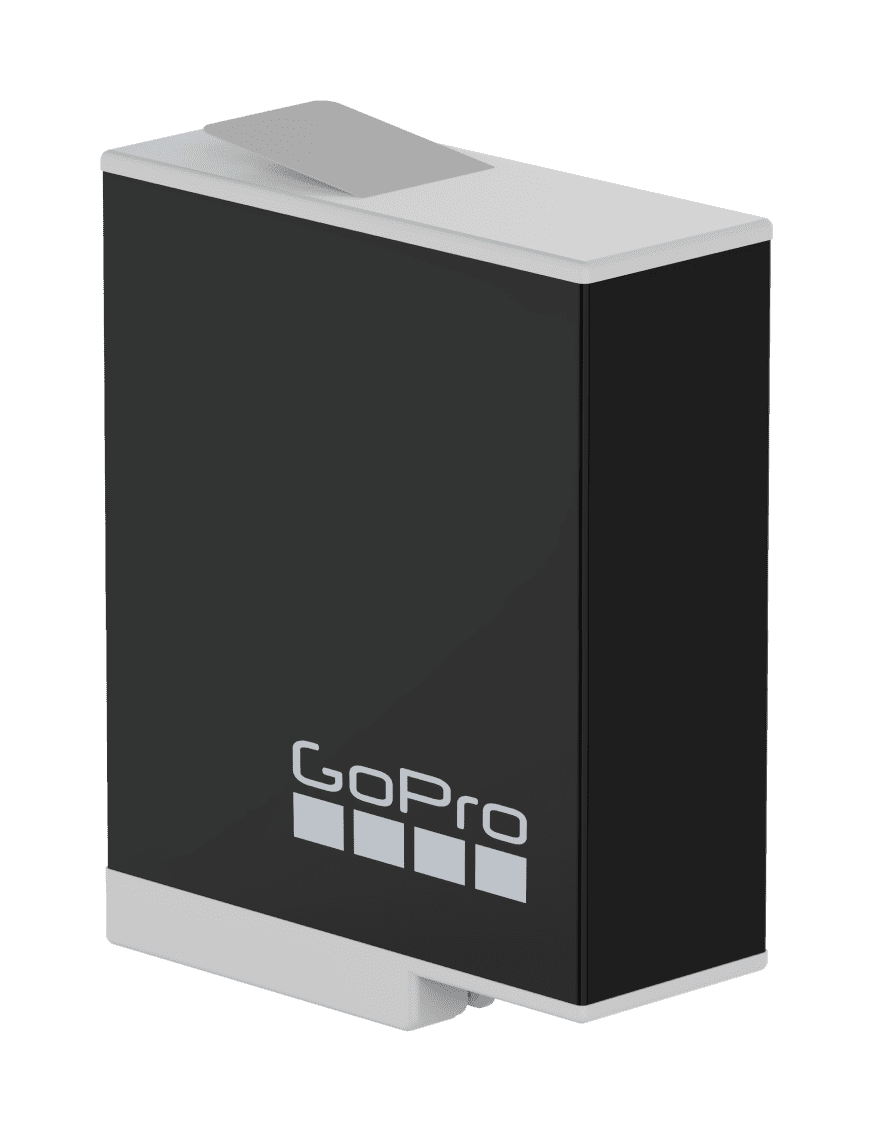
For action cameras, GoPro remains one of the most popular choices among divers.
Enduro Battery
The recommended option for liveaboards is the Enduro Battery.
Advantages:
- Better cold-water performance, stable even in 20 to 24°C water
- More efficient power consumption than standard batteries
- Stable performance for 4K recording
Price range:
- Global: USD 24 to 30 per unit
- Indonesia: approximately IDR 350,000 to 500,000 per unit
- If purchasing a bundle of 2 to 3 batteries plus a charger, the price is approximately IDR 900,000 to 1,300,000
Real-World Runtime in 4K Underwater
In real underwater use:
- 4K at 30fps, approximately 60 to 75 minutes
- 4K at 60fps, approximately 45 to 55 minutes
Important note: underwater housing and water temperature influence performance.
Tips to Extend Battery Life
- Use 4K at 30fps instead of 60fps
- Turn off GPS and Wi-Fi
- Avoid long preview sessions after dives
For a liveaboard, it is ideal to bring three to five Enduro batteries to safely cover four dives per day.
DJI Osmo Action
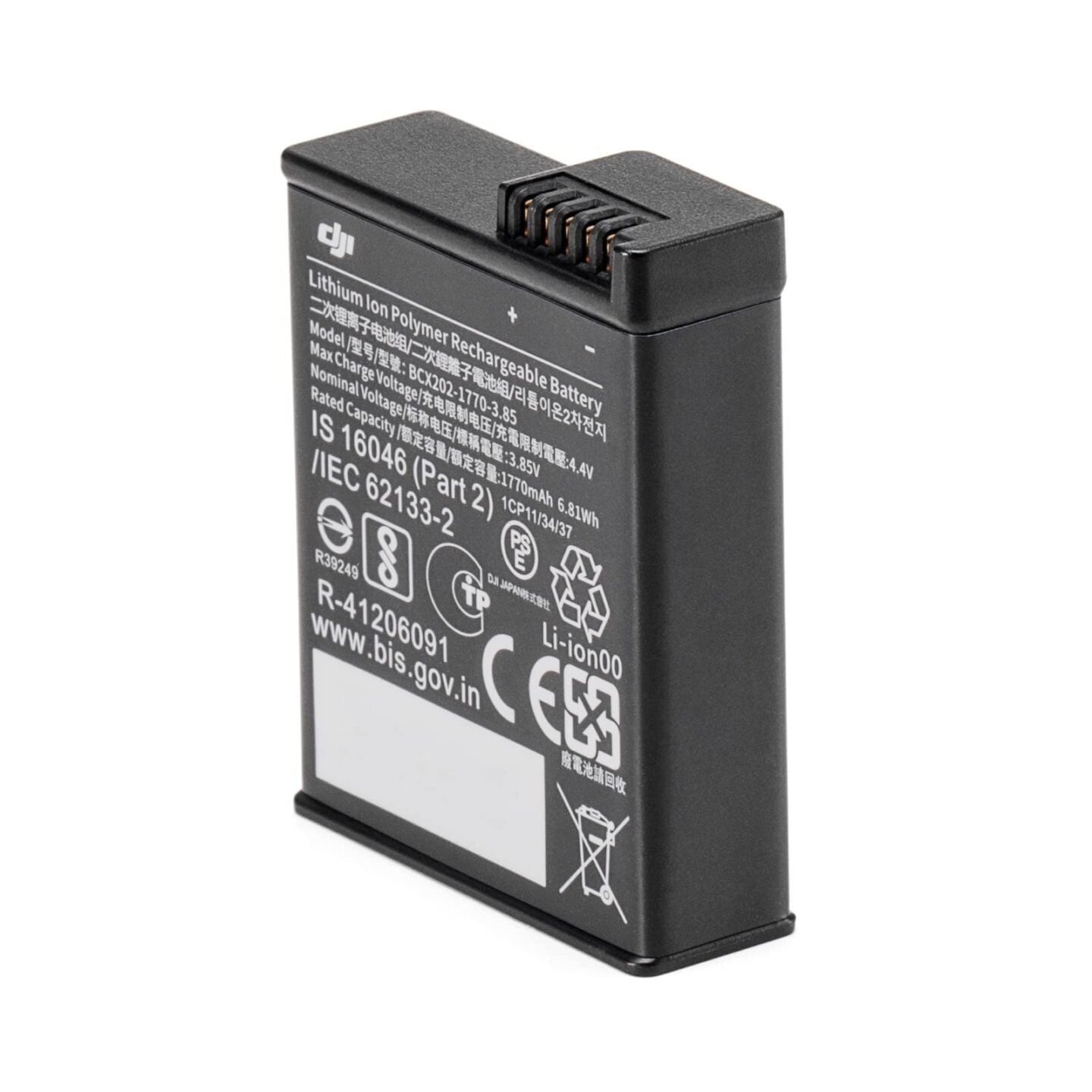
A strong alternative to GoPro comes from DJI with the Osmo Action series.
Extreme Battery
The latest versions include the Extreme Battery, which:
- Performs well in cold water
- Has a slightly higher capacity
- It is more stable for long recording sessions
Price range:
- Global: USD 29 to 35 per unit
- Indonesia: approximately IDR 400,000 to 550,000 per unit
- Bundle, 2 batteries plus charging hub: approximately IDR 1,000,000 to 1,400,000
Fast Charging Advantage
One major advantage of DJI is charging speed.
- Charging is generally faster than many other action cameras
- Multi-slot charging hubs are highly efficient
This is particularly helpful during short surface intervals.
Suitable for Long Diving Days
The DJI Osmo Action is often considered slightly more power-efficient in real-world use compared to certain GoPro generations, especially when settings are not overly aggressive.
For liveaboards, it is still recommended to bring at least three to four spare batteries.
Sony Mirrorless (A7 / A6xxx Series)
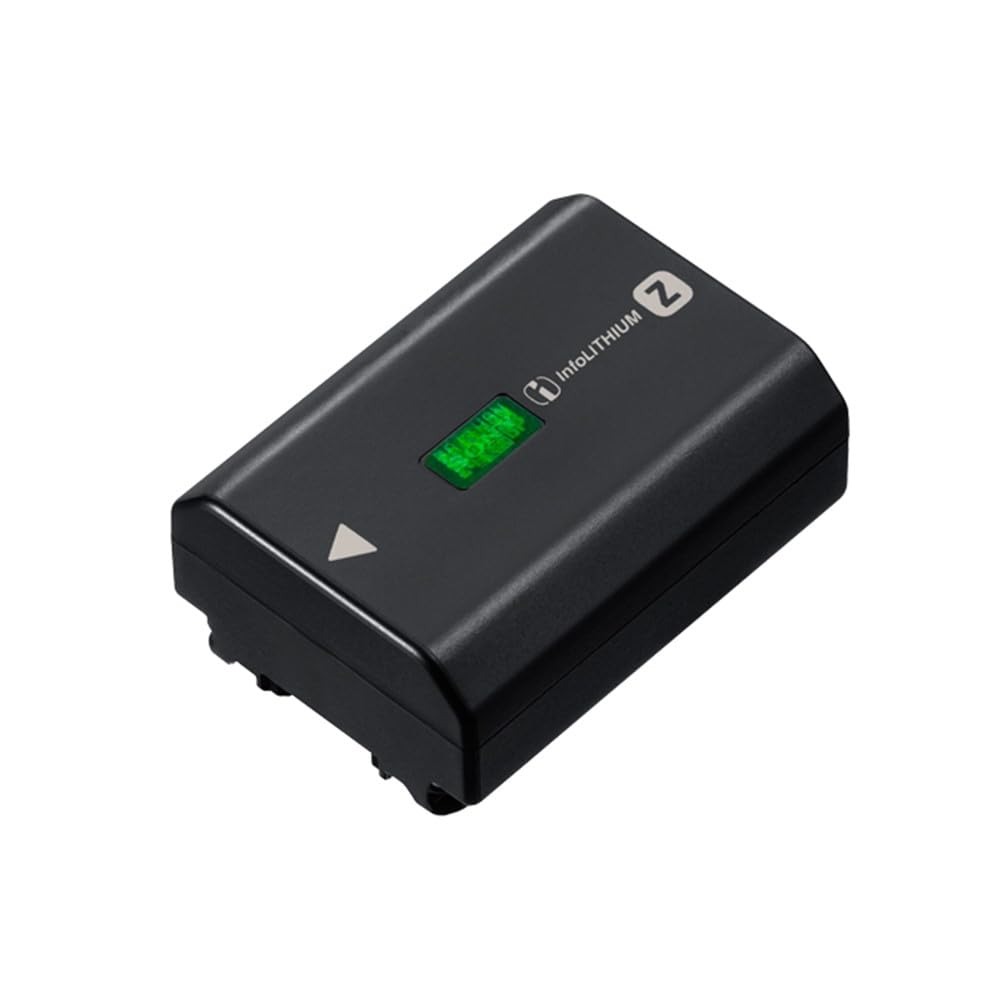
For serious photographers using mirrorless systems such as the Sony A7 or A6xxx series, battery requirements differ significantly from those of action cameras.
NP-FZ100 (Very Long Lasting)
Used in the newer A7 series.
Advantages:
- Large capacity
- Can last for two light dives if primarily shooting photos
- Significantly more efficient than older generations
Price range:
- Global: USD 70 to 80 per unit
- Indonesia: approximately IDR 1,000,000 to 1,300,000 per unit
Third-party options, such as Patona, Wasabi, and others:
- Approximately IDR 400,000 to 700,000 per unit
NP-FW50 (More Power-Hungry)
Used in older A6xxx models.
Limitations:
- Smaller capacity
- Can be depleted within one dive if shooting bursts frequently
Price range:
- Global: USD 50 to 60 per unit
- Indonesia: approximately IDR 700,000 to 900,000 per unit
Third-party options:
- Approximately IDR 250,000 to 450,000 per unit
Mirrorless Rig Equals Additional Power Drain
Underwater rigs commonly use:
- Dual strobes
- Focus lights
- Continuous autofocus
- RAW shooting
All of these accelerate battery consumption.
For liveaboards, mirrorless photographers should ideally bring four to six batteries, or even more for extended expeditions.
Battery Guide for Dive Cameras
| Camera Type | Main Battery Type | Average Runtime per Dive | Daily Requirement (3 to 4 dives) | Recommended to Bring |
| Action Cam – GoPro Hero 11/12/13 | Enduro Battery | Approximately 60 to 75 minutes at 4K30 | 3 to 4 batteries | 3 to 5 batteries |
| Action Cam – DJI Osmo Action | Extreme Battery | Approximately 60 to 70 minutes at 4K30 | 3 to 4 batteries | 3 to 4 batteries |
| Mirrorless – Sony A7 Series | NP-FZ100 | 1 to 2 dives, photo-focused | 2 to 3 batteries | 4 to 6 batteries |
| Mirrorless – Sony A6xxx | NP-FW50 | Approximately 1 dive | 3 batteries | 5 to 6 batteries |
Practical Advice
- Heavy video shooters should calculate one battery per dive
- Photo-focused shooters may use fewer
- Cold water or night dives increase battery drain
- Strobes and focus lights add to the overall power consumption
Practical Recommendations Based on Shooting Style
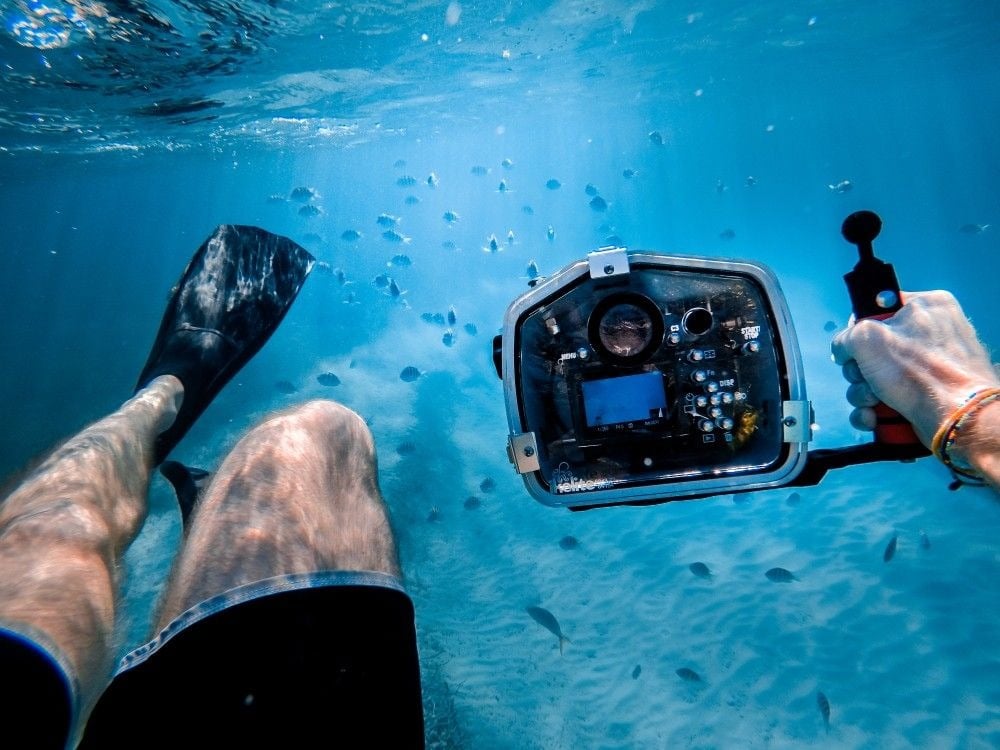
Casual Shooter, light photo and video
- Action cam: 3 batteries are usually sufficient
- Mirrorless: 4 batteries are generally safe
Video-Focused Diver
- Action cam: 4 to 5 batteries
- Bring a multi-slot charging hub
Serious Underwater Photographer
- Mirrorless: 5 to 6 batteries
- Add a power bank and rotate charging efficiently
Expedition or Remote Trips, 10 days or more
- Add 1 to 2 extra batteries beyond your normal requirement
- Anticipate limited electricity and heavier usage
Alternatives If Your Camera Battery Is Not Enough
Sometimes the issue isn’t the battery type but the overall system.
Here are practical solutions that are very helpful on liveaboards.
Multiple Spare Batteries
For action cameras:
- Ideal: 3 to 5 batteries
- Heavy video shooters: 5 or more
For mirrorless systems:
- Minimum 4
- Extended expeditions: 6 to 8
It is better to bring more than too little.
Multi-Slot Charging Dock
A two-to-three-slot charging dock:
- Keeps the setup organised
- Speeds up rotation
- Reduces competition for chargers
It is a small investment with significant benefits.
High-Capacity Power Bank
A 20,000 to 30,000 mAh power bank:
- Can be used during surface intervals
- Provides backup if power is interrupted
- Useful inside your cabin
Ensure the output supports fast charging.
USB Fast Charging
Use compatible fast-charging cables and adapters.
Sometimes the limitation isn’t the battery but a slow charger.
Cabin vs Camera Room Strategy
- Camera room: more stable and safer
- Cabin: more private and flexible
The best strategy is often a combination of both.
Voltage Stabiliser for Remote Vessels
On some remote vessels, power fluctuations may occur.
A small voltage stabiliser or surge protector can protect your chargers and batteries.
Read Also: The Best Underwater Cameras for 2025: Gear Up, Dive In & Capture Magic
Power Management Tips on a Liveaboard
This is the most important part: power management.
A simple but effective checklist.
1. Turn off Wi-Fi and Bluetooth
These connections drain the battery even when not actively used.
2. Do not review footage after every dive
Rewatching all footage can consume 10-20 per cent of the battery’s capacity.
3. Lower screen brightness
Higher brightness equals faster drain.
4. Use 4K at 30fps instead of 60fps
The difference in power consumption is significant.
5. Record in clips, not continuously
Do not press record from descent to ascent.
Capture key moments selectively.
6. Label batteries and use a rotation system
Number your batteries:
1 – 2 – 3 – 4
Rotate usage evenly to avoid overusing one battery.
7. Charge immediately after each dive
Do not wait until evening.
Surface intervals are prime charging time.
8. Do not drain to 0 per cent
Repeated full depletion accelerates battery degradation.
Recharge when 15-20% remains.
How Many Batteries Do You Actually Need?
Let us calculate realistically.
Action Cam
General estimate:
One dive equals approximately one battery for heavy video use.
Four dives per day require at least three to four batteries.
If you shoot selectively, three may be sufficient.
If you record nearly continuously, five is safer.
Mirrorless
Realistically:
Two to three batteries per day.
RAW shooting with strobes increases consumption.
For a seven-day trip:
Four batteries minimum.
Six is more comfortable.
For a ten to eleven-day expedition:
Do not hesitate to bring more.
Verdict
Choosing a long-lasting battery for a dive camera on a liveaboard is not only about capacity numbers.
What truly works is the combination of:
- High-quality batteries such as Enduro, Extreme, or NP-FZ100
- Sufficient spare quantity
- Efficient charging systems
- Disciplined power management
Because liveaboards are about moments.
And you do not want to miss your first shark, the largest manta, or the best sunset dive because of one simple issue:
A battery that runs out too quickly.
With proper preparation, you can focus on enjoying the ocean without worrying about the red indicator flashing.
FAQ
1. How long does an action camera battery usually last while diving?
For 4K underwater recording, most action cameras, such as GoPro or DJI Osmo Action, last approximately 45 to 75 minutes, depending on frame rate and water temperature. In practice, one battery usually covers one dive if recording intensively.
2. Does water temperature affect battery life?
Yes. Colder water can accelerate the decline in lithium-ion battery performance. Batteries such as the Enduro from GoPro or the Extreme Battery from DJI are designed to remain more stable at lower temperatures than standard batteries.
3. How many batteries should I bring on a liveaboard?
As a general guide:
- Action camera: minimum 3 to 4 batteries for four dives per day
- Mirrorless: 4 to 6 batteries, depending on shooting style
If you frequently record long videos or use high frame rates, bringing one to two additional batteries is safer.
4. Is charging on a liveaboard sufficient for all cameras?
Most liveaboards provide adequate charging areas. However, because they are shared, charging time should be managed carefully. Bringing a multi-slot charging dock and spare batteries reduces dependence on limited charging windows.
5. Can a power bank be used to charge camera batteries on board?
Yes, provided the power bank has sufficient capacity and a compatible output. A 20,000 mAh or larger power bank is very useful for recharging during surface intervals or as backup if outlets are occupied.
6. Is it better to record in 4K at 30fps or 60fps to save battery?
4K at 30fps generally consumes less power than 4K at 60fps. If the goal is to extend battery life during a liveaboard, a lower frame rate can be a more efficient option without significantly compromising quality.
7. Are third-party batteries safe for dive cameras?
Third-party batteries can be an option, but quality varies significantly. For intensive liveaboard use in remote areas, original batteries or well-proven alternatives are usually more stable and reliable over the long term.
8. How can I extend battery lifespan during a long trip?
Simple steps include:
- Avoid draining batteries to 0 per cent
- Recharge when 15 to 20 per cent remains
- Store batteries in a dry, moderate-temperature environment
- Use a rotation system to distribute usage evenly
With proper management, batteries will last longer and maintain stable performance throughout the trip.