
Liveaboard diving is synonymous with intensive dive schedules, typically three to four dives per day over several consecutive days. For many divers, this is the most exciting part: waking up, diving immediately, resting briefly, then heading back into the water.
However, behind that excitement lies one important factor that often goes unnoticed: nitrogen accumulation in the body.
This is where Nitrox, also known as Enriched Air Nitrox or EANx, begins to make a difference. Compared to regular air, Nitrox can help the body feel lighter and better able to handle the demanding rhythm of liveaboard diving.
This article explains why Nitrox is beneficial on liveaboards and when you should consider using it.
What Is Nitrox?
Understanding Oxygen and Nitrogen Percentages
Nitrox is a breathing gas mixture with a higher oxygen content than regular air. Normal air contains approximately 21 per cent oxygen and 79 per cent nitrogen. Nitrox is typically blended at 32 per cent or 36 per cent oxygen.
In practical terms, this means you inhale less nitrogen.
Although the percentage change may seem small, the impact can be significant on how long you can stay underwater and how much nitrogen your body absorbs.
Read More: What is Nitrox Diving? Pros and Cons of Enriched Air
Less Nitrogen Matters in Repetitive Diving
Each time you dive, your body absorbs nitrogen. The deeper and longer the dive, the more nitrogen is absorbed.
Now imagine a liveaboard scenario:
- Three to four dives per day
- Several consecutive days
- Sometimes, including a night dive
Nitrogen can gradually accumulate.
With Nitrox:
- Less nitrogen is inhaled
- Nitrogen absorption into body tissues is reduced
- Accumulation between dives decreases
- No-Decompression Limits, or NDL, may be extended at certain depths
This is why Nitrox is a favourite choice on liveaboard trips.
Common Mixes Used on Liveaboards: EAN32 and EAN36
The two most common mixes you will encounter on liveaboards are:
- EAN32, 32 per cent oxygen
- EAN36, 36 per cent oxygen
EAN32 is often the default choice because it provides extended bottom time without significantly limiting maximum depth.
EAN36 offers greater nitrogen reduction but has a shallower maximum operating depth. It is therefore better suited for medium-depth dives.
The appropriate mix is usually selected according to the dive profile throughout the trip.
Why Nitrox Is Good for Liveaboard Diving
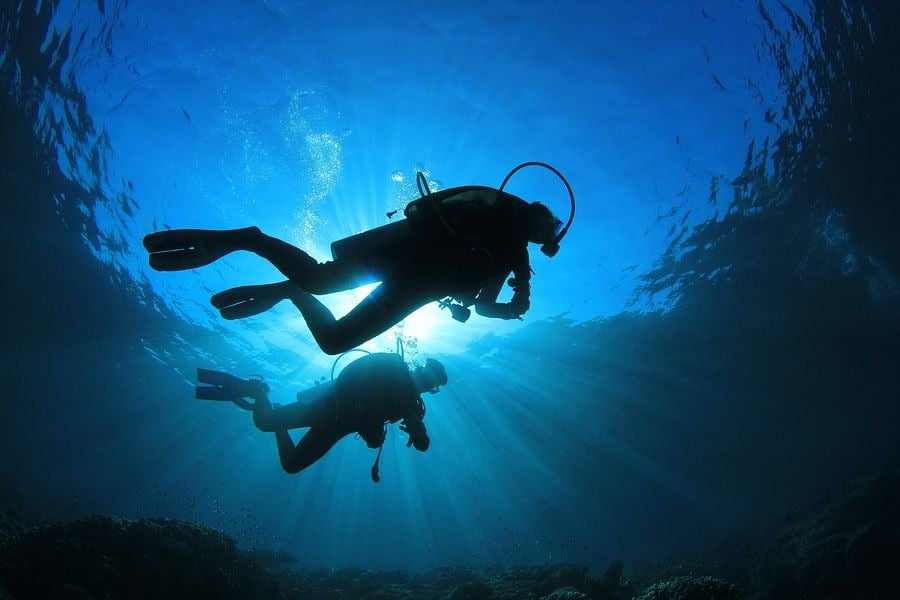
1. Better Nitrogen Management for Repetitive Dives
Liveaboard diving means repetitive diving.
With Nitrox:
- Residual nitrogen levels are lower after each dive.
- Surface intervals feel more adequate
- The body is better prepared for the next dive
This is particularly helpful during packed schedules from morning to evening.
2. Longer No-Decompression Limits, NDL
At recreational depths of 18 to 30 metres, Nitrox provides:
- Longer bottom time
- Reduced the likelihood of entering decompression limits
- Greater flexibility when exploring dive sites
On walls, seamounts, or cleaning stations, this additional time can make a noticeable difference.
3. Reduced Fatigue During Multi-Day Trips
Many divers report feeling more refreshed when using Nitrox, particularly by the third or fourth day of a trip.
Commonly reported effects include:
- Less post-dive fatigue
- More stable energy levels
- Greater readiness to participate in all scheduled dives
Individual experiences vary, but on trips involving 15 to 20 dives, the difference is often noticeable.
4. Added Safety Margin
Some divers use Nitrox not to extend bottom time, but to increase safety.
Because nitrogen exposure is lower:
- Dive profiles become more conservative
- Safety margins are wider
- Multi-day diving feels more manageable
This is important because liveaboard diving is not about a single dive, but about cumulative exposure over several days.
When Should You Use Nitrox on a Liveaboard?
Nitrox is most beneficial when:
- You are doing three to four dives per day. The more frequently you dive, the more helpful it becomes.
- You are diving at depths between 18 and 30 metres. This is the sweet spot for Nitrox benefits.
- Your trip lasts longer than four to five days. The longer the trip, the more important nitrogen management becomes.
- You prefer conservative diving. Many photographers and senior divers choose Nitrox for its additional safety margin.
When Nitrox May Not Be Necessary
There are situations in which Nitrox is less critical:
- Shallow dives under 15 metres
- Only one or two dives per day
- Short trips of two to three days
In these cases, regular air is often sufficiently safe and conservative.
Important Safety Notes
Although beneficial, Nitrox still requires proper procedures:
- Enriched Air Diver certification
- Understanding of Maximum Operating Depth, or MOD
- Gas analysis before each dive
- Setting the dive computer according to the correct mix
Nitrox increases the safety margin, but it must always be used with discipline.
On responsible liveaboard operators such as La Galigo Liveaboard, the use of Nitrox is not left solely to the diver. Strict safety procedures support it. Common safe practices include:
- Mandatory Tank Analysis Station
Each diver analyses their own tank using an oxygen analyser provided on the dive deck. The result is recorded, and the diver signs the log as verification. - Clear Tank Labelling
Nitrox tanks are clearly labelled with the O₂ percentage and MOD, minimising the risk of selecting the wrong tank. - Dive Briefing Adjustment
Dive guides adjust briefings for Nitrox users, including reminders of operational depth limits. - Computer and MOD Cross-Check
Crew members often assist in confirming that divers have set the correct mix in their dive computers before entering the water. - Consistent Fill Quality Control
Professional operators maintain blending standards and quality control to ensure the gas mixture is accurate and safe.
Air vs Nitrox on Liveaboards: A Quick Comparison
| Factor | Air | Nitrox |
| Nitrogen load | Higher | Lower |
| NDL | Shorter | Longer |
| Repetitive dives | Faster accumulation | Slower accumulation |
| Fatigue | More noticeable | Less noticeable |
| Safety margin | Standard | Wider |
| MOD limit | None | Has a limit |
Read More :Benefits and Risks of Diving with Nitrox
Verdict
Nitrox is not mandatory on a liveaboard, but in many cases it is a very sensible choice.
Why is it beneficial?
Because it helps reduce nitrogen load, extend NDL, reduce fatigue, and increase safety margins.
When should it be used?
When the dive schedule is intensive, depths are moderate, and the trip lasts several days.
If liveaboard diving is a marathon, Nitrox is a smart strategy to keep your body comfortable, safe, and energised until the final dive.
FAQ
1. Is Nitrox worth using on a liveaboard trip?
Yes, especially if the trip includes three to four dives per day. Nitrox helps reduce nitrogen absorption, extend no-decompression limits, and make repetitive diving more manageable over multiple days.
2. Do I need a certification to use Nitrox on a liveaboard?
Yes. You need an Enriched Air Diver certification to use Nitrox. The course is usually short and focuses on gas theory, analysing tanks, and understanding oxygen exposure limits.
3. Will Nitrox let me dive deeper?
No. Nitrox does not allow you to dive deeper. In fact, it has a shallower depth limit, known as the Maximum Operating Depth (MOD), due to its higher oxygen content. Its main benefit is longer no-decompression time at recreational depths.
4. How many dives per day make Nitrox useful?
Nitrox becomes most beneficial when doing three or more dives per day, which is standard on most liveaboards. The more repetitive the dives, the more noticeable the advantage.
5. What Nitrox mix is most commonly used on liveaboards?
The two most common mixes are:
- EAN32, balanced for depth and extended bottom time
- EAN36, offering less nitrogen but a shallower MOD
EAN32 is typically the default option on many liveaboards.
6. Does Nitrox reduce post-dive fatigue?
Many divers report feeling less tired when using Nitrox, especially on multi-day trips. While individual experiences vary, reduced nitrogen load is believed to contribute to this effect.
7. Is Nitrox necessary for shallow dives?
Not always. If most dives are shallow, under 15 metres, or limited to one or two dives per day, the benefits of Nitrox are less significant compared to deeper, repetitive dive schedules.
8. How much extra does Nitrox usually cost on a liveaboard?
Costs vary by operator, but Nitrox is often offered as:
- A per-tank fee, or
- An unlimited Nitrox package for the entire trip
Many divers consider it a worthwhile upgrade for dive-intensive itineraries.