
Indonesia is renowned as one of the world’s best diving destinations. From Raja Ampat to Komodo National Park, you will encounter coral reefs teeming with tropical fish, sea turtles, and an extraordinary variety of marine life. However, not every reef you see is in the same condition.
Some reefs remain exceptionally healthy, providing a home for thousands of marine species. Others have been damaged by climate change, pollution, and human activities. Understanding the difference between a healthy and an unhealthy coral reef will make your snorkelling or diving experience far more meaningful.
At La Galigo, we believe the best underwater experiences are not only about appreciating the ocean’s beauty, but also about understanding what keeps an ecosystem thriving. By learning to recognise the signs of a healthy coral reef, you also become part of the effort to protect Indonesia’s oceans for future generations.
| Fact | Description |
| Cover less than 1% of the ocean floor | Support around 25% of the world’s marine species |
| Built by coral polyps | Tiny animals that produce calcium carbonate skeletons |
| Require sunlight | Zooxanthellae provide energy through photosynthesis |
| Support high biodiversity | Provide habitat for fish, molluscs, crustaceans, sea turtles, and reef sharks |
| Can recover from disturbances | Healthy reefs have greater resilience and are better able to recover from environmental stress |
When you swim over a healthy reef, you will usually see far more marine life.
Butterflyfish weave through branching corals, parrotfish graze algae from the reef surface, schools of fish move in synchrony, while sea turtles occasionally appear in search of food.
The greater the diversity of species living on a reef, the more stable the ecosystem is likely to be.
A healthy reef does not simply look beautiful today. It can also recover after pressures such as storms or marine heatwaves.
This ability is known as reef resilience. Reefs with high resilience are generally better able to maintain their biodiversity and support new coral growth than reefs that have already undergone severe degradation.
The following are some of the easiest differences to recognise when you’re underwater.
| Healthy Coral Reef | Unhealthy Coral Reef |
| Abundant live corals in a variety of growth forms | Dominated by dead or broken corals |
| High diversity and abundance of fish | Fewer fish and lower species diversity |
| Algae kept under control | Excessive algal growth covering the reef |
| Relatively clear water | Water often appears cloudy due to sediment or pollution |
| Young corals actively recruiting and growing | Little or no coral regeneration |
| A vibrant, balanced ecosystem | Significantly reduced marine life |
Remember that a healthy reef does not always look perfect. Some areas may show signs of natural damage, but the ecosystem as a whole continues to function effectively.
The reverse is also true. A struggling reef can look striking. Freshly bleached coral is a brilliant white that many visitors photograph without realising what they are looking at, and dead reef quickly gets colonised by colourful algae and soft corals. Bright is not the same as healthy.
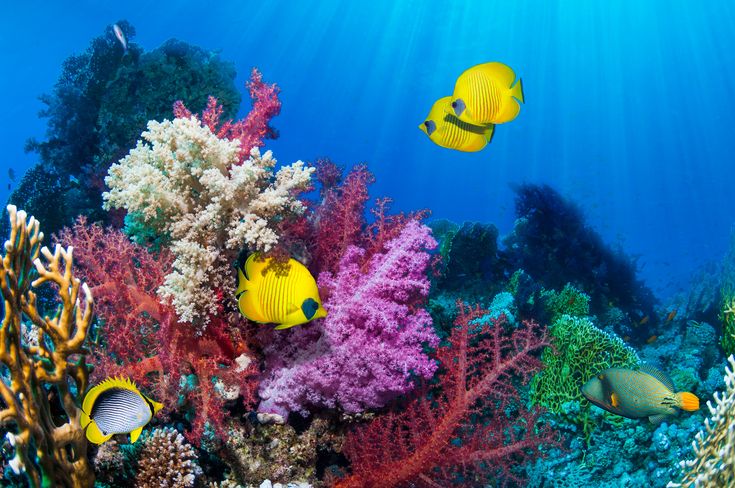
You do not need to be a marine biologist to recognise a healthy reef. The following signs are easy to observe while snorkelling or diving.
Healthy reefs usually support a wide range of coral types, including branching corals, massive corals, plate corals, and soft corals.
This diversity of coral structures indicates that the habitat can support a wide variety of marine species.
A healthy reef is almost always full of activity.
You may see clownfish sheltering among sea anemones, parrotfish grazing on algae, schools of surgeonfish swimming together, and predators such as reef sharks patrolling in the distance.
The presence of top predators is actually a positive sign, indicating that the marine food web remains healthy and balanced.
A small amount of algae is a natural part of every reef ecosystem.
However, if most of the reef surface is covered by green or brown algae, it may indicate that the ecosystem is becoming unbalanced.
Herbivorous fish such as parrotfish play an essential role in controlling algal growth, allowing corals to retain the space they need to thrive.
Relatively clear water allows sunlight to reach the corals. Sunlight is essential because zooxanthellae, the microscopic algae living in partnership with corals, produce much of the energy corals need through photosynthesis.
One caveat: cloudy water is not always a bad sign. Some of the richest reefs in Komodo sit in green, plankton-heavy water, and that plankton is precisely what draws in the manta rays. What matters is sediment, silt washed off the land that settles on coral and blocks the light, rather than reduced visibility in itself.
By contrast, the following are some of the most common indicators that a reef is under stress.
Bleached corals are among the most recognisable warning signs.
Coral bleaching occurs when corals lose their zooxanthellae due to stress, most commonly as a result of elevated sea temperatures.
Bleaching does not necessarily mean that a coral has died, but if stressful conditions persist for too long, its chances of survival decrease significantly.
Physical damage may result from storms, boat anchors, destructive fishing practices, or visitors accidentally standing on corals.
Because corals grow very slowly, recovery can take decades, or even centuries.
When algae dominate the reef surface, corals struggle to access the space and sunlight they need to grow.
This condition is often associated with declining populations of herbivorous fish, increased nutrient levels in the water, or a combination of both.
If a reef appears quiet, with relatively few fish and little visible activity, it may indicate that the habitat can no longer support a healthy and diverse marine ecosystem.
Healthy coral reefs provide benefits that extend far beyond their beauty.
For marine life, they serve as essential habitats where thousands of species feed, shelter, and reproduce.
For people, coral reefs help protect coastlines by absorbing wave energy, support fisheries, and form the foundation of thriving marine tourism industries.
Healthy reefs also create richer diving experiences. The healthier a reef is, the greater your chances of encountering sea turtles, reef sharks, nudibranchs, schooling fish, and vibrant coral gardens in their natural state.
No single cause drives coral reef decline.
Several major factors contribute to reef degradation:
Rising sea temperatures are the leading cause of coral bleaching in many parts of the world.
Plastic waste, sewage, and excess nutrients carried from land can disrupt the natural balance of reef ecosystems.
Sediment washed into the ocean can smother corals, reducing the amount of sunlight reaching the zooxanthellae that provide much of their energy.
Practices such as blast fishing and cyanide fishing can destroy coral reefs within seconds.
Touching corals, standing on the reef, or littering in the ocean can all accelerate reef degradation.
Read Also: Symbiotic Relationships: 8 Incredible Underwater Symbiotic Relationships
The good news is that every traveller can make a positive difference.
Here are a few simple ways you can help:
Indonesia is still home to some of the world’s finest coral reefs.
Raja Ampat is renowned as the global centre of marine biodiversity, with more than 1,600 species of reef fish and around 600 species of hard coral, roughly three-quarters of every reef-building coral species known to science, in one Indonesian archipelago.
Meanwhile, Komodo National Park offers a unique combination of nutrient-rich currents, healthy coral reefs, and the opportunity to encounter iconic marine life such as manta rays and sea turtles.
When you join a liveaboard journey with La Galigo, you’ll have the opportunity to explore these remarkable destinations while learning how to recognise the characteristics of healthy coral reefs in their natural environment.
A healthy coral reef supports high biodiversity, abundant live coral, balanced fish populations, and can recover from disturbances. Dead coral, excessive algal growth, and fewer fish typically characterise an unhealthy reef.
No. Colour is only one indicator. Scientists also assess reef health by examining biodiversity, water quality, live coral cover, the presence of herbivorous fish, and the reef’s ability to recover from disturbances.
No. Bleached corals can recover if environmental conditions improve before permanent damage occurs.
Herbivorous fish, such as parrotfish, help control algal growth, allowing corals to retain the space they need to grow and thrive.
You can help by avoiding contact with corals, maintaining good buoyancy while diving, reducing plastic waste, using reef-safe sunscreen, and choosing responsible tour operators committed to sustainable marine tourism.
References
Ben-Tzvi, O., Loya, Y., & Abelson, A. (2004). Deterioration Index (DI): A suggested criterion for assessing the health of coral communities. Marine Pollution Bulletin, 48(9–10), 954–960.
Burke, S., Brown, C. J., Magris, R. A., Beger, M., Mumby, P. J., Wolff, N. H., Ortiz, J. C., Darling, E. S., Kennedy, E. V., & Beyer, H. L. (2025). A review of the application of coral reef condition indicators in conservation planning. Ecological Indicators, 179, 114222.
Castro-Sanguino, C., Ortiz, J. C., Thompson, A., Wolff, N. H., Ferrari, R., Robson, B., Magno-Canto, M. M., Puotinen, M., Fabricius, K. E., & Uthicke, S. (2021). Reef state and performance as indicators of cumulative impacts on coral reefs. Ecological Indicators, 123, 107335.
Littler, M. M., & Littler, D. S. (2007). Assessment of coral reefs using herbivory/nutrient assays and indicator groups of benthic primary producers: A critical synthesis, proposed protocols, and critique of management strategies. Aquatic Conservation: Marine and Freshwater Ecosystems, 17(2), 195–215.