
Thinking about joining a liveaboard and one thought immediately comes to mind: “What if I get seasick?” Relax. You are not alone. The good news is that seasickness on liveaboards is far more manageable than many people expect. This article is based on real field experience. It is not written to scare you, nor to downplay the issue.
Seasickness on Liveaboards
Seasickness, or motion sickness at sea, is the body’s natural response to unfamiliar movement. The brain, eyes, and inner ear receive conflicting signals, which can confuse the body. The result may be mild nausea, dizziness, or general discomfort.
What is often overlooked is that seasickness exists on a spectrum. It is not a simple yes or no condition. On liveaboards, most guests experience only mild discomfort, if any, after the first day.
On well-designed itineraries and in favourable seasons, prolonged seasickness is uncommon. During monsoon transitions or open-ocean crossings, discomfort can increase
Many people equate liveaboards with small boats or speedboats. In reality, the sensation is very different. Liveaboards are generally:
- larger and heavier,
- more stable,
- and move with a consistent rhythm.
The motion of a larger vessel tends to be slower and more predictable, rather than sharp and sudden like a speedboat. In fact, many guests who feel seasick on small boats report feeling far more comfortable on a liveaboard.
How Most Liveaboard Guests Actually Feel at Sea
Field experience shows a fairly consistent pattern:
- day one: some guests feel slightly “off” or mildly dizzy
- day two: the body begins to adapt
- day three and beyond: many forget they are even at sea.
This adaptation is natural. The human body is remarkably good at adjusting, as long as it is given time, adequate hydration, and supportive conditions.
Interestingly, many first-time liveaboard guests say the same thing after the trip: “It was nowhere near as bad as I imagined.”
Read More: How Do I Prevent Seasickness When Diving on a Liveaboard
Seasickness Hacks
Choose the Right Cabin Location
Cabin location makes a significant difference. Midship and lower-deck cabins are the most stable areas of the vessel.
Why?
- the least movement occurs near the ship’s centre of mass.
- vertical and horizontal motion is reduced.
- the body adapts more easily.
Cabins at the bow or stern experience more movement. This does not make them bad, but for those who are sensitive, midship cabins are the safest choice.
If you are concerned about seasickness, choosing the right cabin is the first and most effective hack.
Timing Matters: Night Crossings vs Day Sailing
Liveaboards often relocate at night. This is not by accident.
The reasons are simple:
- winds tend to ease at night, which can reduce surface chop
- guests are sleeping and are less focused on motion.
- the body adapts without conscious awareness.
Daytime is usually reserved for diving or exploration rather than long transits. This rhythm makes the journey feel smoother and less disruptive.
Fun Fact: Diving Often Reduces Seasickness
This is an important insight that is rarely discussed.
Many guests report that:
- nausea disappears after diving,
- the body feels more balanced after being in the water.
Why does this happen?
- underwater, there is no moving horizon.
- water pressure and immersion help the vestibular system recalibrate
- mental focus on diving distracts from discomfort.
Ironically, the main activity on a liveaboard, diving itself, often becomes a natural remedy for seasickness.
Food, Hydration, and Simple Onboard Habits
Small habits can have a big impact.
Simple practices that consistently help include:
- eating light but regular meals, do not dive on an empty stomach
- avoiding overly greasy or spicy food
- drinking enough water helps prevent dehydration, which worsens nausea.
- sitting in open areas and looking at the horizon when uncomfortable
- getting sufficient rest slows fatigue-driven adaptation.
Liveaboards usually provide food that is gentle on the stomach and accommodating of guests’ dietary needs.
Medication and Natural Options
This is not medical advice, but a general overview.
Common options guests use include:
- standard motion sickness medication,
- ginger in the form of tea or sweets,
- anti-motion wristbands.
Many guests take mild preventive measures on the first day and no longer need them once their bodies adapt.
The key is moderation. Use what works for you, in appropriate amounts.
The Crew’s Role in Managing Seasickness
Liveaboard crew members are well-versed in seasickness. They:
- recognise early signs,
- can suggest the most stable areas on the vessel,
- help adjust activities if needed,
- provide calm reassurance.
Most importantly, crew members do not judge. Seasickness is common, and they have handled it many times before.
This approach means that if seasickness does occur, it is usually manageable and rarely disrupts the overall journey.
One operator known for this approach is La Galigo Liveaboard. With extensive experience operating in eastern Indonesian waters, La Galigo designs its trips to prioritise comfort, sailing stability, and crew readiness in supporting guests, whether they are first-time liveaboard travellers or seasoned divers.
What Makes a Destination More “Seasickness Friendly”?
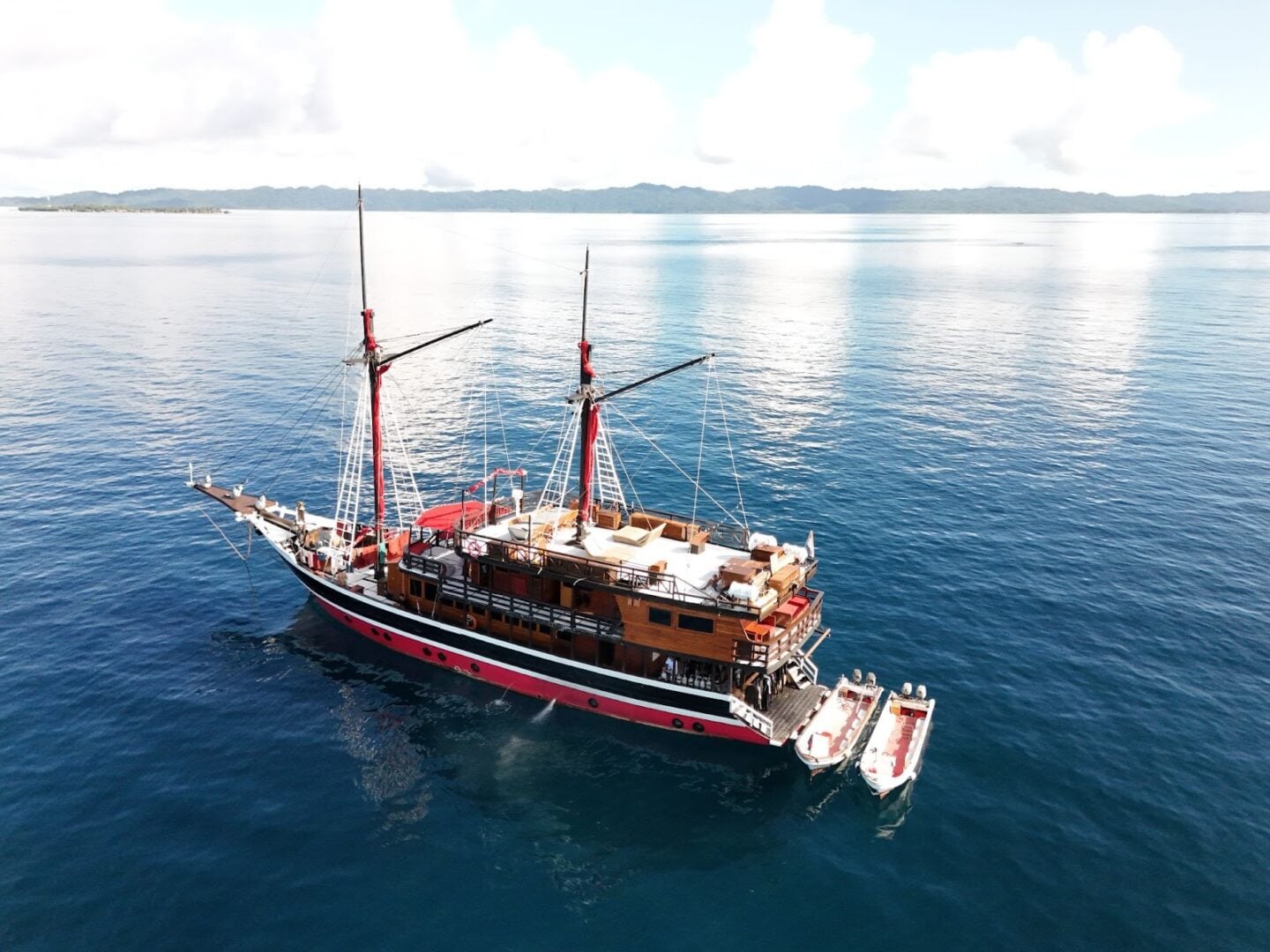
Destinations with lower seasickness risk typically share these characteristics:
- sheltered waters behind large island groups
- short, low waves rather than long open-ocean swells
- short distances between dive sites
- light or minimal night crossings
- flexible routes that adapt to sea conditions
These factors make it easier for the body to adapt, especially during the first one to two days.
Recommended Liveaboard Destinations for Beginners
Raja Ampat
Dense island clusters create relatively sheltered waters. Many dive sites are located in lagoons and narrow straits. Longer crossings are often done at night. Many first-time guests feel comfortable from the start. Best for beginners seeking a world-class experience with a calm rhythm.
Komodo
Numerous bays and large islands provide shelter. Popular sites are close together. With the right routing, rough crossings can be minimised. Best for beginners who enjoy a mix of diving and dramatic landscapes.
Maldives Central Atolls
Many calm lagoons. Short transits between atolls. Operators are highly experienced with international guests. Best for first-time liveaboard travellers globally.
Red Sea
A relatively enclosed sea with more stable winds. Many wrecks and reefs are located close to each other. Best for beginners seeking a first liveaboard experience outside Asia.
Destinations That Are More Challenging for Beginners
Not bad, but more demanding:
- southern Red Sea
- banda Sea open crossings
- pacific open-ocean routes
- long inter-country or ocean crossings
These are generally better once your body is more accustomed to life at sea.
Seasickness Is Not a Liveaboard Problem
This point is worth emphasising.
Seasickness:
- is a natural bodily response, not a reflection of ability,
- does not mean you are unsuitable for a liveaboard,
- does not determine trip quality.
With the right vessel design, a well-paced itinerary, and a calm approach, seasickness is almost always manageable.
With the Right Operator, Seasickness Is Easier to Handle
A liveaboard experience is shaped not only by sea conditions, but by how the operator designs the journey and supports guests from day one.
Experienced liveaboard operators typically:
- plan routes based on sea conditions, not just the number of dive sites,
- schedule sailing at more comfortable times, often using night crossings so guests can rest,
- ensure crew are trained to recognise and support guests experiencing seasickness,
- provide an onboard environment that supports adaptation, including open spaces, balanced activity rhythms, and an unhurried atmosphere.
Rather than forcing dense schedules, trips are designed to give the body time to adapt naturally. This is why many guests who initially worry about seasickness end up feeling calmer and enjoying their first days on board.
If you want to explore Indonesia’s seas with a comfortable rhythm and a human-centred approach, choosing the right operator is the first step. You can learn more about how La Galigo Liveaboard designs its journeys and onboard experience through its official website, and see how a liveaboard should feel from day one: calm, safe, and genuinely enjoyable.
FAQ
Can first-time liveaboard travellers handle seasickness?
Yes. Most liveaboard guests are first-time guests, and most travel comfortably. If discomfort appears, it is usually mild and limited to the first day while the body adapts. Liveaboards are designed for multi-day travel, allowing a relaxed rhythm, time for adaptation, and crew support for newcomers.
Are liveaboards more stable than small boats?
Generally, yes. Liveaboards are significantly more stable. Their size, weight, and hull design result in slower, more predictable motion compared with small boats or speedboats. This is why many people who feel seasick on speedboats feel comfortable on liveaboards.
How long does seasickness usually last on board?
If it occurs, seasickness typically lasts only the first 24 to 48 hours. This is the body’s natural adaptation phase. After that, balance systems synchronise, and nausea usually fades or disappears entirely.
Should I avoid liveaboards if I have been seasick before?
No. Previous seasickness is not a reliable indicator of how your body will respond on a liveaboard. Many people who feel unwell on ferries or speedboats find liveaboards more comfortable due to their stability and rhythm.
What should I do if I start feeling seasick on board?
Stay calm. Seasickness rarely escalates suddenly. Helpful steps include sitting or resting near the centre of the vessel, looking at the horizon or spending time in open areas, eating light meals, staying hydrated, and informing the crew. They know exactly how to help and usually intervene before discomfort worsens.