
When discussing the ideal dive experience, many divers immediately focus on the destination, visibility, and the type of vessel and facilities available. Yet one fundamental factor is often overlooked: dive group size.
Many divers see group size as a purely operational detail rather than part of the experience itself. As long as the location is well known and marine life is abundant, the dive format is often considered unimportant. In practice, however, the number of people underwater simultaneously significantly impacts visual comfort, stress levels, mental focus, and the quality of interactions with marine life.
Group size determines not only how crowded a dive feels, but also how well we manage our energy, how aware we are of our surroundings, and how fully present we are during the dive. This is where small-group diving begins to demonstrate its value, not as a luxury but as an approach that prioritises the quality of the experience.
What Do We Mean by Small Group Diving?
What “Small Group” Typically Means in the Diving Industry
In industry practice, small group diving generally refers to:
- A limited number of divers per group
- A lower diver-to-guide ratio compared to standard operations
- A dive approach that emphasises quality, control, and awareness
Small-group diving does not necessarily imply a private or exclusive dive. The focus is not on absolute numbers, but on the intention to reduce underwater congestion and distractions so the dive feels more controlled and comfortable.
How Small Group Diving Differs from Standard Group Diving
Standard dive groups are often designed for efficiency, with tight schedules, fixed routes, and a relatively large number of divers. While this approach is logistically sound, it often sacrifices flexibility and composure.
Small-group diving is based on a different philosophy: quality over throughput. Dive pace tends to be more relaxed, communication clearer, and small adjustments can be made without disrupting the entire group. This philosophical difference directly shapes the overall dive experience.
How Small Group Diving Changes the Experience Underwater
Less Underwater Congestion, Better Visibility
The more divers present in one area, the greater the chance that fin kicks, bubbles, and uncontrolled movement will stir up sediment. In small groups:
- Sediment is less frequently disturbed
- Movement is more orderly
- Visibility tends to last longer
The result is a cleaner visual experience that is less mentally tiring, especially at sandy sites or on fragile reefs.
More Natural and Unhurried Marine Life Encounters
Marine life is highly sensitive to crowds, noise, and sudden movements. In small group diving, interactions with marine animals are typically:
- Slower
- More controlled
- Free from competition for position
This allows animal behaviour to appear more natural. Encounters become less about simply seeing and more about observing without pressure.
READ ALSO: Supporting Marine Life Conservation, Why Should I Do it?
A Calmer, More Focused Dive Environment
With fewer people around, the mental burden of constantly monitoring other divers is reduced. Focus can return to fundamentals such as breathing, buoyancy, and environmental awareness. Many divers report that small-group diving is more meditative. Diving becomes an experience rather than a checklist.
Why Fewer Divers Reduce Mental Load and Physical Fatigue
This topic is rarely discussed, yet it is crucial for serious divers.
Less Task Overload and Constant Awareness
In larger groups, divers often carry an unconscious cognitive load, increasing underwater stress and fatigue. Small groups ease this burden, helping divers feel more relaxed and in control.
Small-group diving reduces these demands, allowing attention to remain focused on oneself and the surrounding environment.
Easier Buoyancy Control and Energy Management
Fewer divers mean fewer positional disturbances and water flow disruptions. This makes it easier to:
- Maintain trim
- Control buoyancy
- Manage energy consumption
Better energy efficiency directly improves dive quality and duration.
Why Fatigue Accumulates Faster in Larger Groups
On multi-day dive trips, fatigue rarely comes from a single dive. It builds through repeated minor stresses. Large groups accelerate this accumulation. Small group diving, by contrast, helps maintain stamina and consistency from day to day.
Personalised Guidance: The Real Advantage of Small Group Diving
One of the most tangible benefits of small group diving is the quality of guidance.
More Effective Communication with Dive Guides
In smaller groups, dive guides can:
- Deliver clearer briefings
- Monitor individual diver conditions
- Respond more quickly to issues
The diver–guide relationship often feels more personal and trust-based.
Dives Better Aligned with Skill Level and Interests
Small groups make it easier to tailor dives based on:
- Experience level
- Air consumption
- Specific interests such as photography, macro, or pelagic encounters
The result is a dive that feels well-matched rather than compromised.
Greater Flexibility Without Compromising Safety
Flexibility in small-group diving does not imply reduced safety. On the contrary, minor, safe adjustments often significantly improve comfort and experience quality.
Small Group Diving and Marine Ethics, and Why It Matters More Than You Think
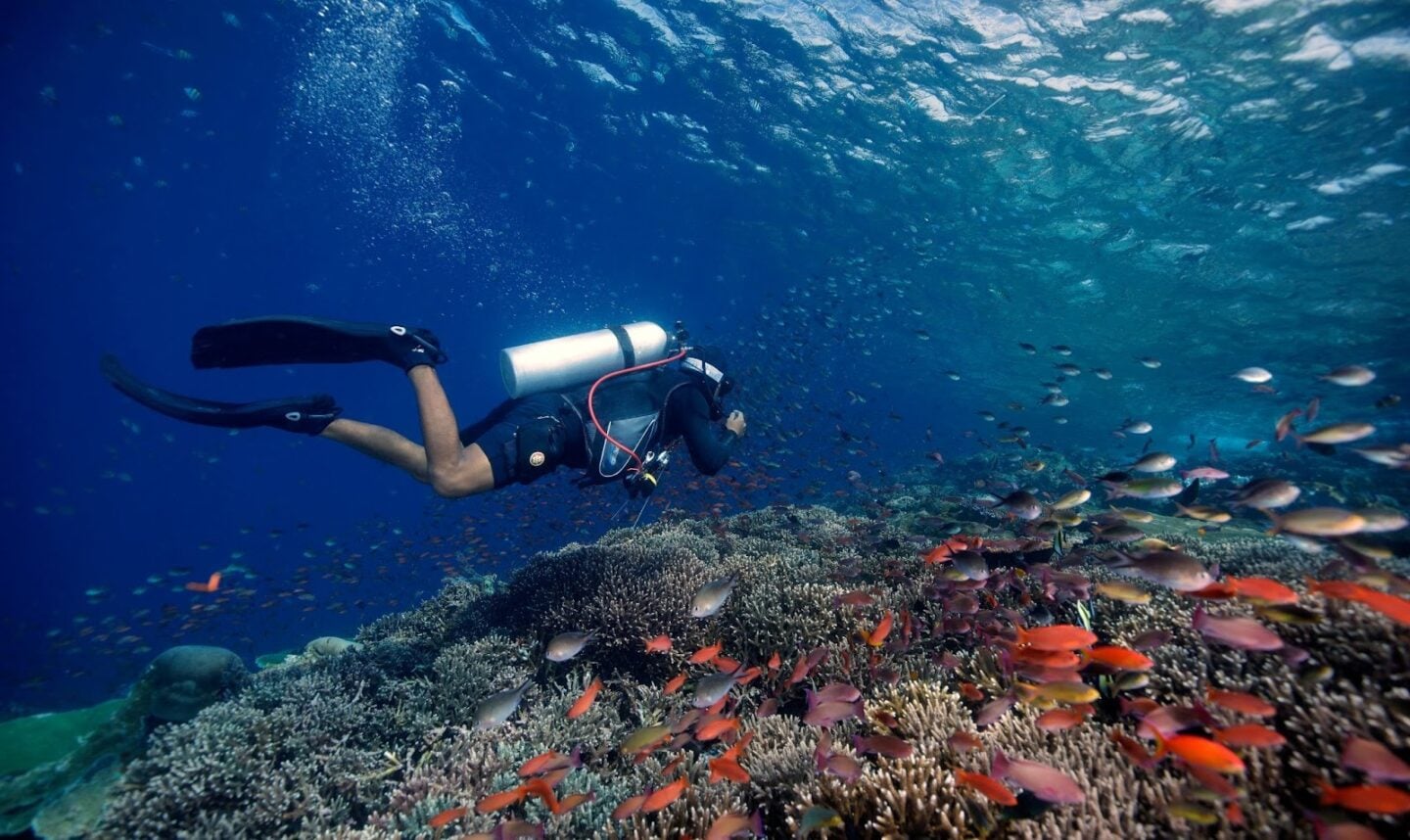
The impact of group size extends beyond divers to the marine environment itself.
Reduced Disturbance to Marine Life
Smaller groups create less visual and physical disturbance, which means:
- Marine animals are less easily stressed
- Natural behaviour is better preserved
- The risk of accidental contact is reduced
Encouraging Respectful, Low-Impact Encounters
With fewer divers, maintaining distance and ethical interaction becomes easier. This approach aligns with conservation principles that promote sustainable diving practices.
Why Many Experienced Divers Shift Priorities Over Time
As experience grows, many divers move away from the mindset of maximising dive numbers and towards more mindful, calm, and ethical diving. Small group diving often becomes part of this evolution.
Who Gains the Most from Small Group Diving?
Serious and Experienced Divers
Experienced divers tend to value control, consistency, and calm. All of these are easier to achieve in small groups.
Underwater Photographers and Videographers
Underwater photography requires space, time, and minimal disturbance. Small group diving supports all three.
READ ALSO: Tips Underwater Photograpy
Travellers Who Value Depth Over Volume
For travellers who prioritise experience quality over dive counts, small-group diving is often far more rewarding.
Small Group vs Large Group Diving
| Experience Aspect | Small Group Diving | Large Group Diving |
| Dive Quality and Focus | Focus is better maintained, with higher environmental awareness and minimal distraction. | Attention is often divided by many divers moving simultaneously and by constant adjustments. |
| Flexibility and Comfort | Small adjustments in pace, position, or interest are easier without disrupting the group. | Adjustments are limited because the group must follow a collective pace. |
| Multi-Day Experience | More consistent and less fatiguing, well-suited to multi-day trips. | Fatigue tends to accumulate faster, especially with intensive dive schedules. |
When Is the Right Time to Choose Small Group Diving So It Truly Feels Worthwhile?
Small group diving often feels most appropriate when you begin to experience the following:
- Returning from a dive holiday feeling tired rather than satisfied
- Dive schedules that feel rushed, especially on multi-day trips
- Difficulty maintaining focus and rhythm because of constant adjustments to others
In these situations, smaller groups naturally slow the pace. Energy is better preserved, focus improves, and each dive feels more complete rather than just another logbook entry.
Small group diving is also highly worthwhile when your dive objectives include:
- Observing natural marine behaviour without disturbance
- Conducting underwater photography with sufficient space and time
- Diving in conditions that demand high concentration, such as strong currents or poor visibility
At this point, experience quality usually outweighs the total number of dives.
Common Misconceptions About Small Group Diving
“It’s Only for Advanced Divers”
Not always. Many beginners feel more comfortable and confident in smaller groups.
“It’s Less Social”
Interaction in small groups is often more meaningful than simply noisy.
“It’s Not Worth the Extra Cost”
The value of small-group diving often lies in the experience, not just the price.
Does Small Group Diving Matter More in Certain Destinations?
Group size does not have the same impact everywhere. In some destinations, small-group diving is a key factor in whether a dive feels ordinary or truly memorable.
Remote and Expedition-Style Destinations
In remote locations where distances between dive sites are significant, small-group diving helps maintain consistent dive quality. In destinations such as Raja Ampat and Komodo National Park, dynamic currents and high biodiversity require rigorous monitoring and management. In smaller groups, dives feel more orderly and controlled, allowing divers to enjoy the rhythm without the constant pressure to adjust to others.
High-Current or Environmentally Sensitive Areas
In areas with strong currents, complex reef structures, or sensitive visibility, group control is critical. Small-group diving simplifies underwater coordination, reduces environmental disturbance, and helps preserve the naturalness of interactions with the sea. Based on the La Galigo Liveaboard crew’s experience, limiting the number of divers per group helps maintain a calm dive rhythm, particularly in challenging conditions.
Popular Dive Sites Versus Remote Reefs
At popular global destinations such as the Maldives, the Galápagos Islands, or the Red Sea, diver density is often unavoidable. In this context, small group diving helps reduce crowding and creates a more personal experience, even at famous sites. On quieter reefs, small groups deepen the experience by giving divers the space to be fully present and appreciate details without distraction.
How Experienced Divers Decide
What Experienced Divers Start Prioritising
Experienced divers often evaluate dive trips using practical questions such as:
- Can I dive at a comfortable pace without constantly adjusting to many others?
- Does the dive guide genuinely have time and attention for my underwater condition?
- Does the dive environment feel calm and free from distraction?
- Are interactions with marine life ethical and unhurried?
When most responses are “yes,” this usually reflects a small-group format.
Why Quality Gradually Matters More Than Quantity
For many experienced divers, the final decision often comes down to simpler questions:
- Do I want to increase the number of dives, or deepen the quality of each one?
- Do I return from the trip feeling satisfied rather than merely exhausted?
- Does the experience leave an impression I want to repeat, not just record in a logbook?
When these considerations outweigh numbers, group size almost always becomes a decisive factor.
Final Thoughts
Small group diving is not about exclusivity but about awareness. With fewer divers underwater, diving returns to its essence: being fully present, respecting the ocean, and enjoying each moment without pressure. This approach becomes increasingly important in regions such as Indonesia, where remote dive sites and dynamic sea conditions require appropriate pacing, focus, and a diving platform.
If you are considering a liveaboard experience with a small-group approach on a multi-day trip, La Galigo Liveaboard warrants serious consideration. It is designed for long-range expeditions, providing a calm, comfortable atmosphere that allows divers to focus on the experience rather than logistics. More information about the vessel can be found here:
👉 https://www.lagaligoliveaboard.com/
FAQ
1. What is small group diving?
Diving with a limited number of divers per group creates a calmer, more focused, and controlled rhythm.
2. Is small group diving only for experienced divers?
No. Simplified pacing and clearer communication can benefit divers at all levels of experience.
3. Is small group diving more expensive?
It is often slightly more expensive, but it offers a more consistent and distraction-free experience.