
The name Raja Ampat is almost always spoken with a sense of awe. Home to the highest marine biodiversity on the planet, living coral reefs, and dramatic seascapes, it has become a premier destination for divers worldwide.
Yet behind that reputation lies an important question, especially for divers who honestly assess their own abilities:
Is Raja Ampat really right for me?
The answer is rarely a simple yes or no. Raja Ampat is not a single dive environment but a collection of highly diverse marine systems. Some locations are calm and beginner-friendly, while others demand experience, current awareness, and mature decision-making.
This article is not about selling unrealistic expectations. Its purpose is to help you understand how skill level shapes the diving experience in Raja Ampat, so you can choose dive sites and a diving approach that truly suit you.
The Importance of Skill Level
In many dive destinations, certification level is often treated as the main benchmark. In Raja Ampat, actual skill level matters far more than the certification card you carry.
In this guide, skill levels are defined using a practical framework commonly used by dive operators and cruise directors, rather than formal certification systems. The key factors include:
- The number and variety of logged dives
- Ability to manage currents, not simply having done a drift dive before
- Buoyancy stability in different conditions
- Situational awareness and multitasking ability
- Risk awareness, including knowing when to continue and when to abort a dive
This approach is more relevant in Raja Ampat because conditions are dynamic and can change quickly. Two divers with the same certification can have very different experiences depending on their real-world exposure and decision-making maturity.
Read Also: Scuba Skills: How to Become a Self-Sufficient Diver
Diving Conditions in Raja Ampat
To determine whether Raja Ampat suits different skill levels, it is important to consider its diving conditions.
Raja Ampat is at the heart of the Coral Triangle and is influenced by large-scale ocean currents from the Pacific Ocean. The result is:
- Strong and complex current systems
- Nutrient upwelling that fuels exceptional coral and fish growth
- Highly varied underwater topography, including shallow lagoons, reef slopes, narrow channels, and exposed pinnacles
Within a single day, a diver may encounter:
- Shallow reefs with no current
- Gentle drift dives along reef slopes.
- Channels with strong and shifting currents
This is why Raja Ampat is often described as challenging. Not because it is always extreme, but because it requires thoughtful site selection.
Beginner Divers
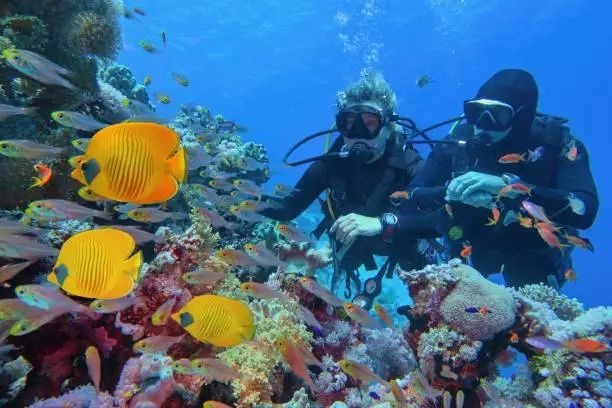
(Open Water, fewer than 20 to 30 logged dives)
Calm Reefs and Sheltered Sites
For beginner divers, typically newly certified or with limited experience, Raja Ampat can be a beautiful learning environment if the focus is on the right sites. At this stage, divers are still building core skills such as buoyancy control, air management, and environmental awareness.
Typical characteristics:
- Newly certified or low experience
- Focused on buoyancy, air consumption, and basic awareness
- Not yet comfortable with currents, depth, or task-heavy dives
Ideal dive conditions:
- Shallow depths, roughly 5 to 15 or 18 metres
- Very weak or no current
- Good visibility
- Easy entry and exit
- Clear and visually calming reef structure
Suitable dive site types in Raja Ampat:
- Sheltered reefs
- Lagoons and bays
- Shallow coral gardens
In protected lagoons and shallow coral gardens, beginner divers can:
- Practise buoyancy without pressure
- Enjoy coral colour and structure at a relaxed pace.
- Build confidence in a healthy, natural environment.
While Raja Ampat is known for dynamic currents, carefully selected sheltered sites can feel surprisingly accessible, when dive planning is done properly
Novice and Early Intermediate Divers
(20 to 50 logged dives)
Gentle Currents and Reef Slopes
Once divers become more comfortable with buoyancy and air management, the next step is to learn to work in light current. This is where Raja Ampat becomes an excellent learning ground.
Typical characteristics:
- Improving buoyancy stability
- Some prior experience with light current
- Growing interest in wider exploration
Suitable dive conditions:
- Light to moderate current
- Depths of around 18 to 25 metres
- Reef slopes and small pinnacles
Common site types:
- Sloping reefs
- Small bommies
- Channel edges during slack tide
At this level, Raja Ampat offers:
- Reef slopes with gentle current
- Slow, controlled drift dives
- A transition from staying in one place to moving with the water
Divers at this stage learn to:
- Maintain position relative to the reef
- Adjust finning to avoid fatigue.
- Begin readingthe current direction and strength.
This phase is often when divers start to enjoy the natural flow of diving, without excessive technical pressure.
Intermediate Divers
(50 to 100 logged dives)
Channels, Drifts, and Dynamic Reefs
For intermediate divers, Raja Ampat begins to reveal its true character as a living, energetic marine system.
Typical characteristics:
- Stable buoyancy
- Comfortable with drift diving
- Beginning to multitask, such as using a DSMB, carrying a camera, or basic navigation.
Suitable dive conditions:
- Moderate current
- Depth variation up to around 30 metres
- Drift diving as a core experience
Common site types:
- Channels and passes
- Larger pinnacles
- Current-swept reefs
Channels and reefs with moderate current allow:
- Faster drift dives
- Intense interaction with schooling fish
- A strong sense of ecosystem activity
At this level, divers are usually:
- Confident with buoyancy
- Comfortable deploying a DSMB
- Able to maintain a safe distance from the reef even as the current changes
For many divers, this stage marks a turning point, when current is no longer seen as an obstacle but as the engine of life.
Advanced Recreational Divers
(100 or more logged dives)
High-Current Sites and Exposed Pinnacles
For advanced recreational divers, Raja Ampat becomes a high-energy playground.
Typical characteristics:
- Very comfortable in the current
- Strong situational awareness
- Ability to read tides and current patterns
Dive conditions:
- Strong currents
- Upwellings and downwellings
- Complex underwater topography
Common site types:
- Exposed pinnacles
- High-current channels
- Blue-water entries
Sites with strong current and exposed pinnacles offer:
- Increased big fish and predator activity
- Nutrient-rich upwellings
- Visually intense experiences
Key skills at this level include:
- Precise entry and exit timing
- Proper use of reef hooks
- Efficient body positioning in the current
Small mistakes rarely lead to immediate danger, but they can make a dive tiring or less effective. Decision-making becomes the most important skill.
Hardcore and Expert Divers
(Very high experience, often with a technical background)
Complex Current Systems and Blue-Water Conditions
For highly experienced divers, Raja Ampat offers conditions that are both technically and intellectually demanding.
Typical characteristics:
- Actively managing risk, not just tolerating it
- Comfortable with rapidly changing conditions
- Capable of handling sudden current shifts, including upcurrents and downcurrents
- Confident performing blue-water ascents without close visual reference
Dive conditions:
- Extreme current systems
- Minimal visual reference
- Highly critical timing
Common site types:
- Major current intersections
- Isolated offshore seamounts
- Advanced exploration dives
What distinguishes expert divers is not bravery, but:
- Mature risk awareness
- The ability to read conditions before entering the water
- Willingness to abort a dive without ego
At this level, Raja Ampat is not just beautiful. It becomes a complex marine system that demands understanding and respect.
Why One Destination Can Work for Every Skill Level
Raja Ampat’s uniqueness lies in its micro-variability. Within the same marine area, conditions can vary dramatically.
Within relatively close range, Raja Ampat offers:
- Shallow, sheltered, calm reefs
- Gentle slopes with light current
- Narrow channels with strong flow
- Open pinnacles are exposed to major current systems.
Because of this diversity, the same destination can be:
- Safe and enjoyable for beginners
- Challenging and engaging for the most experienced divers
Conditions at a single dive site also change over time. Current strength, effective depth, and overall difficulty vary with tides and timing.
This is why in Raja Ampat, the key question is not how skilled you are, but where and when you dive, and how the dive is planned.
Choosing the Right Operator Matters
In Raja Ampat, the quality of the experience is shaped by daily planning.
Operators such as La Galigo Liveaboard:
- Group divers by real skill level
- Match dive sites to tidal conditions
- Provide honest and clear briefings.
Dive guides and cruise directors play a critical role in:
- Reading sea conditions
- Making conservative decisions when necessary
- Keeping dives both safe and rewarding.
This is why experienced divers often stress the same advice. Choose an operator with a proven track record, not one that promises spectacle at all costs.
Final Thoughts
So, is Raja Ampat right for you? In many cases, the answer is yes, provided you understand yourself as a diver. Raja Ampat does not require everyone to be hardcore. It rewards self-awareness, humility towards nature, and decisions based on real ability.
With the right site selection, the same region can be a gentle learning environment for beginners, a dynamic exploration space for intermediate divers, and a deeply satisfying challenge for the most experienced.
This flexibility is exactly what makes Raja Ampat special. It is not a place for proving ego, but for diving with intention, understanding, and respect for the sea.
For many divers, the best way to experience this flexibility is through a liveaboard that understands site selection, timing, and skill-based group management. This is where La Galigo Liveaboard plays its role: planned diving, honest briefings, and site choices tailored to conditions and the guest experience. If you want to experience Raja Ampat as it should be, safely, meaningfully, and in line with your abilities, La Galigo Liveaboard helps ensure every dive happens at the right place and the right time.
Frequently Asked Questions
1. Is Raja Ampat suitable for beginner divers?
Yes, Raja Ampat can be suitable for beginners if dive sites are chosen carefully. The region has many shallow reefs, sheltered lagoons, and coral gardens with very weak currents. Challenges usually arise not from the destination itself, but from poor site selection or timing that does not match a diver’s skill level.
2. Do all dive sites in Raja Ampat have strong currents?
No. This is one of the most common misconceptions. Raja Ampat is known for strong current systems, but not every site has current, and even the same site can feel very different depending on timing. Some locations remain calm throughout the day, while others are only suitable at specific tidal windows.
3. Can the same dive site feel different at different times?
Yes. Conditions in Raja Ampat are strongly influenced by tides and regional currents. A site may feel relaxed in the morning and become far more dynamic a few hours later. This is why when you dive, it is just as important as where you dive.
4. Is an Advanced certification enough for all dives in Raja Ampat?
Advanced certification helps, but it does not automatically mean a diver is ready for all conditions. Operators typically assess a combination of certification level, logged dives, and real-world experience. Two divers with the same certification may be directed to different sites based on actual ability.
5. What do “complex current systems” and “blue-water conditions” mean?
Complex current systems refer to currents that are not unidirectional and can change rapidly in both strength and direction. Blue-water conditions describe dives where there is little or no nearby visual reference, such as open-ocean ascents. These conditions are generally suitable only for highly experienced divers.
6. Can beginner and advanced divers dive in the same area?
Yes, because Raja Ampat has many micro-locations within the same region. In practice, divers may:
- Dive at different sites
- Dive the same site at different times.
- Use different sections of the same reef.
This approach allows one destination to serve multiple skill levels safely.
7. Why is operator choice so important in Raja Ampat?
The diving experience depends heavily on site selection, timing, and group management. A good operator adjusts dive plans to guest skill levels, daily sea conditions, and experience goals, rather than simply chasing famous sites.
8. Are liveaboards better for trips with mixed skill levels?
In many cases, yes. Liveaboards offer greater flexibility to change locations, adjust schedules to sea conditions, and group divers by ability. Operators such as La Galigo Liveaboard use this flexibility to ensure each diver has a safe, comfortable, and appropriate experience.