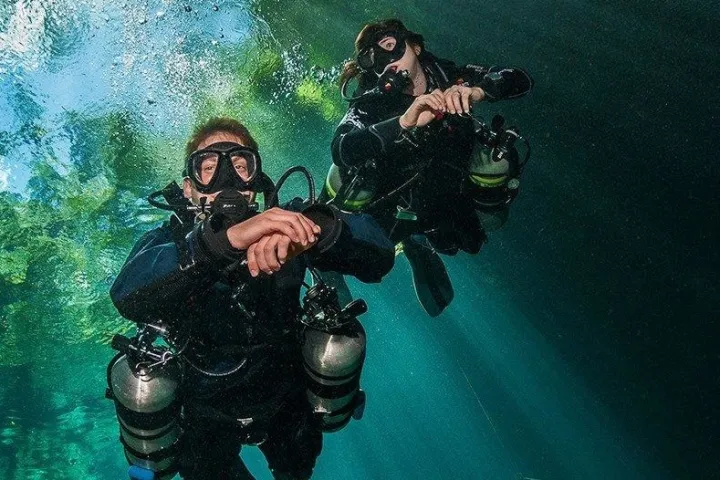
If you’re looking to push your depth limits in scuba diving, you’re probably considering taking a deep diving speciality course. Two of the most recognised options are the PADI Deep Diver and SSI Deep Diver courses. While both certifications prepare you for diving to 40 meters (130 feet), they differ in structure, philosophy, and flexibility. Let’s dive into the specifics to help you choose the one that aligns best with your diving goals.
Why Deep Diver Certification Matters
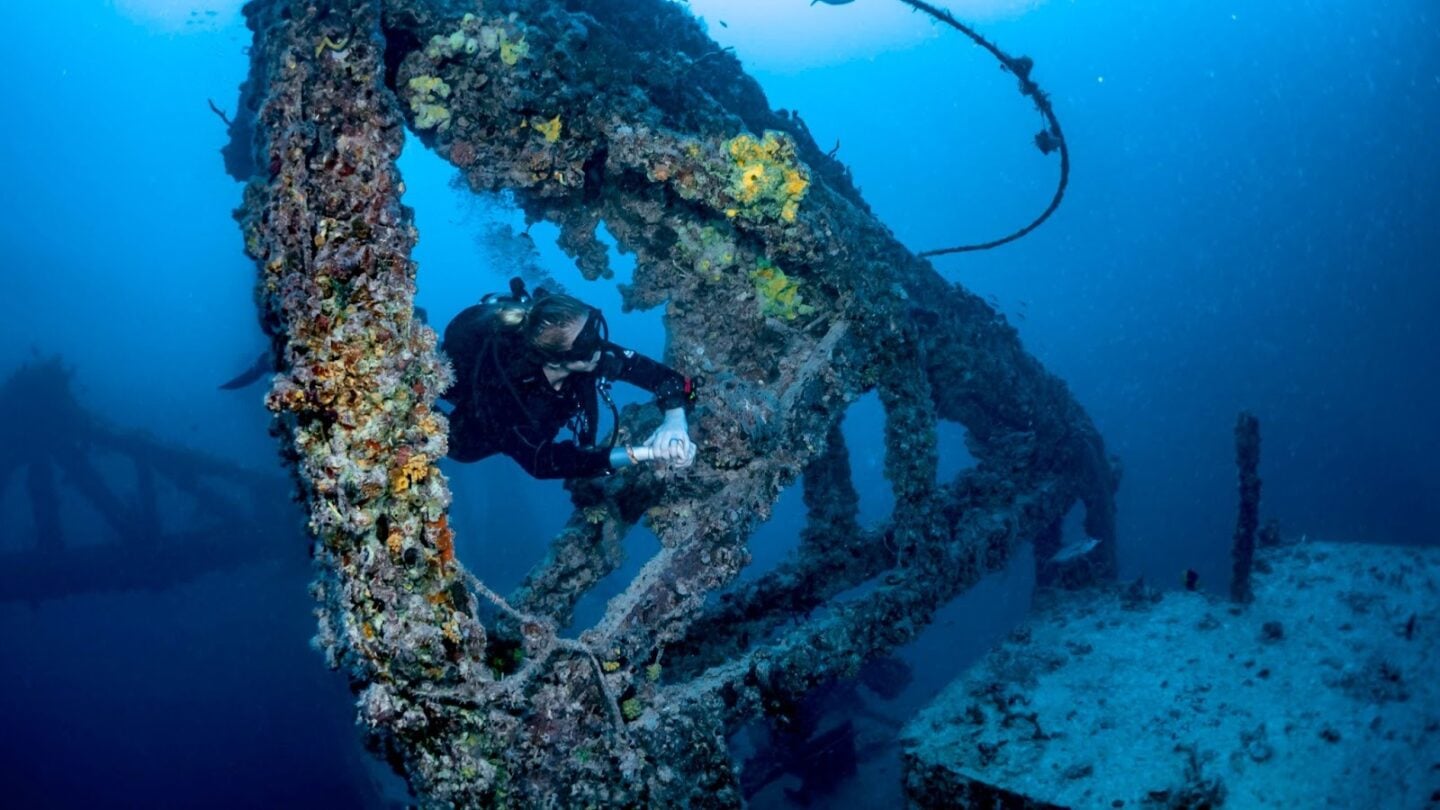
Diving deeper than 18 or 30 meters requires additional training to manage the effects of pressure, gas narcosis, and more complex planning. A deep diver certification opens access to dive sites at the deeper end of recreational limits, such as advanced wrecks, walls, and pinnacles.
PADI & SSI Deep Diver: Comparison Table
| Category | SSI Deep Diving Speciality | PADI Deep Diver Speciality |
| Max depth | 40 m / 130 ft | 40 m / 130 ft |
| Minimum age | 15+ | 15+ |
| Prereqs | Open Water Diver | Adventure Diver (or higher) + OW/equivalent (often via AOW track) |
| Open-water dives/sessions | 3 open water sessions | Commonly 4 open water dives; AOW deep dive may count as 1 |
| Classroom/theory | 5 academic sessions | eLearning + knowledge reviews; topics include narcosis, emergency decompression, DCI, etc. |
| Emphasis | Planning deep dives + computers & gas consumption calculations | Planning + gas management + narcosis identification/management, buddy procedures, buoyancy at depth |
| Digital ecosystem | Strong “all-in-one” MySSI app (digital materials/cards/logbook) | PADI has broad eLearning/digital options |
ALSO READ : Surprising and Rare Marine Animals Found in Indonesia
Certification Requirements
Both courses require that you already hold an Open Water Diver certification (from their respective agency or a recognised equivalent). The minimum age to enrol is 15 years old.
Course Objectives & Skills Covered
PADI Deep Diver
- Four deep dives, with gradual depth progression.
- Topics include nitrogen narcosis, gas management, deep dive planning, and emergency procedures.
- You’ll also explore considerations like buoyancy changes at depth, increased air consumption, and environmental impact.
SSI Deep Diver
- Three training dives focused on planning and executing dives to 40 meters.
- Emphasis on risk management, proper ascent rates, and dealing with potential complications.
- Includes training in narcosis awareness and emergency protocols.
ALSO READ : How to Log a Dive
Which Course Is Right for You?
Both SSI Deep Diving and PADI Deep Diver train you for the same recreational depth limit (up to 40 m/130 ft). They also cover the same core risks: buoyancy control at depth, gas management, narcosis awareness, and planning a dive so you don’t accidentally push into decompression. In other words, either course is fine, and most dive operators accept either one (yes, you can be SSI certified and dive in PADI certified Dive Operators and vice versa).
If you only have an Open Water certification and want to progress toward deeper diving, SSI may offer a more flexible pathway depending on your logged experience and whether Advanced Adventurer–level training is completed first or integrated as part of your progression. Availability and structure vary by dive centre and instructor.
If you’re already in the PADI track, especially if you have (or plan to get) Advanced Open Water/Adventure Diver and you like continuing with PADI specialties, then PADI Deep Diver fits neatly into that system and your future certifications.
Another practical difference is how the training is commonly packaged. PADI Deep Diver is often taught as four open-water dives, which can feel like a bit more guided practice time. SSI Deep Diving is often run as three open-water sessions and a structured academic component.
More dives isn’t automatically “better,” but if you learn best by repeating skills in the water (and you want that extra supervised depth time), PADI may feel more comfortable. If you prefer a slightly more streamlined in-water schedule and you’re happy focusing on planning and technique with fewer training dives, SSI can be a great fit. SSI Deep Diving is commonly taught in three dives, while PADI is commonly taught in four, but both agencies allow instructors flexibility based on student performance and local conditions.
If you want the most reliable way to choose, pick the course taught by the stronger instructor and dive center, not the logo. A calm, strict, safety-minded instructor who does a thorough briefing, checks your weighting and trim, watches your gas, and practices real-world scenarios will beat a “checkbox” course from either agency. So choose the option where you trust the instructor more, the dive site conditions match what you want to learn (current, visibility, cold/warm, wall/wreck), and the schedule gives you enough time to practice without rushing.
Planning for Technical Diving?
Both certifications are stepping stones for tech diving. However, SSI’s modular digital training may better integrate with extended range or tech programs under SSI.
PADI Deep Diver also fulfils prerequisites for several PADI TecRec programs.
Either way, these deep diver specialties help you:
- Prepare for longer, deeper, and more complex dives.
- Understand gas narcosis and air management under pressure.
- Learn to prevent and respond to deep diving emergencies.
Pro Tip:
If your goal is diving deep in Komodo, strong currents are part of the game. Choose a course that emphasises current management and situational awareness, more important than digital e-learning.
Who This Course Is Not For
A deep diver speciality is not ideal for everyone right away. If you have fewer than 20 logged dives, are still working on consistent buoyancy control, or feel rushed or task-loaded during basic dives, you’ll benefit far more from building experience at shallower depths first. Likewise, if your goal is to jump straight into technical diving, this course alone won’t be enough, you’ll still need additional training in advanced gas management, decompression theory, and equipment configuration. The deep diver speciality works best as a confidence-building step, not a shortcut.
Final Thoughts
Both PADI Deep Diver and SSI Deep Diver courses are respected worldwide and will prepare you for exploring dive sites up to 40 meters.
- Go with PADI if you prefer a longer, more in-depth course with additional instructor contact.
- Choose SSI if you want a more flexible, app-based learning system that gets you certified faster.
No matter which you choose, the deep blue just got a little more accessible, and a lot more exciting.