
Coral reefs are often the main reason people travel long distances. Their vivid colours, intricate shapes, and the sense of abundant marine life are what draw many travellers to the sea. Yet for many, there is one moment that is difficult to forget. It is when they dive or snorkel and encounter reefs that look pale, bleached, or almost colourless.
Seeing bleached coral reefs can raise many questions and a sense of concern. Does this mean the reef is already dead? Is it still worth visiting? And the question that comes up most often: is there still hope for these reefs? This article is written to answer those questions.
When Reefs Look Different Than Expected
Many people imagine coral reefs as underwater landscapes filled with colour. Reds, purples, yellows, and bright blues are what we expect to see. When those colours fade and are replaced by pale white, the experience can feel shocking, even distressing.
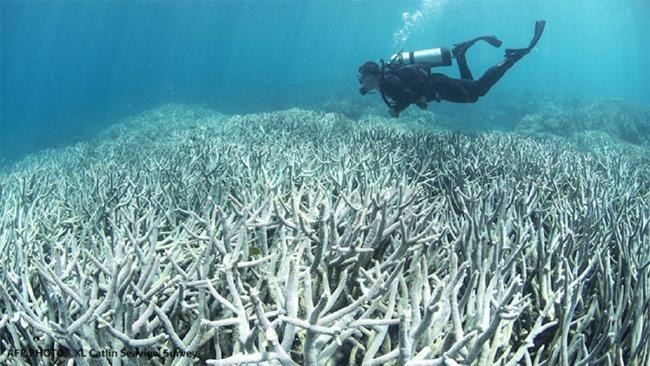
Underwater, bleached corals appear fragile. Their shapes remain, their structures are still standing, but it can seem as though the life within them has stopped. For divers or snorkellers seeing this for the first time, the reaction is often surprise or disappointment.
However, seeing a bleached reef is not a sign that everything is over. With the right understanding, we can better recognise what is actually happening.
What Coral Bleaching Actually Is
A Stress Response, Not Instant Death
Coral bleaching is not instant death. It is a stress response. When environmental conditions become too extreme, corals respond in a way that looks dramatic. They lose their colour.
Corals are living organisms that are highly sensitive to their surroundings. When stress occurs, especially in the form of heat, corals enter survival mode. In this state, they are still alive, but operating at the edge of their tolerance.
This means that bleached corals are not necessarily dead. They are struggling.
Why Corals Turn White
The colours we associate with corals actually come from microscopic organisms that live within coral tissue. These organisms play a major role in providing energy to the coral.
When environmental conditions become too warm or unstable, this relationship breaks down. Corals expel these organisms as a protective response. Without them, the transparent coral tissue reveals the white limestone skeleton beneath, which is what we recognise as coral bleaching.
The white appearance is not a structural collapse. It is a sign that the internal system is out of balance.
Why Liveaboards Are Better Positioned to Access Healthier Reefs
Coral reefs located far from centres of human population tend to exist in a more balanced condition. Remote areas generally experience lower local pressure, giving reefs the space to grow, function naturally, and recover more effectively after environmental stress.
Liveaboards are better positioned to reach these areas because they do not rely on land-based daily dive operations. By staying directly on board, journeys can reach reefs that are harder to access and relatively protected from mass-tourism pressure.
Several factors explain why reefs in remote locations are often healthier, including:
- lower exposure to pollution, both from land-based sources and coastal activity
- reduced boat traffic, which limits physical disturbance
- less frequent visitation compared with daily dive sites that are used repeatedly
In addition, liveaboards offer route and timing flexibility, allowing dives to take place under the most suitable conditions for currents, visibility, and marine activity. Many liveaboards also operate at a calmer, more controlled pace, helping to minimise pressure on any single site. This combination of distance, flexibility, and management often makes liveaboard diving feel more natural while increasing the likelihood of encountering reefs with intact structure, biodiversity, and ecosystem dynamics.
Coral Bleaching in Indonesia Versus Global Reefs
Compared with many coral reefs around the world, Indonesia still contains areas that show relatively lower levels of coral bleaching. This does not mean that Indonesian reefs are immune to environmental change; rather, several natural and geographic factors work together to provide greater resilience.
Key reasons why some Indonesian reefs remain comparatively strong include:
- extremely high coral species diversity, allowing ecosystems to respond more flexibly to environmental stress
- a large number of remote locations, far from major population centres and coastal activity
- lower local pressure in certain areas, including reduced pollution, boat traffic, and intensive daily visitation
- reef structures that remain complex, helping ecosystem functions continue to operate
For travellers, these differences are often felt most clearly underwater. In many locations, particularly in eastern Indonesia, divers and snorkellers can still encounter vibrant colours, layered coral formations, and natural marine interactions. This is why Indonesia is often regarded as one of the last regions in the world where coral reefs not only appear beautiful, but also continue to function as relatively intact ecosystems.
Why Coral Bleaching Happens
Heat Stress and Prolonged Warm Water
The primary cause of coral bleaching is prolonged heat. It is not simply a brief spike in temperature, but extended periods of unusually warm water.
The ocean naturally experiences temperature fluctuations. However, when water remains warmer than normal for extended periods, corals do not have enough time to adapt or recover. Stress accumulates, eventually triggering bleaching.
Why Bleaching Events Are Becoming More Frequent
Over the past few decades, bleaching events have become increasingly common. They now occur more frequently, across more locations, and on a much larger scale.
The issue is not only individual heat events but also the shortening of the time between them. Corals need time to recover. When recovery periods are repeatedly interrupted by new stress, their ability to survive declines sharply.
White Does Not Always Mean Gone
How Corals Can Recover
When environmental conditions stabilise again, when water temperatures cool and water quality improves, corals may have a chance to recover. The microscopic organisms can return, colour can gradually reappear, and ecosystem functions can begin to resume.
This process is not immediate. Recovery can take many years. However, in many regions, genuine recovery has been documented.
This shows that corals do possess natural resilience.
Temporary Stress Versus Permanent Loss
Not all bleaching events lead to the same outcome. There is an important difference between temporary stress and permanent damage.
If bleaching occurs once and is followed by improving conditions, recovery is possible. If stress returns repeatedly without sufficient recovery time, corals lose their ability to rebound.
When Recovery Is Possible
Repeated stress is the most critical factor. Each bleaching event weakens the coral’s internal systems. Without adequate recovery time, corals cannot rebuild their energy reserves.
Imagine a person who becomes ill, recovers only partially, then falls sick again. Eventually, the body can no longer cope. The same process occurs in coral reefs.
Not all reefs respond in the same way. Some are more tolerant of change, while others are extremely vulnerable.
Factors such as water quality, human pressure, and surrounding biodiversity strongly influence reef resilience. Reefs in relatively clean and balanced environments have a far greater chance of recovery than those under constant stress.
What Bleached Reefs Mean for Travellers
Visiting reefs that have experienced bleaching is not inherently wrong, as long as it is done with awareness. Human presence does not automatically cause harm, but additional pressure can worsen conditions.
With appropriate behaviour, visits can take place without adding stress to the ecosystem.
Travellers play an important role. Simple actions such as avoiding contact with corals, maintaining proper buoyancy while diving, and choosing responsible operators can make a real difference.
Visits that respect the living space of the ocean help ensure that human presence does not become an additional burden for reefs that are already under pressure.
Verdict
Seeing bleached coral reefs can be confronting, particularly for first-time visitors. Without proper context, the experience may feel discouraging. With the right understanding, however, it becomes clearer what these changes actually represent.
White coral does not always signal the end of a reef. It often indicates stress conditions that may still improve over time. Recognising this allows travellers to view reef health with greater clarity rather than alarm.
With this perspective, visiting the ocean becomes an exercise in observing responsibly, minimising impact, and understanding the marine environment as it is, rather than as we expect it to be.
Frequently Asked Questions
How long does it take for coral reefs to recover?
Recovery is not immediate. Under the best conditions, some reefs may begin to show signs of improvement within a few years. Full recovery, however, often takes much longer, sometimes a decade or more. The timeline depends on how severe the bleaching event was and whether the reef is given sufficient time to recover without repeated stress.
Can coral recover after bleaching?
Yes. Bleached coral is not necessarily dead. Many corals remain alive but are under significant stress. If conditions improve, such as cooler water temperatures, good water quality, and minimal disturbance, corals can regain their colour and resume normal growth. Recovery becomes less likely when bleaching events occur repeatedly without adequate time for healing.
How serious is coral bleaching right now?
Coral bleaching is more widespread and frequent than in the past, affecting reefs in many parts of the world. Some regions are experiencing repeated stress, while others continue to show strong signs of resilience. The situation is serious, but it is not uniform everywhere, and it is not a story of total loss.
References
Baker, A. C., Glynn, P. W., & Riegl, B. (2008). Climate change and coral reef bleaching: An ecological assessment of long-term impacts, recovery trends, and future outlook. Global Change Biology, 14(10), 2345–2361.
Graham, N. A. J., Jennings, S., MacNeil, M. A., Mouillot, D., & Wilson, S. K. (2015). Predicting climate-driven regime shifts versus rebound potential in coral reefs. Nature Climate Change, 5(8), 1–7.
Hoegh-Guldberg, O., Mumby, P. J., Hooten, A. J., Steneck, R. S., Greenfield, P., Gomez, E., et al. (2007). Coral reefs under rapid climate change and ocean acidification. Science, 318(5857), 1737–1742.
Hughes, T. P., Kerry, J. T., Álvarez-Noriega, M., Álvarez-Romero, J. G., Anderson, K. D., Baird, A. H., et al. (2017). Global warming and recurrent mass bleaching of corals. Nature, 543(7645), 373–377.
Intergovernmental Panel on Climate Change. (2022). Climate change 2022: Impacts, adaptation and vulnerability (AR6 Working Group II). Cambridge University Press.