
Indonesia stretches across thousands of islands, shaped by powerful currents and some of the richest marine ecosystems on Earth. As a diver, you already know that this region delivers world-class reefs, pelagics, and macro life.
But if you are honest with yourself, there is one encounter that stands above the rest.
Swimming with a whale shark.
If you are planning a trip and wondering when you should go, where your best chances are, and whether you can combine it with a Komodo liveaboard, this guide will help you plan with clarity and confidence.
Why Swimming With Whale Sharks Feels So Different
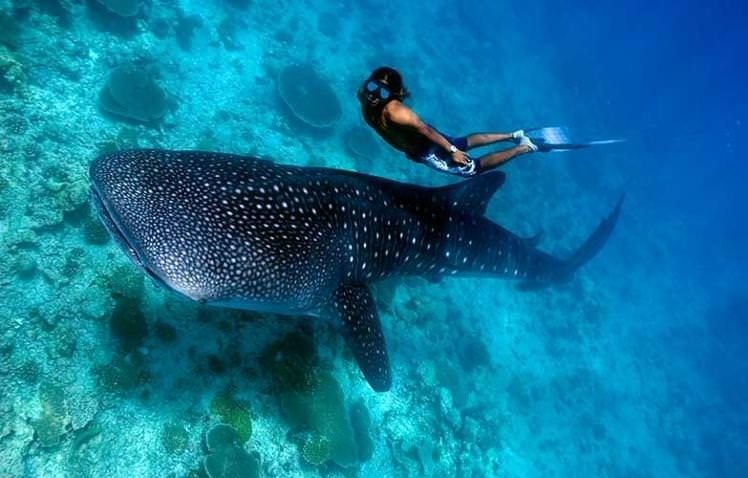
Whale sharks, Rhincodon typus, are the largest fish in the ocean. They can exceed 10 metres in length. Yet what makes this encounter extraordinary is not just size.
It is perspective.
When you enter the water beside a creature the length of a small bus, you do not feel hunted. You feel small in the best possible way. The experience is quiet, almost meditative.
They move slowly, often vertically near the surface while feeding on plankton. Sunlight filters through the water, highlighting their white spot patterns. There is no aggression. No rush. Just presence.
Unlike a reef that is always there, whale sharks are wild. You meet them on their terms. That is exactly what makes the moment powerful.
When Is the Best Time to See Whale Sharks in Indonesia?
Indonesia is vast, and whale shark patterns vary by region. That said, there is a clear window that offers the best overall combination of conditions and opportunity.
Best Overall Season: May to October
This period coincides with the dry season across much of eastern Indonesia, including Nusa Tenggara and Papua.
Why this window works well:
- More stable sea conditions
- Better overall visibility
- Peak liveaboard season
- Easier access to remote bays
Whale sharks do not migrate according to a strict calendar. Their presence depends primarily on food availability such as plankton, fish eggs, and small schooling fish.
That means sightings are never guaranteed on specific dates. However, if you want the strongest combination of favourable seas and high encounter probability, May to October is your safest choice.
Where You Have the Best Chance to Encounter Whale Sharks
Not all Indonesian destinations offer equal opportunities. If you are planning a liveaboard, especially from Komodo, these are the most relevant regions.
Saleh Bay, Sumbawa
For divers cruising out of Labuan Bajo, Saleh Bay is the most realistic location to combine Komodo diving with whale shark encounters.
Why here?
Whale sharks gather around traditional fishing platforms known as bagan. These platforms use lights at night to attract small fish. In the morning, leftover fish and plankton draw whale sharks to feed near the surface.
What you should expect:
- Early morning departures
- Primarily snorkelling encounters
- Surface-based interactions
- Close and often extended observation
If you want Komodo plus whale sharks in one itinerary, Saleh Bay is the logical choice.
Cenderawasih Bay, Papua
Cenderawasih Bay is known as one of the most consistent whale shark destinations in Indonesia.
Here, some individuals remain in the region for extended periods due to predictable food sources near fishing platforms.
However, you should consider:
- It is far from Komodo
- It usually requires a dedicated expedition liveaboard
- Logistics are more complex
If whale sharks are your primary objective and you want to maximise time around them, this region is exceptional.
Gorontalo, Sulawesi
Gorontalo offers a lesser-known but compelling option. Sightings are also linked to fishing activity.
It is less integrated with Komodo routes and better suited to specialised trips, but it remains an interesting alternative if you are looking for something more niche.
Can You Combine Whale Sharks With a Komodo Liveaboard?
Yes, and this is where careful itinerary design matters.
At La Galigo Liveaboard, the Beyond Komodo itinerary was created specifically to combine Komodo’s iconic dive sites with whale shark encounters in Saleh Bay.
This 10-day, 9-night journey typically includes:
- Around 23 dives across Komodo’s best sites
- Snorkelling sessions with whale sharks in Saleh Bay
- Manta aggregation sites
- Drift dives such as Castle Rock and Golden Passage
- Volcanic landscapes like Sangeang
- Light trekking on islands such as Satonda
Instead of choosing between Komodo’s biodiversity and whale sharks, you experience both in one continuous journey.
As a liveaboard operator, we design these routes carefully around seasons, sea conditions, and realistic wildlife patterns so you can plan with confidence rather than guesswork.
Snorkelling vs Diving With Whale Sharks
You might assume scuba diving is the superior option. In Indonesia, that is often not the case.
Why Snorkelling Often Works Better
In Saleh Bay and many other locations, whale sharks feed near the surface.
That means:
- You stay in natural light
- You are not limited by air supply
- You often enjoy longer interactions
- You can see the full body from above
Snorkelling frequently provides the closest and most photogenic perspective.
When Diving Happens
On certain expedition-style trips, you may encounter whale sharks while scuba diving in open water.
Advantages:
- Three-dimensional perspective
- Blue water backdrop
- Potential pelagic combination dives
Limitations:
- Bottom time constraints
- Whale sharks often return to the surface
- Less predictable positioning
For most Indonesian encounters, snorkelling remains the primary and most effective method.
Read More: Differences Between Snorkelling vs Diving
What the Experience Actually Feels Like
It usually begins before sunrise.
The sea is calm. The sky is deep blue. The tender boat moves quietly toward a bagan platform.
As daylight builds, someone points into the water.
A large silhouette moves vertically below the surface.
You slide into warm water with a mask and fins. The white spot pattern slowly appears beneath you. The whale shark moves unhurriedly, filtering plankton in slow, deliberate motions.
There is no engine noise. Just your breathing and the rhythm of the sea.
It is not dramatic in a loud way.
It is powerful in a quiet way.
Even if you have logged hundreds of dives, this moment stays with you.
Responsible Encounters Matter
Whale sharks are fully protected in Indonesia.
Professional liveaboard operations follow strict guidelines:
- Clear pre-encounter briefings
- No touching or chasing
- Controlled the number of guests in the water
- Safe distances from the head and tail
- No flash photography at close range
As a guest, your role is simple:
- Follow the briefing
- Do not block their path
- Keep a respectful distance
- Let the animal set the pace
Ethical tourism ensures these encounters remain possible for years to come.
Your Best Strategy for Planning
If whale sharks are high on your priority list:
- Travel between May and October
- Choose longer itineraries
- Select routes that include Saleh Bay
- Allow flexibility for wildlife conditions
If Komodo is your primary goal and whale sharks are a bonus, a dry season liveaboard still offers the strongest balance.
Final Thoughts
Swimming beside the largest fish in the ocean is not about adrenaline.
It is about scale, silence, and perspective.
Indonesia offers one of the most accessible ways to experience this encounter, especially when you combine Komodo’s world-class diving with the surface feeding behaviour of whale sharks in Saleh Bay.
With proper timing, realistic expectations, and a thoughtfully designed liveaboard itinerary, your chances are strong.
And when you finally find yourself floating above that enormous spotted silhouette in the morning light, you will understand why this experience sits so high on your personal list.
If you are ready to plan it properly, choose the season wisely, and combine it with some of the best diving on the planet, Indonesia is waiting.
Frequently Asked Questions
1. When is the best time to see whale sharks in Indonesia?
The best time to see whale sharks in Indonesia is between May and October, when sea conditions are calmer, visibility is better, and encounter chances are generally higher.
2. Where can you see whale sharks in Indonesia?
Top locations include:
- Saleh Bay
- Cenderawasih Bay
- Gorontalo
Each location offers different levels of accessibility and encounter consistency.
3. Can you see whale sharks in Komodo?
Whale sharks are not commonly found directly in Komodo National Park, but you can combine Komodo diving with whale shark encounters in nearby Saleh Bay on extended liveaboard itineraries.
4. Can you combine whale shark trips with a liveaboard in Indonesia?
Yes, many itineraries combine whale shark encounters with diving trips, especially routes linking Komodo with Saleh Bay.
5. Why are whale sharks found near fishing platforms?
Whale sharks are attracted to fishing platforms (bagan) because leftover fish and plankton accumulate there, creating an easy feeding opportunity.
6. Is it better to snorkel or dive with whale sharks?
In most Indonesian locations, snorkelling is often better because whale sharks feed near the surface, allowing longer and closer interactions without air limitations.
7. How big are whale sharks?
Whale sharks (Whale Shark) are the largest fish in the ocean and can grow over 10 metres in length.
8. Are whale sharks dangerous to humans?
No, whale sharks are completely harmless. They are gentle filter feeders that eat plankton and small fish.