
If you are searching for a liveaboard in Sumbawa, you will likely notice immediately that pricing is not always fully transparent.
Some operators advertise “all-inclusive”, while others only reveal additional costs such as marine park fees, Nitrox, or equipment rental at the final stage of booking.
This often leads to the same question:
Are Sumbawa liveaboards only for high-end travellers?
What kind of budget should you realistically prepare?
This article will help you understand the full cost structure of Sumbawa liveaboards, from pricing factors and vessel categories to frequently overlooked additional expenses.
With this information, you can choose a trip that fits your budget without compromising your diving experience.
Sumbawa Is an Attractive Liveaboard Destination
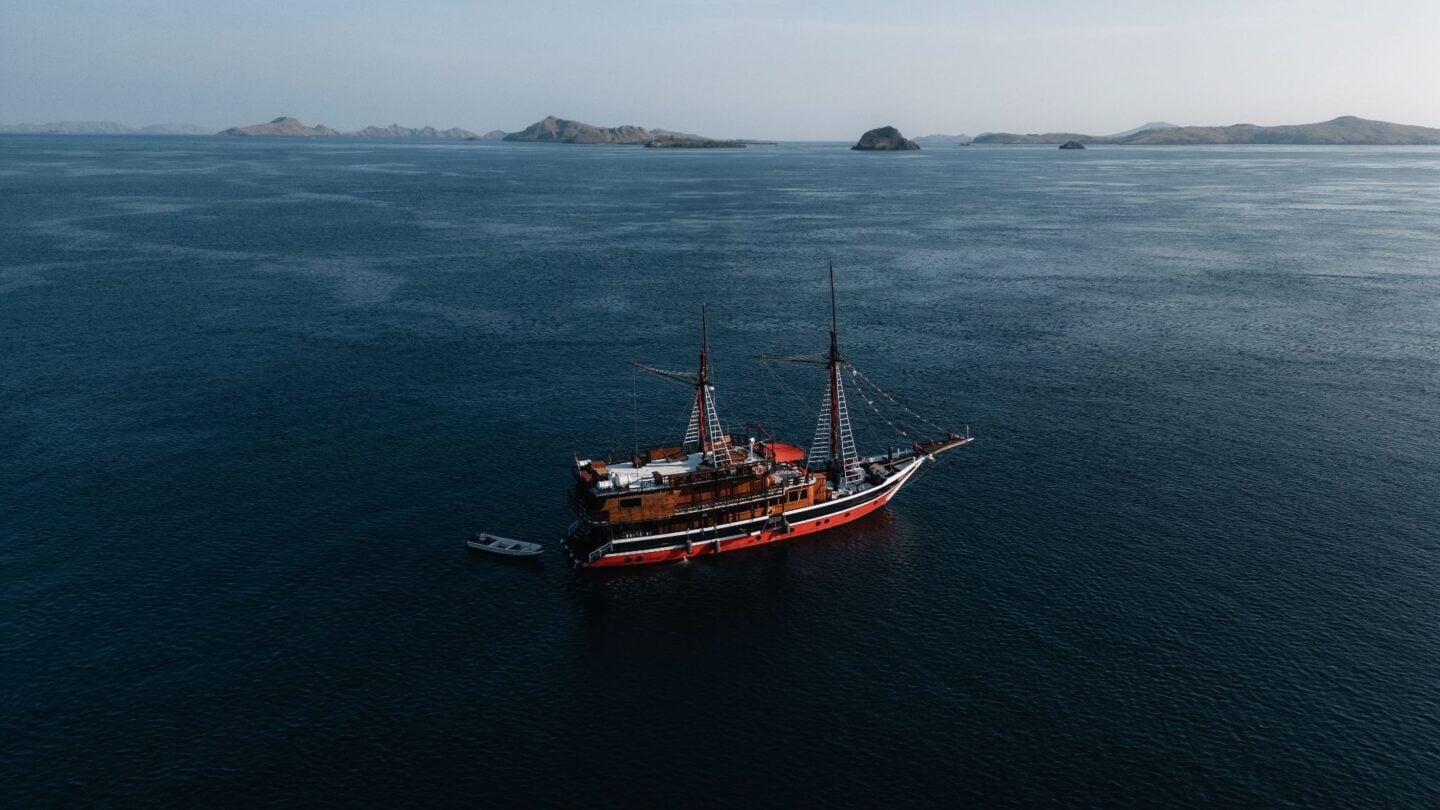
Sumbawa lies on a strategic route between Komodo and Alor, with distinctive marine characteristics: dynamic currents, dramatic underwater topography, and high marine density.
Some liveaboard itineraries combine:
- North Sumbawa
- Saleh Bay, seasonal whale sharks
- Moyo Island
- Satonda
- Tambora coastline
In a single trip, you can experience a combination of big fish encounters, macro diving, and volcanic seascapes, something rarely found in other destinations.
Factors That Influence Sumbawa Liveaboard Prices
1) Travel Season
The concept of supply and demand strongly applies.
Peak season, generally April to November:
- Calmer seas
- More stable visibility
- Whale shark season in Saleh Bay during certain periods
- Higher demand, leading to higher prices
Shoulder or low season:
- Lower prices
- Greater cabin availability
- More dynamic sea conditions
2) Trip Duration
Sumbawa liveaboards typically run:
- 4 days and 3 nights, short exploration
- 7 days and 6 nights, full route
- 8 to 10 days, extended crossing trips
The longer the trip:
- Fuel consumption increases
- Food logistics expand
- Crew operational costs rise
This explains why longer trips can cost thousands of dollars more than shorter itineraries.
3) Cabin Type
Cabin selection significantly affects pricing.
Common tiers include:
- Shared cabin, budget
- Twin or double ensuite
- Master suite
- Balcony suite
Price differences can range from 500 to over 2,000 US dollars solely due to cabin upgrades.
4) Inclusions
Not all liveaboards include the same components.
Differences may involve:
- Nitrox
- Alcohol or soft drinks
- Airport transfers
- Land excursions
- Wi-Fi
- Photography workshops
Price comparisons should always consider what is included.
Read More: What is Nitrox Diving? Pros and Cons of Enriched Air
Cost Comparison: Sumbawa Liveaboards 2026/2027
1) Budget Liveaboards
Estimated range: 1,400 to 2,400 US dollars per trip
Budget boats provide access to Sumbawa for a wider range of divers, and this accessibility is their strength.
What you receive:
- Basic cabin, often shared bathroom
- Three to four dives per day
- Three meals daily
- Dive guide
- Tanks and weights
Characteristics:
- Smaller cabins
- Limited air conditioning or specific operating hours
- Simple but adequate meals
- Narrower dive deck
Nitrox is usually not included and may not be available.
Suitable for:
- Backpacker divers
- Underwater-focused travellers
- Photographers prioritising dive sites over onboard comfort
2) Mid-Range Liveaboards
Estimated range: 2,800 to 4,200 US dollars per trip
This is the most popular category, offering a balance between comfort and value.
What you receive:
- Ensuite cabin
- Twenty-four-hour air conditioning
- More varied dining
- Spacious dive deck
- Dedicated camera table
- Nitrox is often included or optional
Service is typically more polished, with a lower guide-to-diver ratio.
Suitable for:
- Serious recreational divers
- Underwater photographers
- Diving couples
- Travellers seeking comfort while maintaining a realistic budget
3) Luxury Liveaboards
Estimated range: 4,800 to 7,500 US dollars or more per trip
Luxury liveaboards transform diving into a high-end hospitality experience.
What you receive:
- Spacious suite cabins
- Balcony or sea-view windows
- Premium mattresses and linens
- Fine dining menus
- Wine selection
- Spa or massage services
- Optional private dive guide
Some vessels also offer:
- Photography workshops
- Drone footage
- Kayaks or paddleboards
- Beach dinner set-ups
Suitable for:
- Honeymoon divers
- VIP travellers
- Professional photographers
- Divers seeking an all-out experience
Sumbawa Liveaboard Price Comparison Table
| Category | Price/ Day | Est. 10D9N Trip | General Inclusions |
| Budget | USD 340 – 350 | USD 3,400 – 3,500 | Diving, meals, basic cabin |
| Mid-Range | USD 400 – 470 | USD 4,000 – 4,700 | Diving, ensuite cabin, optional Nitrox |
| Luxury | USD 480 – 750 | USD 4,800 – 7,500 | Suite cabins, fine dining, premium service |
Additional Costs to Consider
Many divers focus only on the package price, and then are surprised when the total cost increases.
Here are common additional expenses.
1) Marine Park and Conservation Fees
Some Sumbawa dive areas fall within local conservation zones.
Fees support:
- Reef protection
- Marine patrol
- Community development
- Research and conservation programmes
Estimated range:
100 to 250 US dollars per trip, depending on itinerary
Usually paid onboard and handled by the operator.
Read Also: Supporting Marine Life Conservation, Why Should I Do it?
2) Diving Insurance and Travel Insurance
Dive insurance is essential and covers:
- Hyperbaric treatment
- Evacuation
- Diving accidents
Many operators require proof of insurance before boarding.
Travel insurance is also recommended for:
- Flight delays
- Trip cancellations
- Non-diving medical emergencies
3) Diving Equipment Rental
If you do not bring personal gear, typical estimates are:
- Full set: 35 to 50 US dollars per day
- BCD: 10 to 15 US dollars
- Regulator: 10 to 15 US dollars
- Dive computer: 8 to 12 US dollars
Read Also: Diving Regulators: How They Work, The Types and How to Choose Them
Bringing your own gear can save money, but consider:
- Baggage fees
- Repacking during transit
- Additional weight charges on domestic flights
4) Nitrox Charges
Nitrox provides:
- Longer bottom time
- Greater safety margin
- Reduced fatigue
Typical pricing:
- 10 to 25 US dollars per day
- Or 100 to 150 US dollars per trip
Mid-range and luxury vessels sometimes include it.
5) Flights and Transfers
Access to Sumbawa typically involves:
- Jakarta to Bima
- Bali to Bima
- Lombok to Sumbawa Besar
Estimated return domestic flights: 180 to 350 US dollars.
Airport to harbour transfers may or may not be included. Always confirm before booking.
6) Crew Tips and Gratuities
Liveaboard crew work long hours, including:
- Dive guides
- Captain
- Engineer
- Chef
- Deck crew
A common global guideline is 5-10% of the trip price. Tips are usually pooled and distributed equally unless you prefer to give personal gratuities.
Is a Sumbawa Liveaboard Worth It?
The short answer is yes, especially if you value exploration.
1) Access to Remote Dive Sites
Many of Sumbawa’s best sites:
- Located far from established resort infrastructure
- Cannot be reached by a day boat
- Require overnight sailing
Liveaboards open access to areas largely untouched by mass tourism.
2) Diving Variety in One Trip
Within a single itinerary, you may experience:
- Seamount shark action
- Whale shark encounters
- Muck diving
- Volcanic reefs
- Wall and drift dives
Few destinations offer such concentrated diversity.
READ ALSO: What is Muck Diving? Best Muck Diving in Indonesia
3) Greater Diving Efficiency
Liveaboards allow:
- Three to four dives per day
- Sunrise dives
- Night dives
- No long commutes
More time underwater, less time in transit.
4) Long-Term Value Experience
Sumbawa is not typically visited annually.
Due to its relatively niche accessibility, trips are often:
- Exploration journeys
- Bucket-list diving
- Whale shark missions
The cost often feels more like an investment in experience than a simple holiday expense.
Why Choose La Galigo Liveaboard
La Galigo brings the same philosophy to every Sumbawa sailing: comfort, space, and a personal approach, while maintaining pricing in the sweet spot between mid-range and luxury. For divers, this translates into an intimate liveaboard experience with a maximum of just 14 guests across seven cabins. Even on extended routes such as the 10-day / 9-night Beyond Komodo – Whale Shark Special itinerary, this limited capacity helps preserve a calm onboard atmosphere and well-managed dive operations.
With a typical guide-to-diver ratio of around 1:4–5, dive groups remain small, allowing for attentive supervision, flexible pacing, and a more relaxed underwater experience. Across the journey, guests can expect approximately 23 dives, making the trip a comprehensive exploration rather than a rushed schedule.
In destinations such as Sumbawa, where many dive sites remain remote and rarely visited, onboard comfort is not merely about lifestyle. It supports proper recovery between dives, quality rest, and physical readiness for intensive exploration. Cabins are designed to be spacious and breathable, with ample storage for active divers and underwater photographers. Social and dining areas are generous, allowing guests to unwind without feeling crowded, even at full occupancy.
Operationally, Sumbawa trips are led by experienced dive guides who understand local marine conditions, from dynamic seamount currents and schooling fish behaviour to safe interaction protocols during whale shark encounters in Saleh Bay. Itinerary routing is planned not only to visit sites, but to optimise timing around currents, visibility, and encounter opportunities.
In other words, you do not simply travel to Sumbawa. You explore it at a curated rhythm. If you are seeking a Sumbawa liveaboard that balances comfort, safety, and value, La Galigo is designed precisely at that intersection.
Tips to Save on a Sumbawa Liveaboard
- Book early
Early bird pricing can save 200 to 600 US dollars. - Choose shoulder season
Lower prices and fewer crowds. - Bring your own gear
Save hundreds on rental. - Share a cabin
Private cabin upgrades can be expensive. - Monitor operator promotions
Last-minute deals occasionally appear if cabins remain unsold.
Final Thoughts
Sumbawa liveaboards offer a wide price range, from economical exploration trips to luxury sailings with premium amenities.
In summary:
- Budget focuses on diving with minimal comfort.
- Mid-range offers an ideal balance between cost and comfort.
- Luxury combines premium hospitality with exceptional diving.
The key is not choosing the most expensive option, but the one aligned with:
- Your travel style
- Your comfort priorities
- Your diving goals
Ultimately, Sumbawa is not only about cost. It is about access to wild seas, uncrowded sites, and encounters that feel deeply personal.
With proper planning, this can become one of the most memorable liveaboard experiences in Indonesia.
FAQ
Is the marine park fee mandatory?
Most conservation areas require a mandatory fee, which is either included in your package or collected onboard.
Are flights included?
No. Domestic flights are almost always separate.
Is Nitrox always included?
No. Budget boats rarely include it, mid-range sometimes, and luxury often does.
Can non-divers join?
Yes. They usually receive a discounted rate and can join snorkelling or excursions.
When is the cheapest time to visit Sumbawa?
Shoulder season at the beginning or end of the diving season.
What is the ideal trip duration?
Seven to eight days for optimal exploration.
Are whale sharks always present?
Not always, but Saleh Bay has relatively consistent seasonal aggregations.
Should you bring your own dive computer?
Recommended. Rentals exist but are limited.
Is Wi-Fi available?
Budget vessels rarely offer it.
Mid-range sometimes provide Starlink or limited access.
Luxury vessels offer more stable connections, though not as reliable as land-based internet.
When should you book?
Six to ten months before departure, especially for peak season.