The world of scuba diving continues to evolve, not only in terms of destinations but also in how divers carry their equipment underwater. In the past, almost all divers used a backmount configuration, with tanks positioned on the back. Today, more divers are switching to a configuration that feels more flexible and ergonomic: sidemount diving.
Originally associated with cave and technical divers, sidemount is no longer exclusive to extreme environments. Many recreational divers, travel divers, and even underwater photographers are adopting it for its comfort and efficiency underwater.
The question is:
Is sidemount diving truly right for you?
This article will help you understand sidemount diving, from its benefits and equipment setup to the diver profiles best suited to it.
The Growing Trend of Sidemount
Over the past decade, sidemount has experienced significant popularity. Previously seen mainly in cave diving or technical diving courses, sidemount is now increasingly visible on:
- Liveaboard trips
- Wreck diving expeditions
- Recreational fun dives
- Even advanced non-technical courses
The main reason is simple: divers are seeking configurations that are more comfortable, modular, and efficient.
In addition, many instructors and dive centres now offer dedicated sidemount courses. This means access to training is easier and no longer limited to the technical diving community.
Sidemount is no longer viewed as an advanced-only configuration. It is increasingly considered an alternative setup that can be tailored to individual diving styles.
What Is Sidemount Diving?
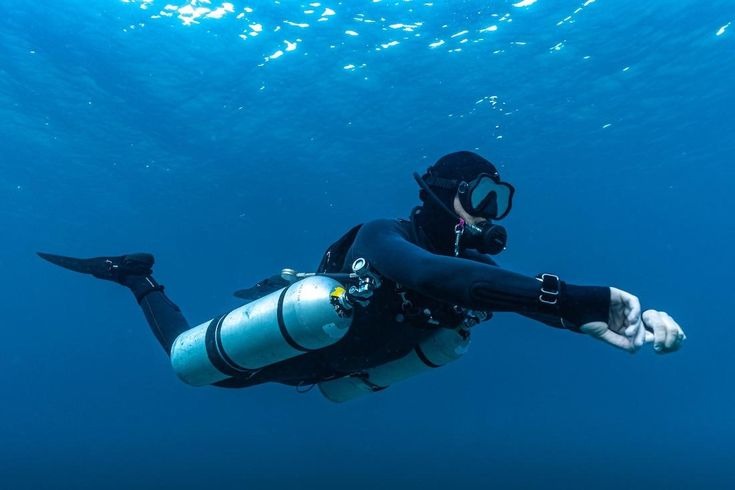
Sidemount diving is a scuba configuration in which tanks are mounted on the left and right sides of the diver’s body, rather than on the back.
Tanks are typically attached using:
- Bolt snaps
- A bungee system
- A dedicated sidemount harness
This positioning keeps the tanks aligned with the body rather than protruding behind it.
The Difference from Backmount
To understand sidemount, the simplest approach is to compare it with the most common configuration: backmount.
Backmount:
- One or two tanks on the back
- Permanently attached to the BCD
- Bulkier profile
- Valves are difficult to reach independently
Sidemount:
- Tanks positioned at the sides of the body
- Can be clipped and unclipped in the water
- Slimmer profile
- Valves are easily accessible
This difference is not merely aesthetic. It directly affects:
- Body stability
- Water resistance
- Energy consumption
- Gas management
Key Benefits of Sidemount Diving
These are the primary reasons many divers transition to sidemount. Let us examine them one by one, starting with what is most noticeable in the water.
1. Better Trim and Buoyancy Control
Trim refers to body position in the water, ideally horizontal rather than head-up or feet-down.
Sidemount improves trim because:
- Tank weight is distributed along the sides
- It does not pull the body backwards
- Ballast distribution is more flexible
The result:
- A more streamlined position
- More efficient finning
- Reduced sediment disturbance
For photographers and videographers, stable trim is crucial for accurate framing.
2. Streamlined Profile
Because the tanks align with the body, the diver’s profile becomes slimmer.
The advantages include:
- Reduced water resistance
- Smoother movement
- Lower energy consumption
- Minimal drag
In strong currents, this difference becomes very noticeable. Many sidemount divers feel lighter and more agile than backmount divers.
3. Redundant Gas Supply
Most sidemount configurations use two independent tanks.
This means:
- Two regulators
- Two air sources
- Two separate systems
If one regulator fails, the diver still has a full backup on the other side.
This redundancy is one of the main reasons sidemount is popular in technical diving. It also provides additional reassurance for recreational divers.
4. Comfort and Back Relief
This is one of the benefits that is felt even before entering the water.
Backmount places the entire load along the spine. Sidemount distributes it along the sides of the body.
The impact:
- More comfortable while walking
- Reduced strain on the back
- Easier for divers with back pain
Many senior divers, or those with prior back injuries, switch to sidemount for this reason.
5. Flexibility and Modularity
Sidemount is highly modular.
For example:
- You can use one or two tanks
- It can be adjusted to different body sizes
- Tanks can be removed easily in the water
- Practical for small boats
For zodiac boarding, narrow ladders, or beach entries, this flexibility is especially helpful.
Equipment Setup Overview
As a non-diver, you do not need to understand technical hose routing. It is enough to understand the main components.
Harness
The harness is the strap system that supports the entire configuration.
Its functions:
- Holds the tanks in position
- Supports the wing
- Provides attachment points such as clips and D-rings
Sidemount harnesses are typically minimalist, without the thick padding often found in recreational BCDs.
Wing or BCD
The wing is the air bladder positioned behind the body.
Its functions:
- Controls buoyancy
- Maintains horizontal trim
- Provides lift at the surface
Sidemount wings are slimmer and elongated, following the line of the spine.
Tank Placement
Tanks are mounted on the left and right sides.
The ideal position:
- Parallel to the body
- Valves near the armpits
- Tank bottoms aligned with the thighs
This positioning keeps the diver streamlined and allows easy access to the valves.
Regulators
Each tank has its own regulator set:
- Primary regulator
- Secondary regulator
- SPG, or pressure gauge
Divers alternate breathing from the left and right tanks to balance gas consumption.
Read More: Diving Regulators: How They Work, The Types and How to Choose Them
Who Is Sidemount Suitable For?
Sidemount is not limited to one type of diver. Below are the profiles that benefit most.
1. Technical Divers
These were the original users of sidemount.
Their needs include:
- Gas redundancy
- Additional stage tanks
- Cave or wreck penetration
Sidemount provides independent valve access and advanced gas management capabilities.
2. Travel and Liveaboard Divers
Travel divers appreciate sidemount because:
- It is easier to board a Zodiac
- There is no need to lift heavy tanks onto the back
- Water entries are more flexible
On liveaboards with multiple dives per day, this added comfort becomes significantly noticeable.
3. Wreck Divers
Shipwrecks often feature narrow corridors and confined spaces.
Sidemount allows:
- A slimmer profile
- Easier passage through tight gaps
- Tanks to be removed if necessary
This increases safety during penetration dives.
Read More: What is Wreck Diving?The Types of Wrecks
4. Underwater Photographers and Videographers
Stability is everything in underwater imaging.
Advantages of sidemount:
- Stable trim
- Smoother frog kick
- Reduced sediment disturbance
The result is preserved visibility and cleaner footage.
Read More: 6 Underwater Wide Angle Photography Techniques
Sidemount Diving in Raja Ampat and Komodo
For many divers, Raja Ampat and Komodo are two of the ultimate bucket list destinations in Indonesia, and even globally. Both offer dynamic conditions, including strong currents, dramatic underwater topography, and high dive frequency during a single liveaboard journey.
In this context, sidemount diving can be highly advantageous, though it remains situational rather than an absolute necessity.
In Komodo, for example, many dive sites are known for active to strong currents. Drift dives and negative entries are common procedures. A more streamlined sidemount configuration helps reduce water resistance and allows divers to move more efficiently with the current. A more horizontal body position also makes fin control easier, with less energy expenditure.
Meanwhile, in Raja Ampat, diving conditions often combine reefs, walls, and bommies with exceptionally high marine life density. In such environments, trim stability becomes extremely valuable, particularly for underwater photographers and videographers. Sidemount allows divers to maintain more precise positioning without stirring sediment or disturbing the surrounding ecosystem.
From an operational liveaboard perspective, sidemount also offers additional comfort. Many dives are conducted from zodiacs or tenders, and the ability to clip and unclip tanks in the water helps reduce physical strain. On itineraries with three to four dives per day over several days, this energy efficiency becomes significant.
However, it is important to note that most operators in Raja Ampat and Komodo still use backmount as the standard configuration. Sidemount support, such as rigging, bolt snaps, and specific tank sizes, may vary between liveaboards and dive centres.
Therefore, divers planning to use sidemount in these destinations are advised to:
- Inform the operator well in advance of the trip
- Confirm tank availability and suitable attachment points
- Bring personal sidemount accessories if necessary
Overall, sidemount can work extremely well in both Raja Ampat and Komodo, particularly for divers already familiar with the configuration. However, recreational divers who are comfortable with backmount can fully enjoy both destinations without having to switch configurations.
Is It Worth Learning?
Now the most important question:
Is sidemount worth learning?
The answer is situational.
1. Situational Value
Sidemount is highly worthwhile if you:
- Frequently dive wrecks
- Enter overhead environments
- Practise technical diving
- Carry stage tanks
- Dive in strong currents
It may be less of a priority if you:
- Only dive occasionally for leisure
- Primarily conduct shallow dives
- Do not require gas redundancy
2. Training Required
Sidemount is not simply about moving tanks from the back to the sides.
You need to learn:
- Gas switching
- Trim adjustment
- Clip positioning
- Hose routing
- Emergency drills
For this reason, there is a dedicated course known as the Sidemount Diver Speciality.
3. Depends on Dive Style
The best configuration always depends on your diving style.
Choose sidemount if you:
- Prefer modular configurations
- Want high flexibility
- Focus on trim and efficiency
- Are oriented towards technical or wreck diving
Stay with backmount if you:
- Are a casual recreational diver
- Dive infrequently
- Do not want additional training
- Feel more comfortable with the conventional setup
There is no absolute superior option. It is simply a matter of suitability.
Final Thoughts
Sidemount diving is no longer a configuration reserved solely for cave divers. It has evolved into a serious alternative for many types of divers, from technical explorers to travel divers prioritising comfort.
Its advantages are clear:
- More stable trim
- Slimmer profile
- Gas redundancy
- Better back comfort
- Flexibility in various situations
However, it also comes with consequences:
- Requires specific training
- More complex setup
- Not always necessary for every dive
Ultimately, the decision to learn sidemount is not about following a trend, but about your needs and diving style.
If you wish to experience how sidemount performs in real conditions, including dynamic currents and multi-dive schedules, a liveaboard trip can be an ideal opportunity.
Experienced operators such as La Galigo Liveaboard, operating in Raja Ampat and Komodo, understand the needs of divers using various configurations, including sidemount. With proper planning and early communication, you can ensure your setup runs safely and comfortably throughout the journey.
Whether you use backmount or sidemount, the most important factor is choosing an operator that prioritises safety, clear briefings, and professional technical support, allowing you to focus entirely on the diving experience itself.
FAQ
1. What is sidemount diving?
Sidemount diving is a scuba configuration in which tanks are mounted on the left and right sides of the body rather than on the back. Originally used in cave diving, it is now popular in recreational and travel diving because it offers improved trim, a slimmer profile, and greater flexibility underwater.
2. What is the difference between sidemount and backmount?
The primary difference lies in tank position. Backmount places tanks on the back, while sidemount positions them along the sides of the body. Sidemount is more streamlined, provides easier valve access, and offers gas redundancy. Backmount is simpler and more commonly used by recreational divers.
3. What are the main advantages of sidemount diving?
Key advantages include improved trim and buoyancy stability, a slimmer body profile, redundant gas supply from two independent tanks, greater back comfort, and flexibility during entries from zodiacs or narrow ladders.
4. Is sidemount safer than backmount?
Sidemount is not automatically safer, but it offers gas redundancy that can increase safety margins in certain situations. Overall safety depends on training, diver experience, and whether the configuration suits the diving environment.
5. Can beginners learn sidemount diving?
Beginners can take a sidemount course, but it is usually recommended to gain backmount experience first. Sidemount involves a more complex setup and requires solid gas management and trim control.
6. Why is sidemount popular in technical diving?
Technical divers require gas redundancy, independent valve access, and flexibility to carry stage tanks. Sidemount meets these needs while facilitating penetration in confined spaces such as caves and wrecks.
7. Is sidemount suitable for liveaboard diving?
Yes, sidemount works well on liveaboards, particularly with multi-dive schedules. The ability to clip tanks in the water and distribute weight comfortably helps reduce physical fatigue during the trip.
8. Is sidemount good for diving in strong currents?
The streamlined profile of sidemount reduces drag, allowing divers to move more efficiently in currents. Stable horizontal trim also supports better fin control during drift dives.
9. How many tanks are used in sidemount?
Typically, sidemount uses two independent tanks, each with its own regulator and pressure gauge. In certain conditions, it can also be configured with a single tank.
10. Is sidemount comfortable for divers with back problems?
Yes. Because tank weight is distributed along the sides of the body, pressure on the spine is reduced. Many divers with a history of back pain switch to sidemount for long-term comfort.
11. Do all dive centres support sidemount?
Not all. Most operators use backmount as the standard configuration. Sidemount divers should inform operators in advance regarding rigging, bolt snaps, and appropriate tank sizes.
12. Is sidemount suitable for underwater photography?
Yes. Stable trim and a slim profile help divers maintain position without stirring sediment, ensuring better visibility and cleaner framing for photographs or video.