
If you have never been on a liveaboard before, feeling unsure is completely normal.
You might be confident underwater, but spending several days at sea? Sleeping on a boat? Diving multiple times a day? That can feel unfamiliar.
What usually holds you back is not your diving ability. It’s not being able to clearly picture what life on board is actually like. How structured are the days? Will you feel exhausted? Is it comfortable? Will you have privacy? How does everything work?
A liveaboard simply means you stay on the vessel for the duration of the trip. You eat, sleep, relax, and dive from the same place. There’s no daily packing, no long transfers to dive sites, and no rushing back to shore between dives.
In this guide, you’ll get a clear and realistic picture of what your first liveaboard experience is really like, from the daily rhythm and cabin comfort to diving logistics, electricity, and internet access.
So you can decide with confidence.
Life Onboard: What Your Days Actually Look Like
Once you understand the flow, a liveaboard feels far more structured. On La Galigo, the daily rhythm is designed to be efficient, yet flexible and comfortable to follow.
Typical Dive Schedule
Although exact timing varies depending on itinerary and sea conditions, the general pattern remains consistent.
On La Galigo, you can expect:
- Up to three to four dives per day
- The possibility of a night dive at selected sites and suitable conditions
Each dive begins with a thorough briefing covering:
- Site conditions
- Current strength
- Entry and exit points
- Safety procedures
This ensures the entire process feels organised and unhurried.
It is important to understand that the schedule is not compulsory.
You are free to:
- Join all dives
- Skip a session
- Omit the night dive if you prefer to rest
The rhythm is designed to maximise experience, not to pressure guests.
Meals and Surface Intervals
One of the most helpful aspects of maintaining energy on a liveaboard is the consistent structure of meals and surface intervals.
On La Galigo, dining is arranged around the daily diving rhythm.
Meal Frequency and Structure
- Four main meals per day
- Snacks after dives
In practice, this means that after almost every dive, either a full meal or light refreshments are prepared.
Repeated diving throughout the day requires calories and hydration. This meal structure helps maintain stable energy levels.
Cuisine Variety
Meals are served buffet-style and include:
- Western cuisine
- Asian dishes
- Vegetarian options
Additionally:
- Vegan meals are available with prior notice
- Dietary restrictions and allergies can be accommodated
The focus is not only on quantity, but on variety and balanced nutrition throughout the trip.
Snacks and Self-Service Refreshments
Outside main meal times, you will have access to:
- Post-dive snacks
- Self-service drinks
- Light refreshments available throughout the day
These are typically enjoyed during surface intervals, when you:
- Rehydrate
- Restore energy
- Relax before the next dive
Surface Interval Experience
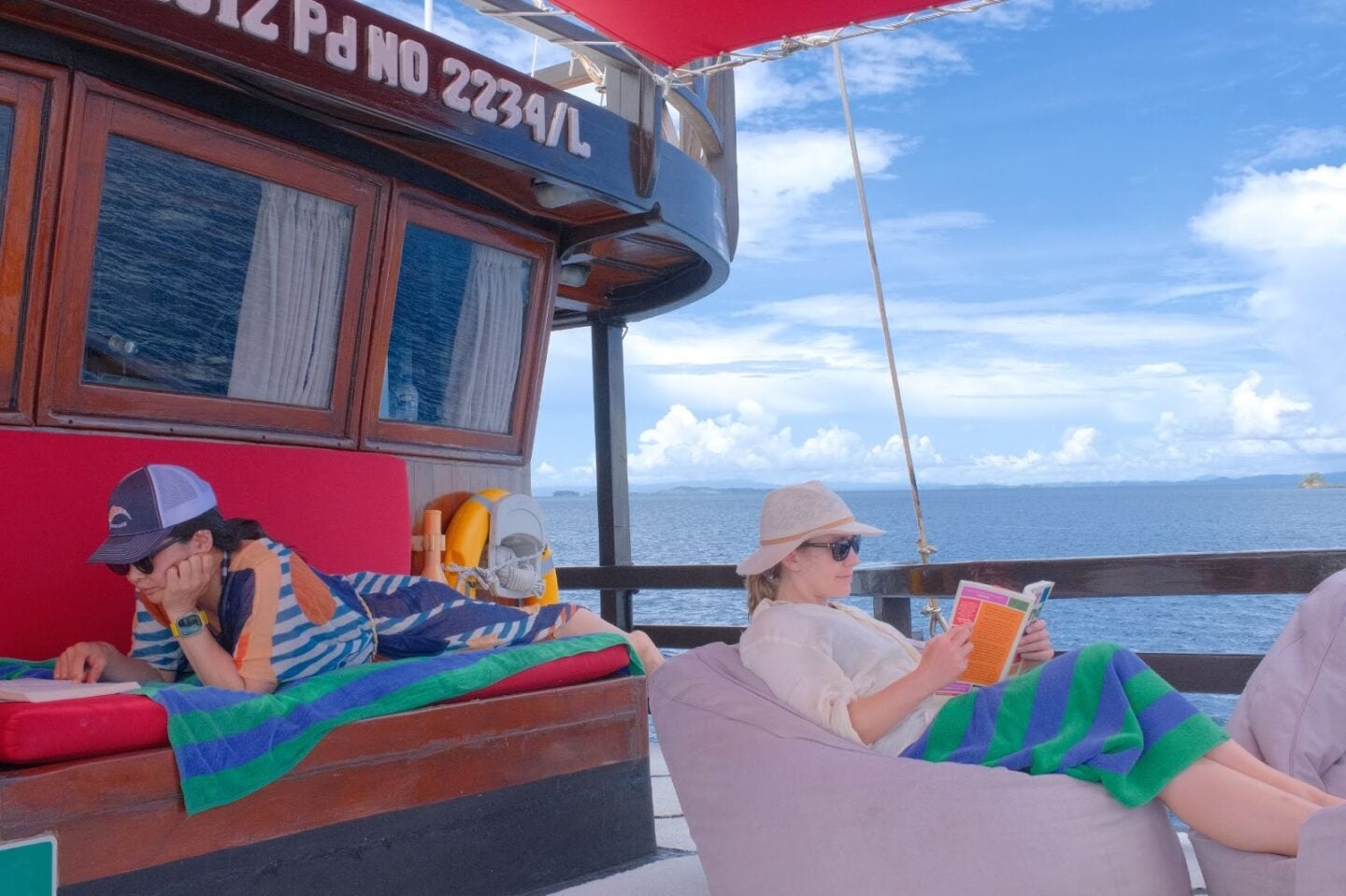
On a liveaboard, a surface interval is more than simply waiting between dives.
On La Galigo, this time is usually spent:
- Dining in the restaurant area
- Relaxing in the lounge
- Sitting on the sun deck, enjoying the scenery
- Reviewing photos or adjusting camera setups
- Resting in the cabin
The restaurant, bar, and sun deck areas are designed as both social spaces and recovery zones between dives.
The daily rhythm often feels like: Dive, Eat, Rest, Dive, Eat, Rest.
Liveaboard operations are highly aware of divers’ energy needs, so food and refreshments are almost always available.
Is It Exhausting?
The short answer is no.
Although up to three or four dives per day are available, you are never required to join them all.
Many of our guests choose to:
- Join two to three dives per day
- Skip the night dive
- Take additional rest sessions
The pace is flexible and tailored to your comfort level. The crew are accustomed to varying energy levels, and there is no pressure to participate in every dive.
Cabin Comfort and Living Space
Cabin comfort on modern liveaboards such as La Galigo is taken seriously. The crew understands that you need genuine rest after multiple dives per day.
The vessel interior combines solid materials such as ironwood for structural elements and teak for interior finishes. In addition to providing durability for long-distance sailing, these materials create a warm and refined atmosphere. The feeling is closer to a boutique accommodation space than a simple boat compartment.
Cabin Types and Bed Setup
La Galigo offers several cabin categories, depending on your needs:
- Deluxe Cabin, approximately 12 square metres, accommodating two guests, located on the lower deck, typically more stable if you are more sensitive to seasickness
- Master Cabin, approximately 14 square metres, located on the upper deck, offering increased privacy and sunrise views
- Suite Cabin, approximately 22 square metres, the most spacious option, including a lounge area and private balcony
Each cabin is equipped with an American spring mattress, available in double or twin configuration, designed to ensure quality sleep despite an active diving schedule.
Cabins provide sufficient space to:
- Rest comfortably
- Change clothing
- Store personal belongings
Air Conditioning and Ventilation
Each cabin includes:
- Air conditioning
- Individual temperature control
- Adequate ventilation
This allows you to adjust cabin temperature to their personal preference, especially important after dives when the body needs recovery in a cool, dry environment.
Soundproofing and Sleep Comfort
On La Galigo, the engine area is isolated from your cabins and fitted with sound-reduction systems to minimise noise.
As a result, you can rest comfortably, even when the vessel is repositioning overnight.
Private Bathrooms
All cabins on La Galigo feature ensuite bathrooms, eliminating the need for shared facilities.
Amenities include:
- Hot freshwater shower
- Seated toilet
- Wash basin
- Sufficiently spacious shower area
This is one of the most significant comfort factors during a liveaboard experience.
Natural Light and Sea Views
Each cabin is designed to allow natural light through windows facing the sea or nearby islands. This design makes cabins feel brighter, more spacious, and less enclosed. This is particularly reassuring for you if you are not accustomed to staying on board vessels.
Storage and In-Cabin Amenities
To support multi-day stays, cabins also include:
- Personal storage or wardrobe space
- Universal charging points
- Bath and dive towels
- Complimentary toiletries
- Full linen
These details will help you feel settled rather than in transit.
In simple terms, from a comfort perspective, staying on La Galigo feels far closer to a floating hotel than an expedition vessel.
Packing for a Liveaboard: What You Actually Need
Clothing: Keep It Simple
The most commonly worn items are:
- Casual T-shirts
- Shorts
- Swimwear
- A light hoodie or windbreaker
Formal outfits are rarely required.
Personal Essentials
Items recommended to bring:
- Reef-safe sunscreen
- Personal toiletries
- A small dry bag
A dry bag is particularly useful for:
- Compact cameras
- Sunscreen
- Your phone during the zodiac transfers
Read More : 10 Tips for Packing and Getting Ready for a Dive Trip
Health and Comfort Items
Strongly recommended:
- Seasickness medication
- Personal medication
- Vitamins or electrolytes
As you will be diving for several consecutive days, maintaining stamina is important.
Travel Documents and Small Essentials
Do not forget:
- Logbook
- Diving certification
- Insurance documents, if applicable
- ID or passport
Seasickness
Who Usually Experiences Seasickness?
Those most susceptible are typically:
- Guests who rarely travel by boat
- Individuals sensitive to motion sickness
- Those who have had insufficient rest before the trip
Interestingly, many divers who initially worry about seasickness often find they adapt without issue.
When It Typically Occurs
If seasickness does occur, it usually happens:
- On the first day
- Occasionally, on the second day
This is typically during the body’s adjustment to wave movement.
Prevention Tips
Some preventive measures include:
- Take seasickness medication before departure
- Choose a midship cabin, which is generally more stable
- Look at the horizon if nausea begins
- Avoid prolonged phone use while feeling unwell
What If You Feel Unwell During the Trip?
The crew are accustomed to assisting if you are having seasickness.
Common recommendations include:
- Resting
- Staying well hydrated
- Skipping a dive temporarily
The good news is that most divers adapt after the first few days.
Power and Charging Onboard
Charging Stations and Cabin Outlets
Available facilities include:
- Power outlets inside cabins
- Charging stations in common areas
Camera and Dive Gear Charging Areas
There is a dedicated area for charging:
- Cameras
- Strobes
- Video lights
This arrangement keeps the process safer and more organised.
Read More: How to Make Sure your Underwater Camera Housing Doesn’t Flood
Power Availability Hours
- Electricity is available for most of the day
- It may be limited during certain sailing periods
What You Should Bring
It is recommended to bring:
- A universal travel adapter
- A small power strip
Setting expectations is important. Power supply is sufficient for general needs and camera equipment, but sensible power management is still required.
Internet and Connectivity at Sea
Wi-Fi is available onboard via the Starlink network. On vessels equipped with Starlink technology, connectivity is significantly more stable compared to earlier generations of liveaboards.
This allows guests to remain connected during the journey, whether for messaging, checking emails, or light browsing, particularly when within optimal coverage areas.
Read More: Internet in Komodo: Staying Connected in the Middle of Nowhere
Diving Operations: How It Actually Works
Common questions often include:
Do I need to set up my gear for every dive?
Is transferring to small boats complicated?
Do I need to bring full equipment?
On a liveaboard such as La Galigo, diving operations are structured and supported by the crew, allowing you to focus on the experience rather than technical logistics.
Dive Platform Infrastructure
The vessel features a dedicated dive platform, a specific area designed for gearing up and water entry.
This means:
- It is separate from the guest relaxation areas
- Diver movement is organised
- Crew assistance with setup is more efficient
If you are a first timer, this provides reassurance that the diving process is structured and professionally managed.
Tank Setup and Crew Assistance
From a logistical perspective, the crew manage most preparation tasks, including:
- Tank setup
- Weight placement
- Gear positioning
You do not need to repeatedly lift tanks or reassemble equipment between sessions. Everything is prepared on the dive deck before briefings begin.
Zodiacs and Water Entry Procedures
For certain sites, entry is not always directly from the main vessel.
La Galigo operates dive tenders measuring approximately 2 metres by 6 metres, which are used to:
- Drop divers at designated entry points
- Collect divers after each dive
- Access sites that the main vessel cannot approach
The use of tenders enhances:
- Safety
- Entry point flexibility
- Efficiency in stronger currents
Equipment Onboard and Rental Availability
You are not required to bring full diving equipment.
Available onboard:
- Tanks and weights
- Full rental equipment
- Brands such as Aqualung and Scubapro
This ensures premium-quality equipment even if you do not bring your own.
Many guests prefer to bring personal items such as a mask or dive computer for comfort, but this is entirely optional.
Tank Options and Nitrox Support
To accommodate different diving preferences, the following are available:
- 12-litre aluminium tanks as standard
15-litre aluminium tanks as an optional upgrade
Nitrox is also available, typically blended at approximately 32 per cent, which helps to:
- Extend no-decompression limits
- Optimise surface intervals
- Reduce fatigue on multi-dive trips
Dive Training Availability
The liveaboard also supports training needs.
Courses available onboard include:
- Advanced certification
- Specialty courses
- Refresher dives
This provides you with an opportunity to upgrade their skills during the trip.
Complimentary Diving Accessories
Several diving accessories are available free of charge, including:
- SMB
- Reef hook
- Dive computer
This is particularly helpful for first-time guests who may not own certain items, eliminating the need for additional rental arrangements.
Overall, diving operations on La Galigo are designed to feel seamless, even for first-time liveaboard guests.
The crew manage logistics, facilities are complete, and processes are structured.
This means you can arrive without worrying about technical details and simply focus on the diving and the experience itself.
Safety, Medical Support and Emergency Preparedness
Oxygen and First Aid Onboard
Standard liveaboard safety equipment includes:
- Oxygen units
- First aid kits
- Trained crew members
Evacuation Procedures
Every vessel operates under established protocols, including:
- Rapid evacuation procedures
- Shore coordination
- Access to the nearest medical facilities
Communication Systems
With satellite communication and Starlink connectivity:
- Emergency communication remains available
- Weather and sea conditions are monitored in real time
Final Thoughts
Once you understand the practical overview, everything begins to make sense.
The daily rhythm is structured.
The dive schedule is flexible, not compulsory.
Meals and rest periods are designed to maintain stamina.
Cabins are comfortable for recovery.
Diving logistics are managed by the crew.
Equipment is available.
Connectivity is accessible.
Most of the aspects that initially seem complicated are already handled by onboard systems.
As a guest, your focus is simple:
Dive. Eat. Rest. Repeat.
Unlike land-based dive trips where equipment is packed and transported daily, everything on a liveaboard stays organised in one place, making the overall experience surprisingly seamless.
FAQ
What if I have not dived in a while?
You may still join. A refresher dive is recommended, and a check dive is typically available at the beginning of the trip.
Is a liveaboard suitable for intermediate divers?
Yes. Many itineraries are designed for intermediate divers, with full guide support.
I experience seasickness. Should I still book a liveaboard?
Many of our guests prone to seasickness still join successfully. Preventive measures and adaptation usually help.
Do I need to bring full dive gear?
No. Equipment is available onboard, with complete rental options.
How many dives will I do per day?
Typically, three to four dives per day, but participation is optional.
Can I skip dives if I feel tired?
Yes. The schedule is flexible and adapts to your condition.
Is there internet on the boat?
Yes, via Starlink, it is suitable for basic communication.
How do I charge my camera and devices?
Charging stations and cabin outlets are available.
What should I pack, and what should I avoid overpacking?
Bring casual clothing, reef-safe sunscreen, and personal medication. There is no need to overpack.
Is a liveaboard safe for solo travellers?
Yes. Many solo divers join and quickly integrate with the group.
What level of certification is required?
Most itineraries require at least Advanced Open Water (or equivalent). Some sites may have stronger currents, but guides will brief and assess conditions before every dive.
Will I be diving in strong currents?
Some dive sites may have moderate to strong currents, depending on location. However, guides evaluate conditions carefully, and not every dive is high-current. Groups are typically organised by experience level.
Is Nitrox available onboard?
Yes. Nitrox is available and can help reduce fatigue and optimize repetitive diving schedules.
Is hot water available in the cabins?
Yes. Cabins are equipped with en-suite bathrooms and hot water showers.