
Indonesia is celebrated as one of the finest diving destinations in the world. Yet it is not only the coral reefs that draw divers from every corner of the globe. Beneath those healthy coral formations lives an extraordinary wealth of reef fish species, filling every dive with colour, movement, and life.
At La Galigo Liveaboard, we believe that every dive is not merely an opportunity to explore the underwater world, but also a chance to deepen your understanding of the ecosystem that makes Indonesia so special. From clownfish sheltering amongst anemone tentacles to Napoleon wrasse gliding gracefully across a reef, each species plays a vital role in maintaining the balance of the ocean.
If you are planning a diving or snorkelling journey in Indonesia, here are some of the most sought-after reef fish that divers dream of encountering.
Why Indonesia Is One of the Best Places to See Reef Fish
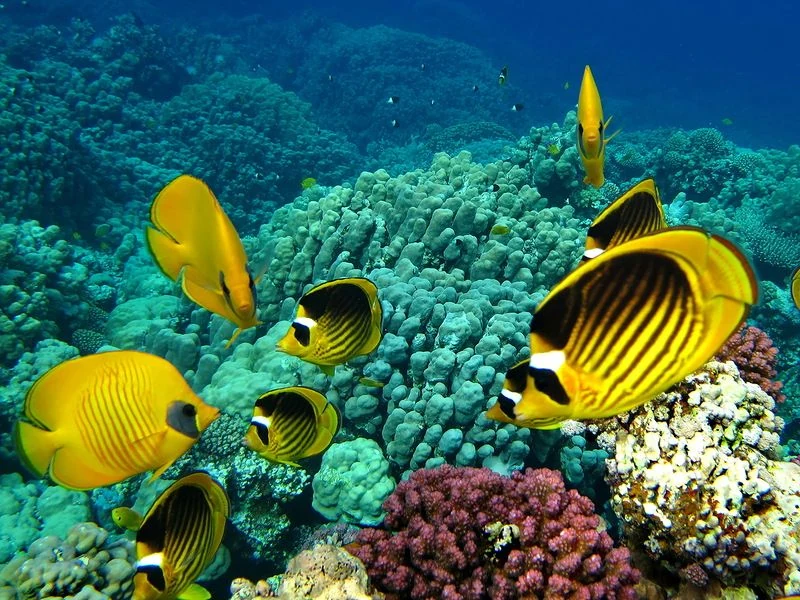
Indonesia lies within the Coral Triangle, a region recognised worldwide as the global centre of marine biodiversity. This area is home to thousands of reef fish species and hundreds of reef-building coral species.
As a result, every dive site offers a distinctly different experience. In Raja Ampat, you may encounter enormous aggregations of schooling fish, whilst in Komodo National Park, nutrient-rich currents attract an impressive range of reef fish, from the smallest species to the largest.
In a single dive, you may find yourself in the company of dozens of species, each with entirely different forms, colours, and behaviours. It is this variety that keeps divers returning to Indonesia time and again.
15 Beautiful Reef Fish Every Diver Should Look Out For
1. Clownfish (Amphiprion spp.)
Clownfish are perhaps among the most recognisable reef fish in the world. Their vivid orange bodies, adorned with distinctive white stripes, make them easy to identify, even for beginner divers.
They are typically found living in close association with sea anemones, a relationship that serves as a classic example of mutualistic symbiosis. The clownfish gains protection from the anemone’s stinging tentacles, whilst the anemone gains a resident bodyguard that drives off butterflyfish and other species that would otherwise eat its tentacles, along with nutrients from the fish’s waste and improved water flow through the tentacles as the fish moves amongst them.
2. Parrotfish (Scaridae)
Parrotfish possess fused teeth that form a distinctive beak-like structure, enabling them to graze on algae growing across coral surfaces.
Beyond their striking colouration, parrotfish fulfil a critically important ecological role. By consuming algae, they help to clear space for new coral growth. In some tropical reef systems, parrotfish also contribute to the formation of fine white sand by digesting and expelling coral material.
3. Butterflyfish (Chaetodontidae)
Butterflyfish are renowned for their flattened bodies and vivid, eye-catching colour patterns. Many species live in established pairs and are frequently observed swimming together across healthy reef systems.
As some butterflyfish species rely heavily on living coral for food, their presence can be a useful indicator of reef condition.
4. Emperor Angelfish (Pomacanthus imperator)
With its bold combination of blue, yellow, and white, the emperor angelfish is one of the species most likely to catch the eye of underwater photographers.
Fascinatingly, juvenile emperor angelfish display a colour pattern that is markedly different from that of adults. This transformation is one of the most striking metamorphoses in the reef fish world.
5. Regal Angelfish (Pygoplites diacanthus)
The regal angelfish carries an elegant combination of yellow, white, and blue that lends it a refined and distinctive appearance. Whilst it is not always easy to locate, this species is a prized photographic subject for divers who appreciate the beauty of reef fish.
It favours healthy reef slopes with an abundance of crevices for shelter.
6. Moorish Idol (Zanclus cornutus)
The Moorish Idol’s elongated dorsal fin gives it a remarkably graceful appearance as it moves through the water.
This species is commonly encountered in the tropical waters of the Indo-Pacific, including throughout Indonesia, and in fact has one of the widest distributions of any reef fish, from East Africa all the way to the coast of Mexico. It is a generalist feeder, taking sponges, tunicates and algae, which is part of why it turns up almost everywhere.
7. Sweetlips (Haemulidae)
Sweetlips are immediately recognisable by their characteristically thick lips. As juveniles, several species swim with an exaggerated, flapping motion quite unlike an adult fish, widely thought to be mimicry of toxic flatworms and nudibranchs, making a small and otherwise vulnerable fish look like something no predator wants to eat.
As adults, they are frequently found resting beneath overhangs or within small caverns around the reef.
8. Bannerfish (Heniochus spp.)
At first glance, bannerfish are often mistaken for the Moorish Idol, as both species share a similarly elongated dorsal fin.
The reliable difference is the face. The Moorish idol has a long, tubular snout that projects forward like a beak, and a broad black bar across the eye; bannerfish have a short, blunt snout and a bright yellow tail, whereas the Moorish idol’s tail is small and dark. Once you have seen the snout, you will never confuse the two again.
9. Surgeonfish (Acanthuridae)
Surgeonfish are equipped with a small, razor-sharp spine at the base of the tail, which serves as a defence mechanism.
Many surgeonfish species feed on algae, meaning they, alongside parrotfish, help maintain the health and balance of coral ecosystems.
10. Anthias (Anthiinae)
Anthias are among the reef fish most reliably capable of creating a truly spectacular underwater scene.
Hundreds or even thousands of individuals may be seen hovering above a reef simultaneously, forming shimmering clouds of orange, pink, or purple that pulse and shift with the current.
An anthias shoal is made up of harems, and every individual starts life as a female. If the dominant male is lost, the largest female changes sex and takes his place, typically within days. The males are larger and differently coloured, holding station slightly above the group.
11. Fusiliers (Caesionidae)
Fusiliers are well known for their habit of moving in large, coordinated schools.
When an entire school moves in unison, the underwater landscape becomes extraordinarily dynamic; it is a spectacle that consistently ranks amongst the most memorable moments for underwater photographers.
12. Triggerfish (Balistidae)
Triggerfish have a distinctively shaped body, characterised by small fins that undulate continuously as they manoeuvre through the water.
Some species can become markedly territorial during the breeding season. Divers are therefore always advised to maintain a respectful distance and follow their dive guide’s guidance at all times.
The species most associated with aggressive territorial behaviour in Indonesia is the titan triggerfish (Balistoides viridescens). It defends its nest within a cone-shaped territory that widens upwards from the seabed, so swimming upwards to escape can take divers further into its territory. The correct response is to swim horizontally away, keeping your fins towards the fish.
13. Lionfish (Pterois spp.)
Lionfish are immediately distinctive for their fan-like fins and venomous spines, which serve as their primary defence against predators.
Whilst undeniably beautiful to observe, divers should never attempt to touch or approach this species too closely.
It is worth noting that lionfish are native to Indonesian waters. The ‘invasive lionfish’ story that many divers will have read about concerns the Atlantic and Caribbean, where the species was introduced and has no natural predators. Here, on their home reefs, they are simply part of the ecosystem.
14. Napoleon Wrasse (Cheilinus undulatus)
The Napoleon wrasse is among the largest reef fish in the world. The biggest individual ever recorded measured 2.29 metres, and mature males on Indonesian reefs commonly reach well over a metre, making an encounter with one of the true heavyweight moments of any dive.
It is a protected species whose populations have declined sharply through overfishing for the live reef food fish trade. It is listed as Endangered on the IUCN Red List and on CITES Appendix II, and in Indonesia it is protected under Ministerial Decree No. 37/2013, which restricts any take to a narrow size range and a set quota, leaving the large adults that divers come to see off limits. Encountering a Napoleon wrasse in its natural habitat is a deeply memorable experience, and one that underscores exactly why these protections matter.
15. Damselfish (Pomacentridae)
Damselfish may be small, but they are remarkably bold in character.
Some species will readily defend their territory against fish many times their own size. Their presence also adds a vivid splash of colour to virtually every reef in Indonesia.
Damselfish belong to the family Pomacentridae, which, as it happens, also includes the clownfish at the top of this list.
Where to See Indonesia’s Most Spectacular Reef Fish
Indonesia offers an abundance of locations in which to experience the full diversity of its reef fish, but several destinations stand out above the rest.
Raja Ampat is celebrated for possessing one of the highest levels of marine biodiversity anywhere on Earth. Almost every dive delivers a remarkable combination of schooling fish, brilliantly coloured reef species, and coral reefs in exceptional condition.
Komodo National Park offers a quite different experience. Nutrient-rich currents attract a wide variety of reef fish, as well as larger predators, creating dives that are dynamic, unpredictable, and consistently rewarding.
For those who wish to explore these destinations to the fullest, a liveaboard voyage provides access to remote dive sites that are simply beyond the reach of day-trip vessels, allowing you to experience Indonesia’s underwater world on its own terms.
What Makes Reef Fish So Important to Coral Reefs?
The beauty of reef fish extends far beyond their remarkable colours.
Many species play an indispensable role in maintaining the balance of the wider ecosystem. Herbivores such as parrotfish and surgeonfish help control algal growth that would otherwise smother coral and prevent new coral larvae from settling. Other species regulate the populations of particular organisms, ensuring that the food chain remains in equilibrium.
When reef fish populations decline, coral reef conditions can deteriorate accordingly. This is precisely why protecting reef fish has become a central component of marine conservation efforts worldwide.
Read Also: Fish Sleeping Behaviour
Tips for Watching Reef Fish Responsibly
Observing reef fish in their natural habitat is a genuinely extraordinary experience. To ensure that future generations can enjoy the same privilege, there are several straightforward steps that every diver and snorkeller can take:
- Maintain good buoyancy at all times to avoid making contact with coral.
- Refrain from chasing or feeding fish.
- Keep a respectful distance when observing marine life.
- Use products that are considerate of the marine ecosystem.
Small actions such as these help to preserve the health of coral reefs and protect the habitats upon which reef fish depend.
When Is the Best Time to See Reef Fish in Indonesia?
The encouraging news is that reef fish are found year-round.
What changes between seasons is not the presence of fish, but rather the visibility, currents, and weather conditions that vary across different regions.
In Raja Ampat, the period between October and April is frequently considered the most popular season. Komodo National Park, by contrast, tends to offer its finest diving conditions between April and November.
As every season has its own distinct characteristics, we always work closely with our guests to help them select the itinerary that best suits their travel goals and diving ambitions.
Discover Indonesia’s Incredible Reef Fish with La Galigo Liveaboard
At La Galigo Liveaboard, we believe that the finest experience is not simply about the number of dives completed, but about the opportunity to develop a genuine understanding of Indonesia’s underwater life.
By visiting several of the region’s most outstanding dive sites on a single voyage, you increase your chances of encountering a wide variety of iconic reef fish, from the diminutive clownfish to the awe-inspiring Napoleon wrasse. Every dive brings a new story, and we are proud to accompany you as you explore one of the most extraordinary marine ecosystems on Earth.
If you have ever dreamt of witnessing the beauty of reef fish in their natural habitat, please do not hesitate to contact our team to find the itinerary that suits your level of diving experience, and to book an underwater adventure you will never forget.
Frequently Asked Questions
Are reef fish dangerous?
The vast majority of reef fish pose no danger whatsoever, provided you maintain a respectful distance and do not disturb them. Certain species, such as lionfish and triggerfish, do warrant a degree of extra care. Still, incidents are generally straightforward to avoid by following your dive guide’s guidance at all times.
Can snorkellers see reef fish too?
Absolutely. Many reef fish inhabit relatively shallow waters, making them accessible to both divers and snorkellers alike. Some species, including clownfish, butterflyfish, and damselfish, are frequently observed just a few metres beneath the surface.
Why are coral reef fish so colourful?
Vivid colouration serves a range of important functions for reef fish, aiding communication, facilitating recognition of potential mates, supporting territorial defence, and enabling camouflage within the richly coloured reef environment. Each species has evolved distinct colour patterns, each with a specific purpose.
What is the difference between reef fish and pelagic fish?
Reef fish spend the majority of their lives in close association with coral reefs, where they feed, seek shelter, and reproduce. Pelagic fish, by contrast, inhabit the open ocean and typically range over considerable distances from reef structures. Clownfish and butterflyfish are examples of reef fish, whilst tuna and mahi-mahi are among the most well-known pelagic species.
Which reef fish are the easiest to spot in Indonesia?
Some of the most reliably encountered reef fish when diving or snorkelling in Indonesia include clownfish, parrotfish, butterflyfish, damselfish, surgeonfish, and anthias. These species are widely distributed across many dive sites, including those in Raja Ampat and Komodo National Park.
Why are reef fish important to coral reefs?
Reef fish play a vital role in maintaining the balance of coral reef ecosystems. Some species graze on algae to prevent it from overwhelming coral, whilst others function as predators or prey within the broader food chain. The presence of healthy reef fish populations is widely regarded as one of the most reliable indicators of a thriving coral ecosystem.
Can I see reef fish year-round in Indonesia?
Yes. Reef fish are present year-round across Indonesia’s dive destinations. However, visibility, current conditions, and weather can vary considerably between seasons and locations, so the ideal time to dive will depend on the specific sites you intend to visit.
How can divers protect reef fish and coral reefs?
The most effective approach is to maintain excellent buoyancy to avoid contact with coral, refrain from chasing or feeding fish, avoid touching marine life of any kind, and follow all instructions given by your dive guide. These simple habits contribute meaningfully to the long-term protection of reef fish habitats.
What is one of the most special reef fish to see in Indonesia?
One of the most exceptional reef fish encounters in Indonesia is with the Napoleon wrasse (Cheilinus undulatus). Listed as Endangered, this magnificent species is considered by many divers to be one of the most treasured experiences the underwater world has to offer.
References
FishBase. (n.d.). FishBase.
International Union for Conservation of Nature. (n.d.). The IUCN Red List of Threatened Species.
National Oceanic and Atmospheric Administration. (n.d.). Coral Reef Conservation Program.
World Register of Marine Species. (n.d.). WoRMS: World Register of Marine Species.