
Indonesia is often described as one of the world’s best diving destinations. With more than 17,000 islands, thousands of kilometres of coastline, and the convergence of major global ocean current systems, Indonesian waters are extraordinarily diverse, not only visually but also physically. One factor that is frequently underestimated, yet fundamentally shapes the diving experience, is water temperature.
Water temperature is not merely a number on a dive computer. It affects comfort, safety, the type of marine life encountered, and the overall character of a destination. Understanding how water temperature varies across regions of Indonesia helps divers make better decisions, not only about where to go but also about what kind of experience to expect.
Water Temperature and the Diver Experience
Before discussing figures, locations, or seasons, it is important to understand why water temperature is a fundamental factor in diving. Many aspects of a dive, both obvious and subtle, are rooted in this factor.
Water Temperature, Comfort, Safety, and Dive Planning
At its most basic level, water temperature determines physical comfort. Water that is too cold can lead to rapid heat loss, even in tropical environments. This not only reduces enjoyment but can also affect concentration, air consumption, and decision-making underwater.
From a safety perspective, water temperature influences:
- Choice of exposure protection, from rash guards to thin or thicker wetsuits
- Safe dive duration
- Risk of fatigue and cold stress
- The body’s ability to recover between dives
In dive trip planning, water temperature is closely linked to seasonality, currents, and visibility. Two locations in Indonesia may both be considered tropical, yet deliver very different diving experiences due to differences in water temperature.
The Link Between Temperature, Marine Life, and Visibility
Water temperature not only affects divers, but it also shapes marine ecosystems. Many marine organisms, particularly hard corals and plankton, are highly sensitive to temperature changes.
Cooler water is often nutrient-rich due to upwelling, which increases marine productivity. This typically results in:
- Higher plankton concentrations
- Greater numbers of small fish
- Increased presence of large predators
However, this productivity often comes at the expense of reduced visibility. Conversely, warmer and more stable water usually offers clearer visibility, but with different marine life dynamics.
What Controls Water Temperature in Indonesia’s Seas
A single factor does not govern sea temperatures in Indonesia. They result from complex interactions between geography, atmosphere, and ocean dynamics.
Geographic Position and Tropical Baseline Temperatures
As a country located near the equator, Indonesia has a relatively warm baseline water temperature year-round, generally ranging from 26 to 30 degrees Celsius. This is why Indonesia is often considered suitable for year-round diving.
However, this tropical baseline is only a starting point. Regional variations can be significant depending on location and local conditions.
Seasonal Monsoons and Wind Patterns
Annual monsoon systems play a major role in regulating sea temperatures across Indonesia. Changes in prevailing wind direction influence:
- Surface water movement
- Mixing between warm surface layers and cooler deeper layers
- Upwelling activity in certain regions
For divers, the impact of monsoons is rarely experienced as dramatic daily temperature fluctuations, but it is clearly evident on a seasonal scale. At certain times of year, water temperatures can be cooler and more variable, particularly in central and eastern Indonesia.
On trips such as those offered by La Galigo Liveaboard, routes, dive site order, and timing are often adjusted to seasonal patterns, not to avoid them, but to work in harmony with them. The result is a diving experience that feels natural rather than forced.
Ocean Currents, Upwelling, and Thermoclines
Indonesia lies along a major pathway for water exchange between the Pacific and Indian Oceans. These currents transport:
- Warm water from the Pacific
- Cooler, nutrient-rich water from deeper layers or southern regions
Upwelling, the process where colder deep water rises toward the surface, is a primary cause of localised temperature drops, even in tropical waters.
Thermoclines, sharp temperature transition layers in the water column, are common in areas with strong current dynamics. Divers may experience significant temperature differences within just a few metres of depth.
Depth, Topography, and Local Reef Structure
Seabed topography also plays a significant role. Narrow channels, steep drop-offs, and current-exposed reefs experience different temperature conditions compared to shallow lagoons or sheltered bays.
This explains why, even within a single destination, diving conditions can vary substantially across sites.
Regional Water Temperature Patterns Across Indonesia
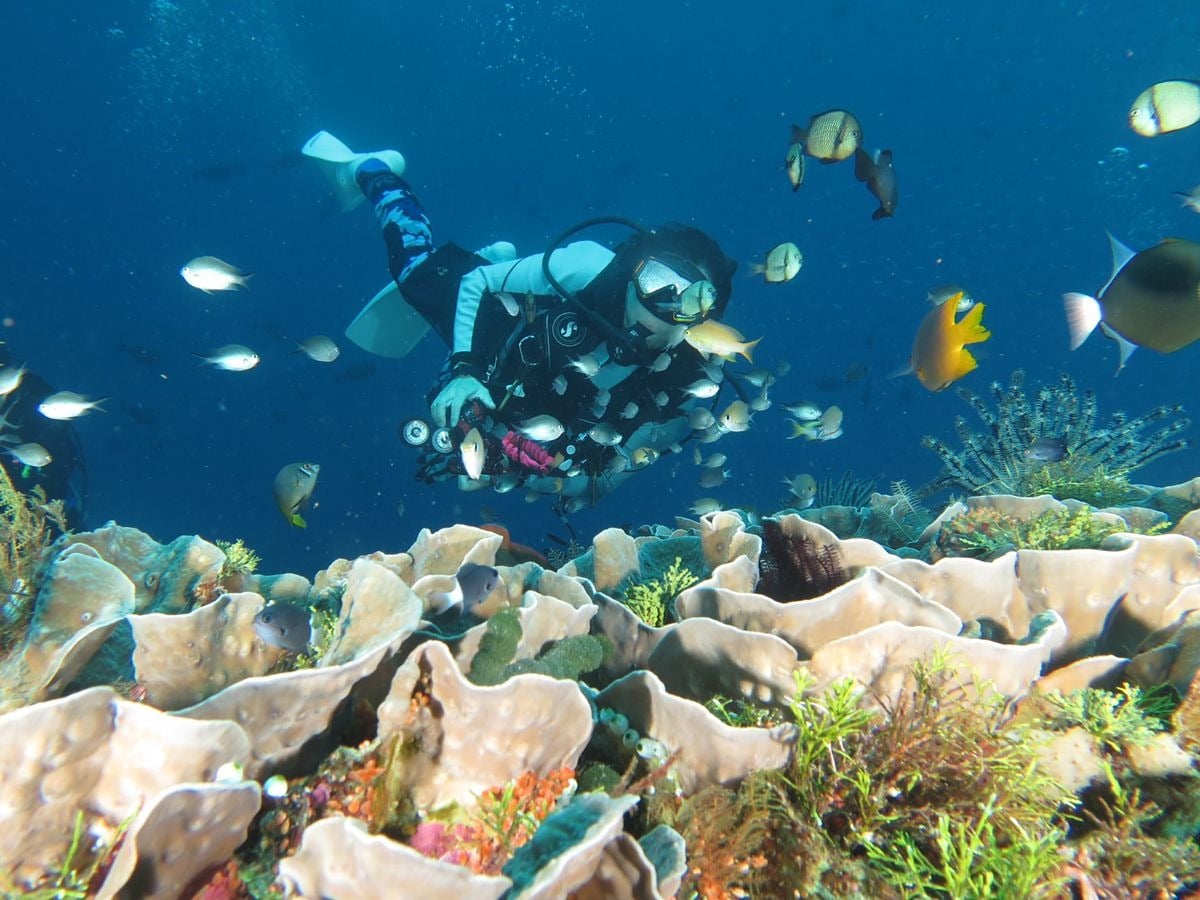
Broadly speaking, Indonesian waters can be divided into three main zones based on water temperature characteristics.
Western Indonesia
Western Indonesia generally experiences warmer, more stable water temperatures year-round. Seasonal variation is relatively minor, and visibility is often consistent.
These conditions support:
- Comfortable diving
- Relatively calm waters
- Coral ecosystems that thrive in shallow environments
Central Indonesia
Central Indonesia is a zone of current and water mass interaction. Here, water temperatures can change relatively quickly depending on season and specific location.
Divers in this region often encounter:
- Pronounced thermoclines
- Dynamic currents
- Noticeable temperature differences between dive sites on the same trip
Eastern Indonesia
Eastern Indonesia is influenced by Pacific Ocean currents and more active upwelling. Water temperatures here can be cooler than in other regions, particularly during certain seasons.
In return, this region is known for extremely high marine productivity.
Raja Ampat: Warm Waters and Stable Diving Conditions
Raja Ampat is often seen as an ideal representation of tropical diving, not because of extremes, but because of its natural consistency. While generally warm and stable, certain areas of Raja Ampat, particularly in the south, may experience mild thermoclines depending on seasonal current patterns.
For many divers, a first experience in Raja Ampat feels like entering an ecosystem that functions in balance. There are no dominant extremes. Warm water, predictable currents, and healthy reefs create conditions that feel comfortable yet alive.
Water Temperature in Raja Ampat
Most dive sites in Raja Ampat maintain relatively stable water temperatures throughout the year, generally within a warm and comfortable range for repeated dives. Seasonal fluctuations do exist, but they are rarely dramatic or disruptive to the diving rhythm.
This stability creates a consistent diving experience:
- The first and fourth dives of the day feel similar in terms of comfort
- Temperature changes with depth are usually gradual rather than sudden.
- Thermoclines may be present, but they are rarely extreme or shocking.
For divers, this means less energy spent adapting to physical conditions. Focus can remain on reef observation, photography, and interactions with marine life rather than on managing cold or discomfort.
Read Also: The Best Time to Dive Raja Ampat
Stable Water Temperatures and Coral Health
Stable water temperatures are critical to maintaining coral reef health in Raja Ampat. Corals are highly sensitive to thermal stress, and rapid or extreme temperature changes can disrupt their biological balance.
In Raja Ampat, temperature stability allows:
- Long-term coral growth without repeated stress
- Reef structures to develop complexity and depth
- Microhabitats for invertebrates and small fish
Currents in the region act as a natural circulation system, delivering nutrients and oxygen without causing dramatic cooling. The result is an ecosystem that feels complete, with all levels of the food chain active, from small nudibranchs to apex predators.
For divers, this translates into a richly detailed experience. It is not only about species count, but about how marine life coexists within a stable and healthy reef landscape.
Exposure Protection, Currents, and Overall Dive Comfort
From a diver’s perspective, Raja Ampat is considered physically comfortable. Light exposure protection is generally sufficient for most dives, even on trips with high dive frequency.
Commonly reported experiences include:
- Cold stress rarely limits dive duration
- The body remains warm and responsive through the end of dives.
- Surface intervals are used for natural recovery rather than simply warming up.
Currents in Raja Ampat are present and ecologically important, but generally manageable. They bring life to the reefs without creating exhausting conditions. For divers, this means:
- Gentle, controlled drift dives
- Relaxed body positioning
- More time observing rather than holding on
The combination of stable temperatures, manageable currents, and consistent visibility creates a diving experience that feels fluid and unforced. It allows divers to be fully present and enjoy each moment underwater.
Komodo: Cooler Water, Strong Currents, and Dynamic Dives
If Raja Ampat is often described as tropical harmony, Komodo represents the opposite. It is dynamic, intense, and highly contrasted. Here, water temperature is not a background element, but a defining force shaping the dive experience.
Many divers arrive in Komodo expecting warm Indonesian waters, only to encounter abrupt temperature changes, strong currents, and conditions that require rapid responses. Yet this is precisely where Komodo’s appeal lies. Cooler water supports an ecosystem that is active, productive, and dynamic.
Seasonal Temperature Drops and Cold-Water Influx
At certain times of the year, Komodo receives inflows of cold water from the south through current systems and upwelling. This cooling does not always occur gradually. In many cases, divers feel a noticeable temperature drop within just a few metres of depth.
Commonly reported experiences include:
- Sudden cold sensations when entering specific water layers
- Clear temperature differences between the surface and the reef base
- Dive computers showing rapid temperature drops during a single dive
For divers who are unprepared mentally or in terms of equipment, this can be uncomfortable. For experienced divers, however, these temperature changes often signal that the ecosystem is active and productive.
Seasonal cooling makes Komodo highly dependent on timing. A site that feels calm one month may become highly energetic in another.
Upwelling, Nutrients, and Big Animal Encounters
Cold water rising to the surface brings nutrients from deeper layers. These nutrients fuel plankton blooms, forming the foundation of the marine food chain. The effect is immediately visible to divers.
Under productive conditions, Komodo is known for:
- Active manta rays at cleaning stations
- Large schools of fish are moving dynamically with the currents
- Predators patrolling reefs and channels
However, this productivity comes with trade-offs:
- Visibility may decrease due to high plankton concentration
- Water can feel heavy and particle-rich
- Marine activity increases, but visual clarity may not be at its best
For many divers, Komodo is less about perfect clarity and more about ecosystem energy. The ocean feels alive, moving, and reactive, with cooler water acting as the catalyst.
Water Temperature and Dive Difficulty
The combination of cooler temperatures, strong currents, and variable visibility makes Komodo one of Indonesia’s more demanding dive destinations. The challenge is not only technical, but also physical and mental.
Direct implications for divers include:
- Greater effort is required to maintain body temperature and stability
- Increased air consumption in cold, high-current conditions
- More critical buoyancy management, especially near thermoclines
Komodo requires divers to:
- Be comfortable with currents and drift diving
- Maintain body control in dynamic environments.
- Recognise physical signals such as fatigue or cold stress.
Komodo offers some sites that require comfort with currents and variable temperatures. With proper guidance and careful site selection, divers of different experience levels can enjoy the region safely.
Comparing Raja Ampat and Komodo Through Water Temperature
Viewing Raja Ampat and Komodo through the lens of water temperature helps explain why the diving experience in these two destinations feels so different. These differences arise directly from distinct thermal environments that shape ecosystems, currents, and overall dive style.
| Aspect | Raja Ampat | Komodo |
| Water temperature character | Warm and relatively stable year-round | Cooler, variable, and seasonal |
| Temperature variation within a dive | Minimal, usually gradual | Can be significant due to upwelling and thermoclines |
| Impact on diver comfort | High, with minimal heat loss | More demanding, higher cold stress risk |
| Exposure protection | Generally light and consistent | Often requires thicker protection |
| Currents | Present but generally manageable | Strong, dynamic, and central to dive planning |
| Ecosystem productivity | High biodiversity | Extremely high density and activity |
| Visibility | Relatively stable and clear | Variable, often affected by plankton |
| Marine life encounters | Species-rich, detailed interactions | Big animals, schooling fish, active predators |
| Dive rhythm | Relaxed, observational, exploratory | Intense, fast-paced, action-oriented |
| Ideal diver profile | Reef explorers, photographers, observers | Experienced divers seeking a challenge |
Practical Implications for Divers
Understanding water temperature should go beyond theory. In practice, it influences nearly every important decision in diving, from equipment selection to underwater energy management and from site selection to timing. Divers who understand these implications will dive more comfortably, more safely, and with greater enjoyment.
Choosing the Right Exposure Suit
One of the most common mistakes is assuming that all Indonesian waters are warm enough for a single type of exposure suit. In reality, temperatures vary significantly between regions and even within the same destination across different seasons.
Exposure suit selection should consider:
- The specific location, not just the country or region
- Season and current conditions that may lower the water temperature
- Dive duration and frequency, especially on liveaboard trips with three to four dives per day
Water that feels comfortable on the first dive may feel cold by the third or fourth. Gradual heat loss often goes unnoticed, yet it directly affects stamina, focus, and air consumption.
An appropriate exposure suit helps to:
- Maintain core body temperature
- Reduce fatigue between dives.
- Extend comfortable bottom time.
In essence, exposure protection is not about tolerance to cold, but about managing energy to maintain optimal performance throughout the trip.
Managing Thermoclines and Cold Stress
Thermoclines, layers where temperature changes rapidly with depth, are common in many Indonesian waters, particularly in areas with active currents and steep topography. Thermoclines are not dangerous, but they can be challenging if unanticipated.
When passing through a thermocline, divers often experience:
- Sudden drops in temperature
- Sharp cold sensations on the face or hands
- Rapid changes in comfort
If unprepared, the body’s response to cold can affect buoyancy, breathing, and concentration. Effective thermocline management includes:
- Stable buoyancy control to avoid repeated vertical movement through cold layers
- Adequate thermal protection, especially for deeper planned dives
- Awareness of bodily signals, such as light shivering or increased breathing rate
Cold stress rarely appears suddenly. It usually develops gradually, and divers who remain aware of their physical state are better equipped to make sound decisions, such as ending a dive early or adjusting subsequent dive profiles.
Planning Dives Around Seasonal Temperature Changes
Seasonality is often understood only in terms of surface weather. For divers, however, seasons also affect water temperature, currents, visibility, and marine life dynamics.
Seasonal changes may cause:
- Water cooling due to upwelling
- Increased nutrients and plankton
- Shifts in current patterns and visibility
Good dive planning considers:
- Desired experience, whether comfort, photography, or big animal encounters
- Diver readiness for dynamic conditions
- Preferred dive style, relaxed or demanding
Understanding seasonal patterns helps align expectations with reality. Cooler water may reduce visibility but increase marine activity. Warmer, stable water offers comfort but different ecological dynamics.
Final Thought
Water temperature is a key factor shaping diving conditions across Indonesia. Despite its tropical location, Indonesian waters exhibit significant temperature variability due to currents, monsoons, upwelling, and seafloor topography. These variations explain why diving in Raja Ampat and Komodo can feel so different in terms of comfort, difficulty, and marine life encounters.
Understanding water temperature patterns helps divers choose destinations, travel timing, and equipment that best suit their preferences and experience levels. With the right approach, these differences become part of the experience rather than an obstacle.
In practice, the best diving experiences often result from planning that aligns with natural conditions. On well-designed liveaboard trips, routes and dive sequences are adjusted to seasonal and thermal dynamics. At La Galigo, we plan our itineraries around these natural rhythms, allowing you to experience the best conditions each region offers without working against nature.
FAQ
1. Do all Indonesian waters have warm temperatures?
No. Although Indonesia is tropical, water temperatures vary substantially across locations, seasons, currents, and seafloor topography. Some areas, particularly in central and eastern Indonesia, can experience significantly cooler water due to upwelling and strong currents.
2. What is the typical water temperature range for diving in Indonesia?
Generally between 26 and 30 degrees Celsius. However, in certain locations and seasons, such as Komodo, temperatures can drop noticeably within a single dive due to thermoclines.
3. Why does Raja Ampat feel warmer and more stable than Komodo?
Raja Ampat has current systems and topography that tend to maintain temperature stability. Komodo is influenced by upwelling and cold-water inflows from the south, resulting in greater temperature fluctuation and more dynamic conditions.
4. Does water temperature affect the type of marine life encountered?
Yes. Stable temperatures support high species diversity, as seen in Raja Ampat. Cooler and more dynamic waters increase productivity, often bringing schooling fish, manta rays, and large predators, as in Komodo.
5. What is a thermocline, and is it dangerous for divers?
A thermocline is a layer where water temperature changes rapidly with depth. It is not dangerous, but it can affect comfort, buoyancy, and air consumption if divers are unprepared or inadequately protected.
6. What exposure suit is best for diving in Indonesia?
There is no single answer. Exposure protection should be matched to the specific destination, season, and number of daily dives. In stable regions like Raja Ampat, lighter protection is often sufficient. In areas such as Komodo, additional thermal protection is commonly required.
7. Is Komodo suitable for beginner divers?
Komodo can be suitable for less experienced divers when sites are chosen carefully, and dives are conducted with operators who adapt conditions to diver ability. However, its cooler water, strong currents, and variable visibility generally make it more suitable for divers comfortable with dynamic conditions.
8. When is the best time to dive if water temperature is a priority?
The best time depends on diving goals. Warmer periods usually offer greater comfort and stable visibility, while cooler periods often bring increased marine activity. Understanding seasonal patterns helps align expectations with conditions.
9. Why is trip planning important when dealing with water temperature variation?
Because water temperature affects comfort, safety, visibility, and marine encounters, effective planning enables divers to experience optimal conditions without unnecessary challenges.
10. How does a liveaboard help optimise diving experiences related to water temperature?
Liveaboards offer flexibility in routing, site selection, and dive timing, informed by real-time conditions and seasonal patterns. On trips such as those operated by La Galigo Liveaboard, this approach allows divers to work with natural thermal dynamics rather than against them.