
Coral reefs are among the most remarkable ecosystems in the ocean. Although they cover only a small proportion of the seabed, they provide a home for around a quarter of all marine species, protect coastlines from wave action, and support the livelihoods of millions of people through fisheries and tourism.
Unfortunately, coral reefs are facing increasing pressure. Rising sea temperatures, pollution, destructive fishing practices, and irresponsible tourism have caused widespread coral degradation and coral bleaching. Effective conservation requires habitat protection, sound management, climate action, and the active participation of local communities and travellers.
At La Galigo, we believe that every diving journey is an opportunity to help protect the ocean. Simple actions, taken consistently, can make a positive difference to underwater ecosystems.
Here are 10 simple ways you can help support coral reef conservation.
Why Coral Reef Conservation Needs Everyone
Coral reef conservation is not solely the responsibility of governments, environmental organisations, or scientists. Travellers, divers, underwater photographers, and local communities all play an important role.
No single solution can save coral reefs on its own. Marine protected areas, coral restoration, sustainable fisheries management, pollution reduction, and changes in human behaviour must all work together if these ecosystems are to thrive.
The good news is that many simple actions are within anyone’s reach. Even the small decisions you make before and during your holiday can help reduce pressure on coral reefs.
10 Simple Ways to Support Coral Reef Conservation
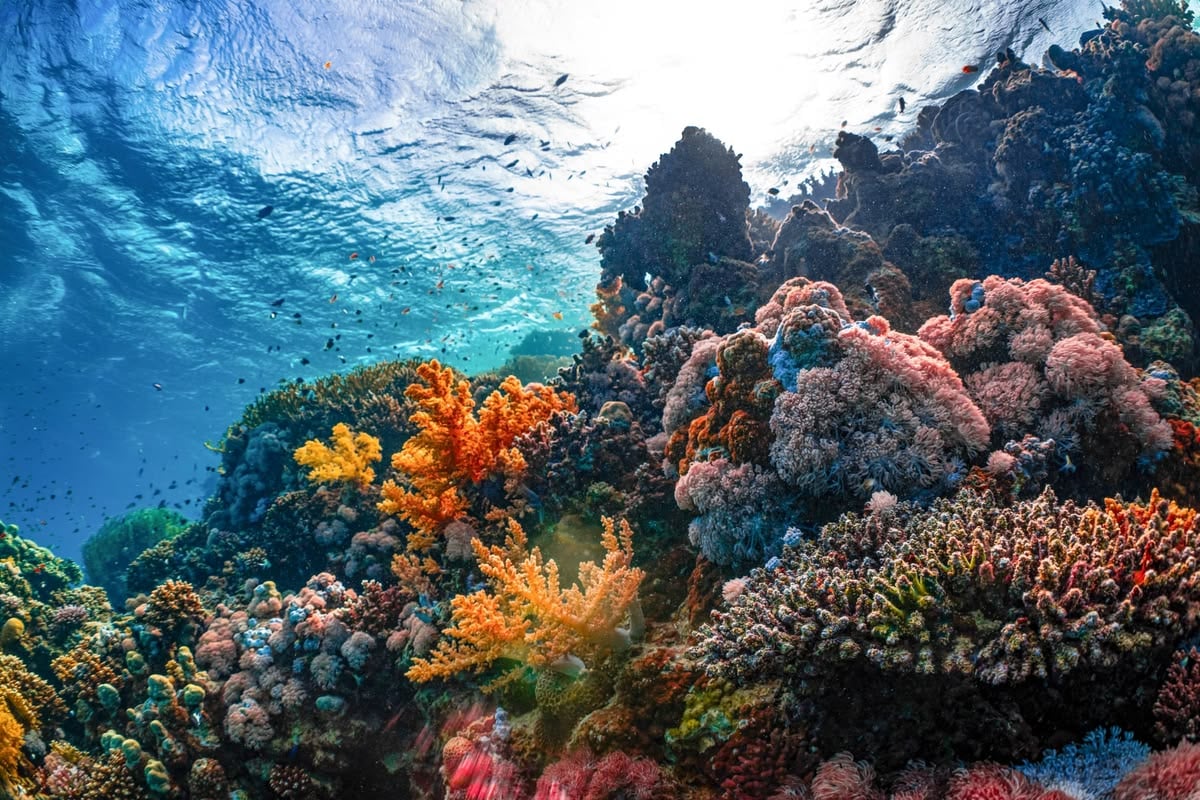
1. Support Conservation and Restoration Programmes
Many organisations are now involved in activities such as:
- Coral transplantation.
- Coral reef health monitoring.
- Community education.
- Beach clean-up initiatives.
Although coral restoration offers hope, it is not a substitute for protecting natural habitats. Restoration is most effective when combined with efforts to reduce threats such as pollution and climate change.
You can contribute by donating, volunteering, or choosing tour operators that work alongside local conservation programmes.
2. Never Touch or Stand on Coral Reefs
Corals may look like rocks, but they are colonies of tiny animals, and many grow astonishingly slowly. The large, dome-shaped coral heads you will swim over in Raja Ampat add well under a centimetre a year, meaning a boulder coral the size of a car may have been growing for centuries. A single careless fin kick can undo decades of growth.
Whether you are snorkelling or diving, always keep a respectful distance from coral reefs and avoid standing on them, even in strong currents.
3. Master Your Buoyancy While Diving
For divers, maintaining good neutral buoyancy is one of the simplest and most effective ways to protect coral reefs.
Good buoyancy control lets you stay suspended in the water without accidentally touching corals with your fins, knees, or diving equipment.
At La Galigo, we always encourage our guests to dive with excellent buoyancy control because a comfortable diving experience also means better protection for the underwater environment.
4. Reduce Your Use of Single-Use Plastics
Much of the plastic waste that ends up in the ocean can damage coastal ecosystems and coral reefs.
You can help by bringing:
- A reusable water bottle.
- A reusable shopping bag.
- Your own reusable cutlery.
- A reusable drinking straw.
These simple choices help reduce the amount of waste that could eventually pollute the ocean.
5. Dispose of Waste Properly
Not all marine litter originates from ships or beaches. Waste that is carelessly discarded in towns and cities can be carried by rivers until it eventually reaches the sea.
For this reason, disposing of rubbish responsibly remains an important part of marine conservation.
If you come across litter while visiting a beach and it is safe to remove, consider taking a moment to help clean it up.
6. Choose Responsible Tour Operators
The tour operator you choose can also make a difference to conservation.
At La Galigo, we believe that the best diving experiences always go hand in hand with protecting the natural environment.
Responsible tour operators typically:
- Provide a conservation briefing before each dive.
- Use mooring buoys instead of dropping anchors onto coral reefs.
- Comply with marine protected area regulations.
- Educate guests about environmentally responsible behaviour.
By choosing operators committed to sustainability, you support better tourism practices.
7. Respect the Rules in Marine Protected Areas
Marine Protected Areas (MPAs) protect important habitats, including coral reefs.
Although certain activities may be restricted, well-managed protected areas have been shown to improve ecosystem health and help preserve marine biodiversity.
When visiting destinations such as Raja Ampat or Komodo National Park, always follow local regulations, including restrictions on areas that must not be entered or touched.
8. Do Not Buy Souvenirs Made from Coral or Marine Wildlife
Some shops still sell home decorations or souvenirs made from hard corals, rare shells, or protected marine species.
Purchasing these products only increases demand for the exploitation of marine resources.
Instead, choose locally made souvenirs that are not produced from marine organisms. This lets you support local communities without adding pressure on marine ecosystems.
9. Reduce Sunscreen Use in the Water
Sunscreen chemicals such as oxybenzone can harm coral in laboratory conditions, although whether they cause measurable damage at the concentrations found on real reefs is still debated. There is also no evidence that sunscreen causes mass coral bleaching, which is primarily associated with marine heatwaves.
It is also worth noting that products labelled as “reef-safe” or “coral-friendly” can differ substantially in their effects on corals, so the label alone does not guarantee that a product is harmless to marine ecosystems (Rücker et al., 2025).
The simplest approach is to cover up. Wearing a rash vest or long-sleeved swim top can reduce the amount of sunscreen entering the water, whatever is in the bottle.
10. Share Awareness About the Importance of Coral Reefs
Conservation does not only happen underwater.
Sharing your experiences of responsible diving, encouraging friends not to touch coral, or explaining why coral bleaching occurs can all help raise public awareness.
The more people understand the importance of coral reefs, the greater the chance these extraordinary ecosystems will continue to thrive for generations to come.
From Local Actions to Global Change
Every action on this list helps reduce local pressure on coral reefs, and that pressure genuinely matters. Reefs that are protected from overfishing, pollution, and careless human activities are better positioned to withstand and recover from environmental stress.
But the single greatest threat to coral reefs is warming seawater, driven by climate change. That is not something that can be solved by anything you pack in a dive bag. Supporting climate action and organisations working to address climate change is therefore also part of coral reef conservation.
Local actions still matter. Protecting the reef beneath your fins, reducing pollution, following conservation rules, and supporting responsible tourism all contribute to healthier marine ecosystems. But protecting reefs for the long term also means addressing the wider pressures that are driving ocean warming.
Read Also: Raja Ampat Liveaboard Cost Guide: Budget, Mid-Range & Luxury (2025/2026)
Small Actions Can Protect Coral Reefs for Future Generations
Protecting coral reefs does not always require large-scale action. In fact, simple habits practised consistently often make the greatest difference.
From using reef-safe sunscreen and reducing plastic waste to keeping a respectful distance from corals and choosing responsible tour operators, every action helps reduce pressure on marine ecosystems.
When you explore Raja Ampat, Komodo, or other diving destinations with La Galigo Liveaboard, we invite you not only to experience the beauty of Indonesia’s underwater world, but also to help protect it. By diving responsibly and respecting nature, we can help ensure that coral reefs continue to provide a home for thousands of marine species and remain a source of inspiration for future generations of divers.
Frequently Asked Questions
What is coral reef conservation?
Coral reef conservation refers to efforts to protect, preserve, and restore coral reefs so they remain healthy and capable of supporting marine life. These efforts include a wide range of actions, from reducing pollution and protecting marine habitats to promoting responsible tourism practices.
Why is coral reef conservation important?
Coral reefs provide habitat for around 25% of all marine species, despite covering only a small proportion of the ocean floor. In addition to supporting marine biodiversity, they help protect coastlines, sustain fisheries, and support the tourism industry that provides livelihoods for many coastal communities.
What are the biggest threats facing coral reefs today?
The greatest threats include climate change, which causes rising sea temperatures and coral bleaching, as well as pollution, plastic waste, destructive fishing practices, and irresponsible tourism activities such as standing on or touching corals.
How can travellers help protect coral reefs?
Travellers can help by using reef-safe sunscreen, avoiding touching or standing on corals, maintaining good buoyancy while diving, reducing single-use plastics, and choosing tour operators that follow sustainable practices.
Is touching coral reefs really harmful?
Yes. Coral reefs are living organisms that grow very slowly. Contact from hands, fins, or feet can damage delicate coral tissue, increase the risk of disease, and even break coral structures that may take many years to recover.
Is coral reef restoration alone enough to save coral reefs?
No. Restoration is an important part of conservation, but researchers emphasise that it cannot replace protecting natural habitats. Reducing pollution, addressing climate change, and protecting marine environments remain essential for restoration efforts to succeed over the long term.
How can I choose a diving or liveaboard operator that supports conservation?
Choose an operator that provides briefings on responsible diving practices, uses mooring buoys instead of dropping anchors onto coral reefs, complies with regulations in marine protected areas, and encourages guests to interact responsibly with marine life. These practices demonstrate a genuine commitment to the long-term sustainability of marine ecosystems.
References
Bayraktarov, E., Stewart-Sinclair, P. J., Brisbane, S., Boström-Einarsson, L., Saunders, M. I., Lovelock, C. E., Possingham, H. P., Mumby, P. J., & Wilson, K. A. (2019). Motivations, success, and cost of coral reef restoration. Restoration Ecology, 27(5), 981–991.
Boström-Einarsson, L., Babcock, R. C., Bayraktarov, E., Ceccarelli, D., Cook, N., Ferse, S. C. A., Hancock, B., Harrison, P., Hein, M., Shaver, E., Smith, A., Suggett, D., Stewart-Sinclair, P. J., Vardi, T., & McLeod, I. M. (2020). Coral restoration: A systematic review of current methods, successes, failures and future directions. PLOS ONE, 15(1), e0226631.
Duarte, C. M., Blythe, J., Devlin, M. J., Hilmi, N., Klein, S. G., Schaffelke, B., Suggett, D. J., Tawake, A., Obura, D. O., et al. (2025). Layering solutions to conserve tropical coral reefs in crisis. Nature Reviews Biodiversity, 1, 788–805.
Hughes, T. P., Kerry, J. T., Álvarez-Noriega, M., Álvarez-Romero, J. G., Anderson, K. D., Baird, A. H., Babcock, R. C., Beger, M., Bellwood, D. R., Berkelmans, R., Bridge, T. C., Butler, I. R., Byrne, M., Cantin, N. E., Comeau, S., Connolly, S. R., Cumming, G. S., Dalton, S. J., Diaz-Pulido, G., … Wilson, S. K. (2017). Global warming and recurrent mass bleaching of corals. Nature, 543(7645), 373–377.
Rücker, J., Leonhardt, J., & Wild, C. (2025). Effects of three sunscreens on the ecophysiology of hard and soft corals from the Maldives. Marine Pollution Bulletin, 219, 118316.