
For many people, sharks mean thriller films and rows of teeth. In reality, they are among the most important animals in the sea, and the reefs divers travel across the world to see are shaped by their presence.
As a diver, you may dream of watching sharks glide gracefully through the coral reefs of Raja Ampat or cruise through the powerful currents of Komodo. Encounters like these are not only unforgettable experiences, but also strong indicators that the underwater ecosystem is functioning as it should.
In this article, we explore why sharks play such a vital role in ocean health, the threats they face, how conservation efforts are helping to protect them, and how you can contribute through responsible diving practices.
Why Sharks Are Vital to Healthy Ocean Ecosystems
Sharks Help Maintain the Balance of Marine Food Webs
Sharks have inhabited the oceans for more than 400 million years. During that time, they have evolved into predators that play a crucial role in maintaining the balance of marine food webs.
Many shark species occupy the top of the food chain or serve as mid-level predators. By preying on sick, weak, or overly abundant fish, sharks help maintain the natural structure and balance of marine communities.
Sharks have inhabited the oceans for more than 400 million years. During that time, they have evolved into predators that play a crucial role in maintaining the balance of marine food webs.
Many shark species occupy the top of the food chain or serve as mid-level predators. By preying on sick, weak, or overly abundant fish, sharks help maintain the natural structure and balance of marine communities.
Exactly how far these effects ripple is still being worked out. Popular accounts often describe a neat chain: fewer sharks, more mid-sized fish, fewer algae-grazers, more algae, weaker coral, but the evidence for that chain operating on coral reefs is genuinely mixed, partly because most reef sharks share their place in the food web with large predatory fish such as groupers and trevally. What is not in doubt is that reefs with healthy shark populations are consistently the reefs in the best overall condition, and that losing an entire group of predators from a system is not something any ecologist would expect to be harmless.
Healthy Shark Populations Support Healthy Coral Reefs
Healthy coral reefs depend on much more than clear water or thriving coral growth. They also rely on a balanced relationship between different fish species and their predators.
This is why many of the world’s best dive destinations still support relatively healthy shark populations. Sharks are often a strong indicator that the marine food web remains intact and functions naturally.
For divers, the benefits are clear. Balanced ecosystems typically support greater biodiversity, larger populations of reef fish, and better opportunities to encounter iconic marine species during a dive.
Why Shark Populations Are Declining
Despite their ecological importance, shark populations are declining in many parts of the world. The greatest pressures on sharks continue to come from human activities. The scale is easy to underestimate. Global abundance of oceanic sharks and rays has fallen by around 71% since 1970, and roughly three-quarters of those species are now threatened with extinction.
Overfishing Remains the Biggest Threat
Overfishing is the greatest threat to sharks.
Some sharks are targeted directly because their meat, fins, liver oil, and other products have commercial value. In some regions, high market demand has driven fishing pressure beyond shark populations’ ability to recover naturally.
Indonesia is part of this story. The country has long been the world’s largest shark fishery by volume, which is precisely why the protected areas now in place around Raja Ampat matter so much. Research there has documented higher predator numbers and changes in fishing behaviour following protection. Progress is real, and it is happening in the waters we sail.
When too many adult sharks are removed in a short period, the number of breeding individuals also declines. The consequences of this can last for decades.
Bycatch Continues to Affect Many Shark Species
Not all sharks are caught intentionally.
Many species become bycatch, meaning they are accidentally caught during commercial fishing operations. Sharks are often entangled in longlines, gillnets, and other fishing gear intended to catch different species, such as tuna.
Although sharks are not the target catch, bycatch still places considerable pressure on shark populations, particularly for species that are already scarce.
Slow Reproduction Makes Recovery Difficult
One of the main reasons shark conservation is so important is that sharks reproduce much more slowly than many other fish species.
Most shark species take many years to reach sexual maturity. They also produce relatively few offspring during each reproductive cycle.
As a result, when shark populations decline, recovery cannot happen quickly. Even after fishing pressure is reduced, some species may still require decades to return to stable population levels.
What Is Shark Conservation?
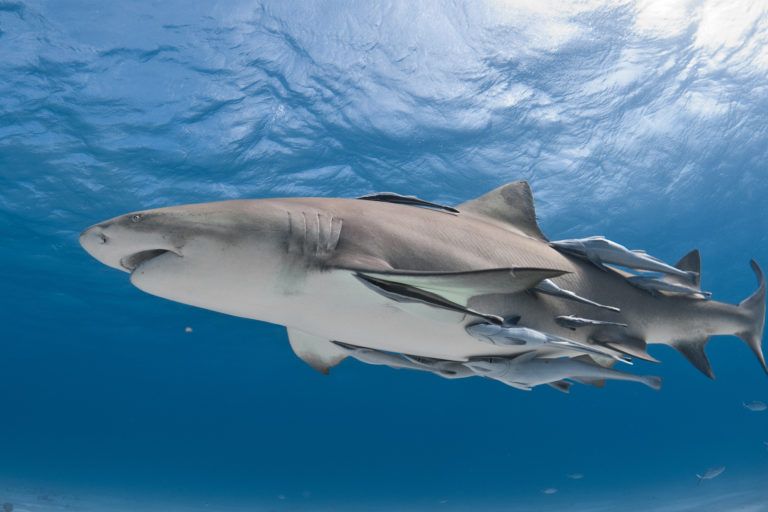
Shark conservation is often misunderstood as a complete ban on all activities involving sharks. In reality, it encompasses a range of efforts like habitat protection, sustainable fisheries, and responsible tourism, which allow us to enjoy diving while supporting shark populations.
Shark conservation refers to efforts to maintain healthy shark populations so they can continue to fulfil their vital role in marine ecosystems. This approach combines habitat protection, sustainable fisheries management, scientific research, and collaboration between governments, scientists, local communities, and the marine tourism industry.
Marine Protected Areas
Marine Protected Areas (MPAs) safeguard important habitats where sharks feed, breed, and migrate.
In places such as Raja Ampat and parts of Komodo, effective management of marine protected areas has helped maintain healthy ecosystems where a variety of shark species can still be found. In Raja Ampat, the government declared a dedicated shark and ray sanctuary in 2012, making it the first shark and ray sanctuary in Indonesia. This provides a concrete example of how marine protection can help safeguard important habitats for sharks and rays.
Sustainable Fisheries Management
Not all fishing activities need to be stopped. The key is ensuring they are managed sustainably.
Measures such as catch quotas, protection for specific shark species, size regulations, and effective monitoring of fishing practices all play an important role in maintaining healthy shark populations over the long term.
Research, Monitoring, and International Cooperation
Scientific research also plays a crucial role.
Using technologies such as satellite tagging, individual identification through body patterns, and population monitoring, researchers can better understand shark migration routes, critical habitats, and population trends.
Successful shark conservation requires international collaboration. Many shark species migrate across national boundaries, so that no single country can protect them alone.
Read Also: Surprising and Rare Marine Animals Found in Indonesia
How Shark Conservation Benefits Divers
Shark conservation not only benefits marine ecosystems, but also directly enhances the diving experience.
More Opportunities to Encounter Sharks
Healthy oceans provide greater opportunities to encounter sharks in their natural habitat.
For many divers, watching sharks swim freely is one of the most memorable underwater experiences. Promoting responsible diving practices helps ensure that these future encounters remain possible, inspiring hope and motivation to protect sharks for generations to come.
Healthier Coral Reefs Mean Better Diving
When shark populations remain healthy, it is easier to maintain the balance of marine ecosystems.
The result is healthier coral reefs, greater biodiversity, and a more rewarding diving experience. You have the opportunity to see not only sharks, but also a wide variety of reef fish, sea turtles, rays, and many other marine species during a single dive.
Supporting Local Communities Through Sustainable Dive Tourism
Responsible marine tourism not only benefits ecosystems but also builds community. Supporting local communities through sustainable dive tourism encourages a shared responsibility to protect sharks and ensures the future of coastal livelihoods.
Rather than generating value from a single catch, living sharks can continue attracting visitors for many years. Mustika et al. (2020) estimated that shark and ray tourism in Indonesia generated a median of USD 73.6 million in total attributable expenditure in 2017, highlighting the economic value of keeping these animals in the water.
In other words, protecting sharks can also mean supporting the future of coastal communities.
How Divers Can Help Protect Sharks
Every diver can make a real contribution. Here is how:
- Respect marine life by maintaining a safe distance.
- Do not chase, touch, or disturb sharks while diving.
- Avoid purchasing shark-derived products or supporting unsustainable trade.
- Choose dive operators that follow responsible marine tourism practices.
- Always follow your dive guide’s instructions and respect conservation regulations at every destination.
Final Thoughts
Sharks are often misunderstood, yet their role in the ocean is irreplaceable. They help maintain ecological balance, support healthy coral reefs, and are one reason many dive destinations continue to thrive with abundant marine life.
At the same time, overfishing, bycatch, and slow reproductive rates mean many shark populations need stronger protection. Through marine protected areas, sustainable fisheries management, scientific research, and collaboration between multiple stakeholders, we have the opportunity to safeguard their future.
As a diver, you also have an important role to play. Every decision to dive responsibly, respect wildlife, and choose operators committed to marine conservation meaningfully contributes to protecting sharks.
At La Galigo Liveaboard, we believe that healthy oceans create extraordinary diving experiences. By protecting sharks today, we help preserve the beauty of Indonesia’s underwater world for future generations of divers.
Frequently Asked Questions
Why is shark conservation important for the ocean?
Sharks play an essential role in maintaining the balance of marine ecosystems. As predators, they help regulate the populations of other marine animals, supporting healthier coral reefs and greater biodiversity. When shark populations decline significantly, the marine food web can be disrupted, affecting the overall health of the ocean.
Are all shark species endangered?
No, not all shark species are endangered. However, many species are declining due to overfishing, bycatch, and habitat degradation. Many sharks and rays are now considered threatened and require effective conservation measures.
How does shark conservation improve the diving experience?
Healthy shark populations often signal a healthy marine ecosystem. Dive sites with balanced ecosystems typically support more diverse marine life, healthier coral reefs, and greater opportunities to encounter iconic species, making every dive more rewarding.
Can scuba divers help protect sharks?
Yes. Every diver can contribute to shark conservation by practising responsible diving. Maintaining a respectful distance from marine life, avoiding touching or chasing sharks, following local conservation regulations, and choosing environmentally responsible dive operators all help minimise human impact on shark populations.
Where can you dive with sharks in Indonesia?
Indonesia is one of the best places in the world to encounter sharks in their natural habitat. Destinations such as Raja Ampat and Komodo are home to a variety of shark species, including blacktip reef sharks, whitetip reef sharks, grey reef sharks, and the unique wobbegong shark. Exploring these remote dive sites on a liveaboard allows divers to visit areas that are difficult to reach on day trips.
Is it safe to dive with sharks?
In most cases, yes. Most shark species are not interested in humans, and shark encounters during recreational diving are generally calm and predictable. Following your dive guide’s instructions, respecting marine life, and avoiding disruptive behaviour help ensure a safe and enjoyable experience for both divers and sharks.
Why are sharks often found at the world’s best dive sites?
Sharks thrive in healthy marine environments with abundant prey and well-balanced ecosystems. Their presence often indicates healthy coral reefs, diverse marine life, and relatively low levels of environmental disturbance, making these locations exceptional diving destinations.
References.
Pacoureau, N., Rigby, C. L., Kyne, P. M., Sherley, R. B., Winker, H., Carlson, J. K., Fordham, S. V., Barreto, R., Fernando, D., Francis, M. P., Jabado, R. W., Herman, K. B., Liu, K.-M., Marshall, A. D., Pollom, R. A., Romanov, E. V., Simpfendorfer, C. A., Yin, J. S., Kindsvater, H. K., & Dulvy, N. K. (2021). Half a century of global decline in oceanic sharks and rays. Nature, 589, 567–571.
Jaiteh, V. F., Lindfield, S. J., Erdmann, M. V., Gunawan, T. R. P., & Bejder, L. (2016). Higher abundance of marine predators and changes in fishers’ behaviour following spatial protection within the world’s biggest shark fishery. Frontiers in Marine Science, 3, 43.
Mustika, P. L. K., Ichsan, M., & Booth, H. (2020). The economic value of shark and ray tourism in Indonesia and its role in delivering conservation outcomes. Frontiers in Marine Science, 7, 261.
Roff, G., Doropoulos, C., Rogers, A., Bozec, Y.-M., Krueck, N. C., Aurellado, E., Priest, M., Birrell, C., & Mumby, P. J. (2016). The ecological role of sharks on coral reefs. Trends in Ecology & Evolution, 31(5), 395–407.