
An ocean that appears blue and crystal clear is not necessarily free from pollution. Beneath calm waters and beautiful coral reefs lies a threat that is almost invisible to the naked eye: microplastics.
At La Galigo, we believe that the best diving experiences are not only about enjoying the beauty of the underwater world, but also about understanding the challenges facing the ecosystems you visit. By learning how microplastics enter the ocean and move through the food chain, you can become part of more responsible marine tourism.
What Are Microplastics?
Microplastics are plastic particles measuring less than 5 millimetres. They can be as small as a sesame seed, and many are even smaller, making them visible only under a microscope.
Despite their tiny size, microplastics have now been found throughout almost every marine environment, from beaches, mangrove forests, seagrass meadows, and coral reefs to the open ocean and the deepest parts of the seabed. They have also been detected in a wide range of marine organisms living in different habitats.
In general, microplastics are divided into two categories.
Primary Microplastics
Primary microplastics are plastic particles that are intentionally manufactured in a small size.
Examples include:
- Plastic pellets used as industrial raw materials.
- Microbeads that were previously used in certain cosmetic products.
Because these particles are already extremely small, they can more easily pass through wastewater treatment systems before eventually reaching rivers and the ocean.
Secondary Microplastics
Most microplastics found in the ocean belong to this category.
Secondary microplastics are formed when larger plastic items gradually break down into increasingly smaller fragments through exposure to sunlight, ocean waves, temperature changes, and physical abrasion.
Drink bottles, plastic bags, food packaging, ropes, discarded fishing nets, and synthetic fibres shed from clothing do not simply disappear. Instead, they can gradually fragment or shed smaller plastic particles, contributing to microplastic pollution.
This is why plastic is often described as never truly disappearing. It simply breaks down into progressively smaller pieces.
How Do Microplastics Enter the Ocean?
Many people assume that most plastic pollution originates from ships or activities at sea. In reality, most marine plastic pollution begins with human activities on land.
Several main pathways carry microplastics into the ocean.
Rivers Are the Largest Pathway
Rivers link human activities on land to marine ecosystems. Plastic waste that is not properly managed can be washed into drainage systems by rainfall, carried into rivers, and eventually transported to the sea. During this journey, plastic continues to weather and fragment into increasingly smaller particles.
This is not an abstract problem for us. Research in Indonesia has documented substantial plastic transport through rivers into coastal waters. Studies of the Citarum River and river outlets around Greater Jakarta have found plastic to be a major component of riverine debris and have documented its transport towards the sea (Cordova et al., 2022). This is why improving waste management and reducing plastic leakage from land matters not only for communities on land, but also for the marine ecosystems we sail and dive in.
Household Wastewater
Every time synthetic clothing is washed, thousands of microscopic plastic fibres can be released into the wastewater.
Although wastewater treatment plants can filter out some of these particles, they don’t capture all of them. Some eventually flow into rivers and, ultimately, the ocean.
In addition to textile fibres, wastewater can also carry microplastic particles generated by various other household activities.
Stormwater Runoff
When it rains, water washes a variety of particles from roads, urban areas, and waste disposal sites.
Among these are tiny plastic particles and dust produced by tyre wear, which are then carried into drainage systems before eventually reaching rivers and coastal waters.
Fishing and Maritime Activities
Activities at sea also contribute to microplastics.
Fishing nets, mooring ropes, buoys, and other fishing equipment that are lost or damaged remain exposed to sunlight and wave action, gradually breaking down into much smaller particles.
This issue is also linked to ghost gear, which refers to fishing equipment that has been lost or abandoned at sea and continues to impact marine life long after it is no longer in use.
Why Don’t Microplastics Disappear?
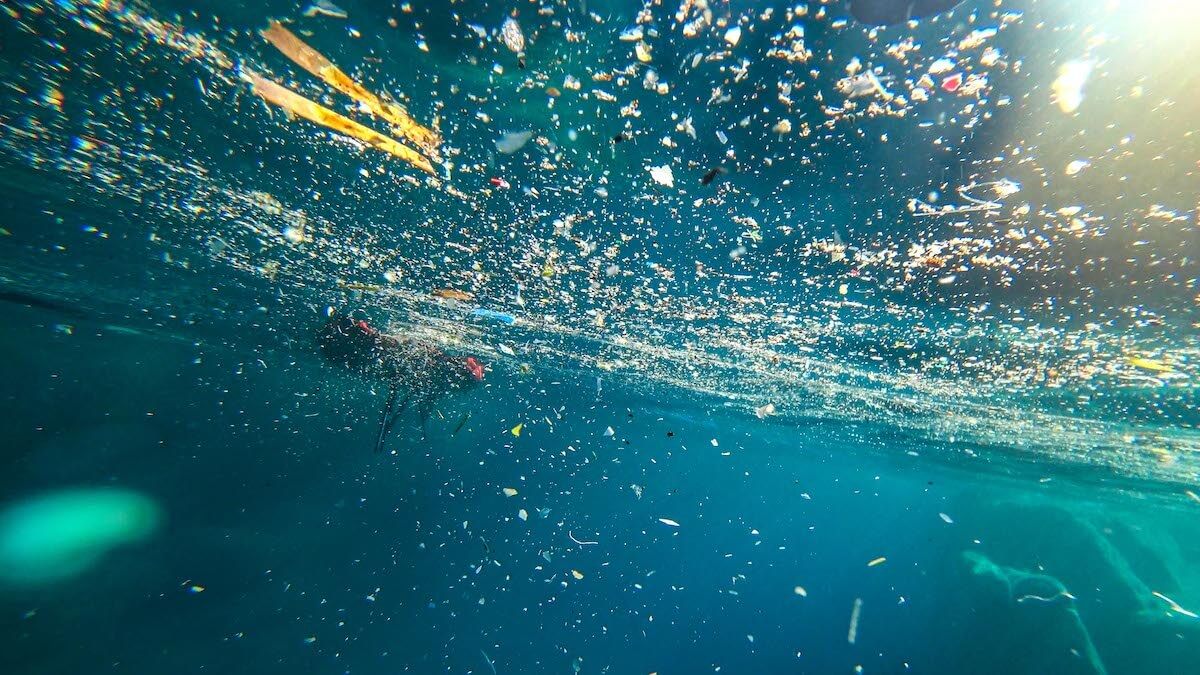
One of the most common misconceptions is that plastic breaks down like leaves or wood.
In reality, most plastics do not biodegrade quickly.
Instead, they undergo a process known as fragmentation.
Exposure to ultraviolet sunlight weakens plastic’s structure. Ocean waves, sand, and physical abrasion continue to break it into progressively smaller pieces.
Over time, large plastic items become microplastics and may continue to fragment into even smaller particles known as nanoplastics.
The smaller these particles become, the more difficult they are to remove from the marine environment.
This is why many scientists emphasise that preventing plastic from entering the ocean is far more effective than attempting to remove it once it has broken down into microplastics.
How Microplastics Enter the Marine Food Chain
The most concerning aspect of microplastics is not simply their presence in the ocean, but the way they move through the food chain.
This process is known as trophic transfer.
In simple terms, the pathway is as follows:
Plastic Waste
↓
Microplastics
↓
Plankton
↓
Small Fish
↓
Predatory Fish
↓
Humans
Step One: Ingested by Plankton
Plankton forms the foundation of most marine food webs.
Because microplastics are extremely small, they are often similar in size to the natural food consumed by plankton. As a result, plankton can accidentally ingest these particles.
Step Two: Transferred to Small Fish
Small fish then feed on plankton.
In doing so, the microplastics already present within the plankton are transferred into the fish.
Microplastics have been found in the digestive systems of numerous fish species, shellfish, oysters, and other marine organisms.
Step Three: Passed to Larger Predators
Predators such as tuna, sharks, rays, and marine mammals feed on smaller organisms.
As this process is repeated throughout the food web, microplastics can continue to move from one trophic level to the next.
Although the quantity and effects may vary between species, this transfer process is one of the main reasons microplastics have become a global concern.
Step Four: Reaching Humans
Humans are at the end of many marine food chains.
When we consume fish, shellfish, or other seafood, we may also ingest microplastics that were previously present in the marine environment.
Researchers have also detected microplastics in products such as sea salt and drinking water.
Read Also: Night Diving Tips: Rules, Equipment, Unique Sealife
How Microplastics Affect Marine Life
Microplastics may be incredibly small, but their impact on marine life should not be underestimated.
Disrupting Feeding
Many marine organisms cannot distinguish microplastics from their natural food.
When plastic particles fill their digestive systems, animals may feel full without receiving sufficient nutrition.
Over time, this can affect their growth and overall survival.
Placing Stress on Marine Organisms
Exposure to microplastics can cause various forms of biological stress in marine organisms.
Although responses vary between species, several studies have linked microplastic exposure to disruptions in metabolism, growth, and reproduction.
Carrying Chemical Compounds
The surface of microplastics can carry a variety of chemical compounds from the surrounding environment.
When marine organisms ingest these particles, the attached substances may also enter their bodies.
Affecting Entire Ecosystems
The effects of microplastics do not stop with a single species.
Because marine organisms are connected through the food web, changes at one trophic level can influence the balance of the entire ecosystem.
For diving destinations such as Raja Ampat and Komodo National Park, healthy ecosystems are the foundation of their extraordinary marine biodiversity.
How We Can Reduce Microplastic Pollution
The good news is that everyone can help reduce microplastic pollution, even if the results are not immediately visible.
Simple actions can make a meaningful difference when adopted collectively.
- Reduce your use of single-use plastics when travelling.
- Carry a reusable water bottle and reusable food containers.
- Choose products with more environmentally friendly packaging.
- Dispose of waste properly so that it does not enter rivers.
- Support improved waste management within local communities.
- Take part in beach clean-ups or marine conservation activities whenever possible.
- Choose tour operators that follow sustainable tourism practices.
At La Galigo, we believe that the best journeys are those that also benefit nature.
When you dive with us in Raja Ampat or Komodo, we always encourage responsible diving practices. Avoid touching marine wildlife, keep a respectful distance from coral reefs, reduce the use of single-use plastics, and leave the ocean just as beautiful as you found it.
Every small decision you make on land can have a significant impact on the underwater world you will encounter.
Frequently Asked Questions
What are microplastics?
Microplastics are plastic particles measuring less than 5 millimetres in size. They originate either as intentionally manufactured small plastic particles or from the breakdown of larger plastic items.
How do microplastics enter the ocean?
Microplastics enter the ocean through rivers, household wastewater, stormwater runoff, fishing activities, and various other human activities in coastal areas.
How do microplastics enter the food chain?
Plankton can ingest microplastics, which can then be transferred to small fish, larger predators, and ultimately to humans through seafood consumption.
Are all marine animals affected by microplastics?
Studies have detected microplastics in a wide range of marine organisms, including plankton, fish, shellfish, sea turtles, seabirds, and marine mammals. However, exposure levels vary by species.
Can microplastics be removed from the ocean?
It is extremely difficult. Once plastic has fragmented into tiny particles, recovering it from the marine environment becomes far more challenging. This is why preventing plastic from entering the ocean is considered the most effective solution.
How can divers help reduce microplastic pollution?
Divers can help by using reusable equipment and containers, reducing reliance on single-use plastics, following responsible diving practices, and supporting tour operators committed to marine conservation.
References
Ghosh, S., Sinha, J. K., Ghosh, S., Vashisth, K., Han, S., & Bhaskar, R. (2023). Microplastics as an emerging threat to the global environment and human health. Sustainability, 15(14), 10821.
Cordova, M. R., Nurhati, I. S., Shiomoto, A., Hatanaka, K., Saville, R., Riani, E., & others. (2022). Spatiotemporal macro debris and microplastic variations linked to domestic waste and textile industry in the supercritical Citarum River, Indonesia. Marine Pollution Bulletin, 176, 113338.
Luqman, A., Nugrahapraja, H., Wahyuono, R. A., Islami, I., Haekal, M. H., Fardiansyah, Y., Putri, B. Q., Amalludin, F. I., Rofiqa, E. A., Götz, F., & Wibowo, A. T. (2021). Microplastic contamination in human stools, foods, and drinking water associated with Indonesian coastal population. Environments, 8(12), 138.