
Imagine diving into crystal-clear waters. Beneath the surface, vibrant coral reefs stretch as far as the eye can see. A sea turtle glides calmly beside you, while shimmering schools of tropical fish move in perfect unison with the current. Moments later, a majestic manta ray sweeps gracefully past, creating an unforgettable experience.
Experiences like these are not just a dream. You can find them in the Coral Triangle, a marine region recognised as the world’s richest centre of marine biodiversity.
So, what makes the Coral Triangle so extraordinary compared to other marine destinations? Let’s explore it together.
What Is the Coral Triangle?
The Coral Triangle is a tropical marine region that spans six countries: Indonesia, Malaysia, the Philippines, Papua New Guinea, the Solomon Islands, and Timor-Leste. Covering millions of square kilometres of ocean, it is home to the most diverse marine ecosystems on the planet.
Often referred to as the “Amazon of the Seas”, the Coral Triangle is renowned for its extraordinary biodiversity. In the delineation published by Veron and colleagues, the Coral Triangle was identified as home to 605 species of reef-building corals, representing around 76% of all known reef-building coral species worldwide, along with thousands of species of fish, molluscs and crustaceans, and a rich diversity of marine mammals. This remarkable diversity makes the Coral Triangle one of the most important regions for global marine life.
For us at La Galigo, however, the Coral Triangle is far more than a region defined by impressive statistics. It is home to underwater experiences that are difficult to find anywhere else in the world. Every dive reveals something different, every island has its own unique character, and every journey offers new surprises.
What Makes the Coral Triangle So Special?
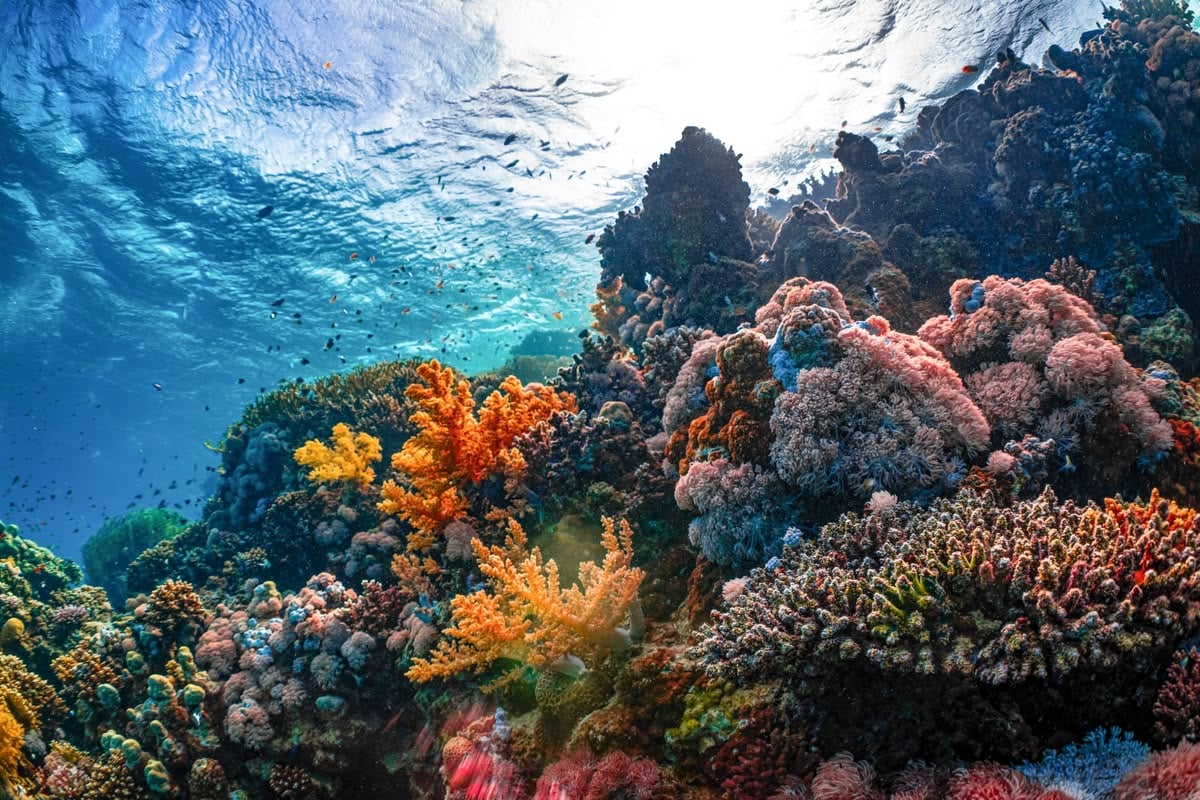
If you are wondering why the Coral Triangle deserves a place on every ocean lover’s bucket list, the answer is simple: nowhere else in the world offers marine biodiversity quite like this region.
Over millions of years, warm tropical waters, nutrient-rich ocean currents, and unique geographical conditions have created the ideal environment for thousands of marine species to thrive. The result is an exceptionally rich ecosystem that continues to captivate travellers from around the world.
The greater the diversity of marine life in a destination, the greater your chances of enjoying spectacular diving or snorkelling experiences.
During a single trip, you may encounter:
- Healthy, vibrant coral reefs bursting with colour.
- Large schools of tropical fish.
- Green sea turtles swimming peacefully above the reefs.
- Manta rays gliding gracefully through the currents.
- Reef sharks patrolling the reef.
- Pygmy seahorses measuring only a few centimetres in length.
- Colourful nudibranchs that are favourites among macro photographers.
This incredible diversity makes every dive feel unique. Even if you return to the same dive site during a different season, you may still discover marine species or behaviours you have never seen before.
That is why so many international divers return to the Coral Triangle time and time again. They do not come for just a single dive. They come back to discover new experiences in a region that never ceases to amaze.
Incredible Marine Life You Can Encounter
One of the things that makes the Coral Triangle so unforgettable is the opportunity to encounter a remarkable variety of iconic marine species in their natural habitats.
Imagine yourself on a drift dive in the waters of Komodo. In the distance, several manta rays slowly emerge from the deep blue sea, gliding so gracefully that they appear to dance with the current. Moments like these often become the highlight of a diver’s journey.
Elsewhere, you may find yourself swimming alongside green sea turtles as they forage among seagrass meadows or watching reef sharks cruising calmly along the edge of the reef. If you are fortunate, you may also encounter schools of barracuda, giant trevallies, Napoleon wrasse, and eagle rays passing effortlessly before you.
For macro photography enthusiasts, the Coral Triangle is a destination unlike any other. Tiny marine creatures such as pygmy seahorses, nudibranchs, frogfish, and ghost pipefish can be found at many dive sites. Although they are incredibly small, their unique shapes and vibrant colours have made them favourite subjects for underwater photographers worldwide.
The wonders of the Coral Triangle extend beyond what lies beneath the surface. While sailing with us, you may also have the chance to watch dolphins swimming alongside the boat, whales migrating through the region during certain seasons, and seabirds soaring above the open ocean.
Every day offers something different. No two journeys are ever the same. That is what makes the Coral Triangle feel so vibrant and endlessly full of surprises.
World-Class Diving and Snorkelling Destinations
One of the Coral Triangle’s greatest strengths is the diversity of destinations it offers. Spanning six countries, this region provides a wide range of underwater experiences, from colourful coral gardens to unforgettable encounters with iconic marine wildlife.
If you are planning to explore the Coral Triangle, here are some destinations that deserve a place on your itinerary.
Indonesia
As the country with the largest share of the Coral Triangle, Indonesia is home to some of the world’s finest diving destinations. Each location has its own distinctive character, ensuring there is always something new to discover.
Raja Ampat
Often regarded as the heart of the Coral Triangle, Raja Ampat, located in Southwest Papua, is renowned for having one of the highest levels of marine biodiversity on Earth. Here, you can explore exceptionally healthy coral reefs while encountering manta rays, wobbegong sharks, and pygmy seahorses, all within a single journey.
Read Also: What to Prepare for Your Travels to Raja Ampat on a Liveaboard Trip
Komodo National Park
Komodo is home to the famous Komodo dragons and a paradise for divers. Its nutrient-rich currents create the perfect habitat for manta rays, sea turtles, reef sharks, and large schools of pelagic fish. Every dive in Komodo offers a different sense of adventure.
Alor
If you are looking for a quieter destination, Alor is an excellent choice. Its coral reefs remain remarkably pristine, with outstanding underwater visibility. Alor is also a favourite among macro photographers thanks to its abundance of unique small marine species.
Wakatobi
Known for its crystal-clear waters and exceptionally healthy coral reefs, Wakatobi offers comfortable diving experiences for divers of all skill levels. Whether you are a beginner or an experienced diver, you can enjoy its spectacular underwater scenery.
Bunaken
Located in North Sulawesi, Bunaken is famous for its spectacular wall dives. Its dramatic reef walls are covered with soft corals and sponges, while sea turtles and colourful reef fish thrive in the clear blue waters.
Papua New Guinea
Papua New Guinea offers some of the Coral Triangle’s most remote and rewarding diving experiences. With healthy coral reefs, diverse marine life, and relatively undeveloped underwater environments, destinations such as Kimbe Bay provide an opportunity to explore the region’s remarkable biodiversity away from more established dive hubs.
Kimbe Bay
Located on the north coast of New Britain Island, Kimbe Bay is known for its rich coral reefs and diverse marine ecosystems. Divers can encounter colourful reef fish, sea turtles, sharks, rays, and a variety of hard and soft corals across its reefs and underwater seascapes.
Philippines
The Philippines offers a remarkable combination of beautiful coral reefs, abundant marine life, and world-class dive sites.
Tubbataha Reefs Natural Park
Tubbataha is one of the world’s best-protected marine areas. Accessible only by liveaboard, it offers an exclusive diving experience in one of the planet’s most pristine underwater environments. Tubbataha is open to divers for only a short season each year, roughly mid-March to mid-June.
Apo Reef
Apo Reef is the largest contiguous coral reef system in the Philippines. Its waters are home to sea turtles, reef sharks, and a wide variety of tropical fish living among healthy coral formations.
Anilao
For underwater photography enthusiasts, Anilao frequently tops the bucket list. It is recognised as one of the world’s finest places to discover rare and unusual macro marine species.
Malaysia
Malaysia is also home to several internationally renowned diving destinations within the Coral Triangle.
Sipadan
Sipadan consistently ranks among the world’s best dive sites. The island is famous for its spectacular barracuda tornadoes, large populations of green sea turtles, reef sharks, and dramatic underwater walls. To help manage visitor pressure and protect its marine environment, Sipadan limits the number of divers who can visit each day through a permit system.
Mabul
Located close to Sipadan, Mabul offers a completely different diving experience. It is celebrated as a macro diving paradise, where divers can find fascinating creatures such as frogfish, nudibranchs, and blue-ringed octopuses.
Solomon Islands
If you are looking to explore destinations that remain relatively uncrowded, the Solomon Islands offer a more exclusive experience.
Marovo Lagoon
As one of the largest lagoons in the world, Marovo Lagoon is home to remarkably pristine coral reefs and exceptional underwater visibility.
Florida Islands
The Florida Islands combine beautiful coral gardens with fascinating World War II shipwrecks, making them an outstanding destination for both divers and underwater photographers.
Coral Triangle: More Than Just a Diver’s Paradise
Although the Coral Triangle is renowned as a world-class diving destination, its appeal extends far beyond the underwater world.
Many islands in the region boast unspoilt white-sand beaches, turquoise waters, and a peaceful atmosphere far removed from the crowds. You can enjoy island hopping to explore a collection of small islands, each with its own distinctive character.
For photography enthusiasts, every corner of the Coral Triangle offers breathtaking scenery. From dramatic karst island landscapes and tranquil sunrises over the ocean to spectacular sunsets that paint the sky in shades of orange and purple, there is no shortage of unforgettable views.
When travelling aboard a liveaboard, the journey itself becomes part of the experience. Waking up to views of tropical islands, enjoying a morning coffee on deck, and sailing towards your next dive site creates a relaxed yet adventurous rhythm that is difficult to match.
It is also not uncommon to see dolphins swimming alongside the boat or flocks of seabirds gliding overhead. Moments like these remind you that the Coral Triangle is not simply a destination to visit, but a place to be truly experienced.
Explore the Coral Triangle with La Galigo Liveaboard
The Coral Triangle is more than just a destination. It is a place where you can witness the ocean’s wonders at their most spectacular.
From the vibrant coral gardens of Raja Ampat and the nutrient-rich waters of Komodo National Park to many other iconic destinations, every journey offers something unique. Whether you are embarking on your very first liveaboard adventure or are already an experienced diver, there is always something new to discover in the Coral Triangle.
At La Galigo Liveaboard, we invite you to explore this extraordinary region in comfort and safety, with a genuine sense of purpose. Our team understands that every journey is an opportunity to build a deeper connection with nature while creating memories that will stay with you for years to come.
We ask all our guests to observe marine animals on their terms, with no touching or chasing, and to maintain careful buoyancy over the reef. The best encounters are the ones the animal chooses to have.
If the Coral Triangle has been on your travel bucket list for some time, now is the perfect opportunity to make that dream a reality.
Join us aboard La Galigo Liveaboard and discover for yourself why the Coral Triangle is a destination every ocean lover should experience.
FAQ
What is the Coral Triangle?
The Coral Triangle is a tropical marine region spanning six countries: Indonesia, Malaysia, the Philippines, Papua New Guinea, the Solomon Islands, and Timor-Leste. It is recognised as the world’s richest centre of marine biodiversity, providing habitat for hundreds of coral species and thousands of fish and other marine species.
Why is the Coral Triangle called the “Amazon of the Seas”?
The Coral Triangle is often called the “Amazon of the Seas” because of its extraordinary marine biodiversity. The region is home to more than 600 species of reef-building corals. Allen (2008) documented 2,228 species of reef fish in the Coral Triangle, accounting for approximately 37% of all known reef fish species worldwide. Making it one of the richest marine ecosystems on Earth.
Which countries are part of the Coral Triangle?
The Coral Triangle spans six countries across Southeast Asia and the Pacific:
- Indonesia
- Malaysia
- The Philippines
- Papua New Guinea
- The Solomon Islands
- Timor-Leste
Each country offers its own unique experiences for diving, snorkelling, and marine tourism.
What are the best destinations in the Coral Triangle?
Some of the most popular destinations within the Coral Triangle include Raja Ampat, Komodo National Park, Wakatobi, Alor, and Bunaken in Indonesia; Tubbataha Reefs and Apo Reef in the Philippines; Sipadan in Malaysia; and Marovo Lagoon in the Solomon Islands. Each destination offers distinctive underwater environments, ranging from pristine coral gardens to encounters with iconic marine wildlife such as manta rays, sea turtles, and reef sharks.
When is the best time to visit the Coral Triangle?
The best time to visit depends on the destination you choose, as each region has its own diving season. In general, October to April is considered the best season for exploring Raja Ampat, while April to November is often regarded as the ideal time to dive in Komodo National Park. Always check local weather conditions and diving seasons before planning your trip.
Is the Coral Triangle only suitable for divers?
No. In addition to diving, the Coral Triangle offers a wide range of activities, including snorkelling, island hopping, nature photography, birdwatching, sailing, and relaxing on pristine tropical beaches. Even if you are not a certified diver, you can still experience the beauty of the region through a variety of activities both above and below the water.
Why is a liveaboard the best way to explore the Coral Triangle?
Many of the Coral Triangle’s finest locations are remote and difficult to reach on day trips from the mainland. Travelling by liveaboard allows you to visit multiple destinations in a single journey, enjoy more diving or snorkelling sessions, and spend more time immersed in the region’s natural beauty without repeatedly returning to port. Beyond its convenience, the voyage itself becomes an unforgettable part of the adventure.
References
Allen, G. R. (2008). Conservation hotspots of biodiversity and endemism for Indo-Pacific coral reef fishes. Aquatic Conservation: Marine and Freshwater Ecosystems, 18(5), 541–556.
Veron, J. E. N., Devantier, L. M., Turak, E., Green, A. L., Kininmonth, S., Stafford-Smith, M., & Peterson, N. (2009). Delineating the Coral Triangle. Galaxea, Journal of Coral Reef Studies, 11(2), 91–100.