
When you picture a healthy marine ecosystem, you may immediately imagine colourful coral reefs, schools of tropical fish, or an endless expanse of blue ocean. However, before many marine animals reach coral reefs or spend their lives in the open ocean, an important part of their life journey may begin much closer to the shoreline.
In this article, we will take you deeper into how coastal ecosystems work, how the different habitats within them connect, and why keeping them healthy matters to the ocean as a whole.
What Are Coastal Ecosystems?
A coastal ecosystem is a community of organisms and their physical environment located in the transition zone between land and sea.
Coastal ecosystems are not a single habitat type. The term encompasses a network of habitats found where land and sea meet.
Examples include:
- Mangrove forests, where salt-tolerant trees and shrubs grow along the coastline.
- Seagrass meadows, formed by flowering plants that live entirely underwater.
- Coral reefs, complex underwater structures that provide habitat for a wide range of marine organisms.
- Estuaries, where freshwater from rivers mixes with seawater.
- Salt marshes, coastal wetland ecosystems dominated by plants that tolerate saline conditions.
- Coastal lagoons, shallow bodies of water that are partially separated from the open sea.
Coastal areas can be highly productive because they are influenced by both land and sea. Tides, currents, waves, sunlight, sediment, nutrients, and biological activity all shape these environmental conditions.
More importantly, the boundary between habitats is not always an ecological boundary.
A fish does not necessarily spend its entire life in one place.
Mangroves, seagrass meadows, and shallow coral reefs can function as interconnected habitats for reef-associated fish. Therefore, to understand coastal ecosystems, we also need to examine how different habitats connect.
Three Important Coastal Ecosystems
Mangrove Forests: Natural Protectors of the Coastline
Mangroves are trees and shrubs adapted to coastal environments, especially areas influenced by tides and salinity changes.
Mangroves’ complex roots create more than a distinctive coastal landscape. These roots also provide shelter and habitat for various marine organisms.
For juvenile fish, this function is particularly important. Mangrove areas can serve as nursery grounds, where young fish find protection and suitable conditions before moving to other coastal habitats.
Mangroves, together with seagrass meadows and shallow coral reefs, can serve as nursery habitats for reef-associated fish.
Raja Ampat offers a striking example of the connection between mangroves and coral reefs. In some of its marine lakes, hard corals grow directly on and between submerged mangrove roots, creating an unusual habitat where these two coastal ecosystems meet. These roots also provide habitat for marine life, including juvenile fish. This close connection makes the mangrove forests of Raja Ampat a compelling example of how coastal ecosystems can support marine biodiversity in interconnected ways.
Mangroves also influence the physical conditions of coastal environments. Their root systems can slow water movement and trap sediment, helping stabilise coastal areas.
This means mangroves connect two functions often discussed separately: supporting marine life while also helping protect the coastline.
Seagrass Meadows: Underwater Nurseries
Seagrasses are flowering plants that have adapted to live entirely underwater. They generally grow in relatively shallow coastal waters, where sunlight can still reach the seafloor.
From the surface, seagrass meadows may not look as dramatic as coral reefs. Yet underwater, they can provide highly productive habitats.
Their leaves and roots create physical structures that various marine organisms can use for feeding, shelter, and growth. As a result, seagrass meadows can form an important part of the life cycles of fish and other marine animals.
Their role extends beyond providing habitat.
Seagrass vegetation interacts directly with the seabed and can help stabilise sediment. This is important because waves and currents continually influence coastal waters. When sediment is easily disturbed, its movement can alter the environmental conditions needed by organisms living in shallow-water habitats.
Seagrass meadows also play a role in the coastal carbon cycle. Organic material from seagrasses can contribute to carbon storage in coastal sediments.
In essence: Seagrass meadows transform shallow coastal waters into productive habitats.
Coral Reefs: Centres of Biodiversity
Coral reefs are one of the most recognisable coastal ecosystems.
When you dive or snorkel with us, coral reefs may be the habitat that captures your attention the most. Their three-dimensional structures create so many spaces for marine organisms to shelter, feed, grow, and interact.
Coral reefs support diverse communities of fish and invertebrates. This diversity of life can also shape how these ecosystems function.
Coral reefs also have a physical role in coastal areas. A global analysis found that coral reefs reduce wave energy by an average of 97% before it reaches the shoreline (Ferrario et al., 2014). This highlights their importance as natural coastal defences, helping protect shorelines from wave impacts.
For coastal communities, coral reefs have both ecological and social value. Reefs support marine life and fisheries, while also contributing to the coastal environments where people live, work, and enjoy tourism activities.
In essence, coral reefs support marine biodiversity while also helping to protect coastal areas.
Read Also: Night Diving Tips: Rules, Equipment, Unique Sealife
How Are Coastal Ecosystems Connected?
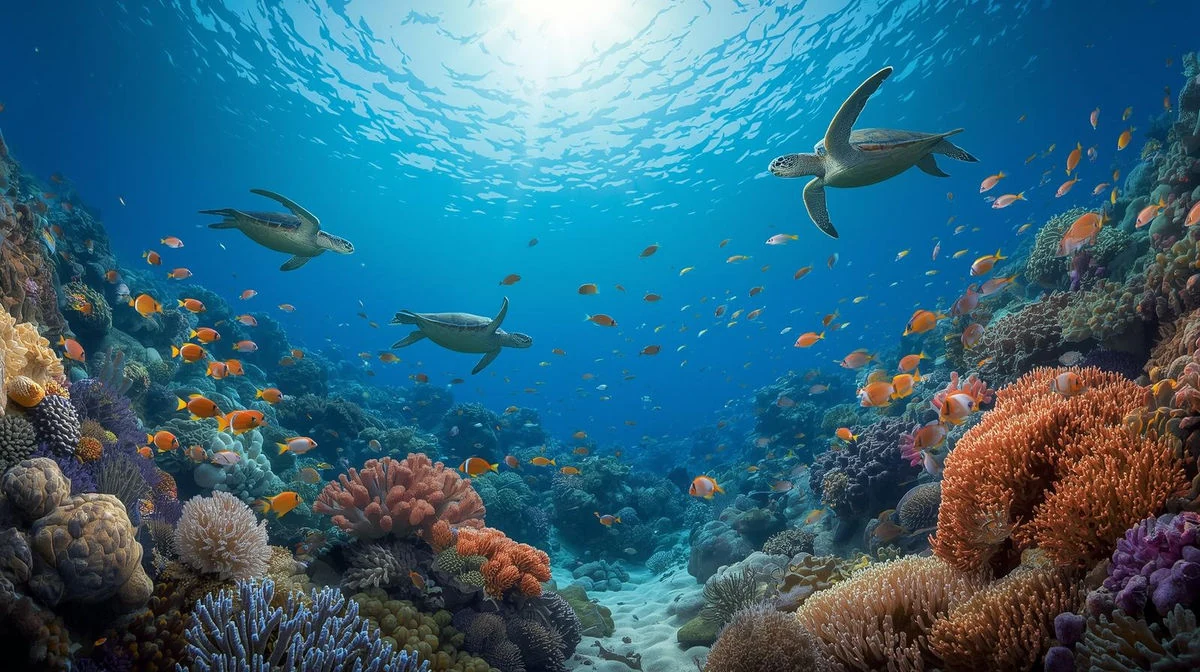
This is where the story of coastal ecosystems becomes even more interesting.
You may see mangrove forests, seagrass meadows, and coral reefs as three different places. However, for many marine organisms, these habitats can form part of a single life cycle.
One simple example is:
Mangroves → Seagrass Meadows → Coral Reefs
Juvenile fish may use mangroves as nursery habitats, then make use of seagrass meadows before some of them move and become associated with coral reefs as adults.
This pattern does not apply to every species. However, various studies provide strong evidence that coastal habitats connect through organism movement.
Researchers can investigate these movements using otolith chemistry. Otoliths, or fish ear stones, grow in layers throughout a fish’s life, much like tree rings. The chemical signatures preserved in these layers reflect the environments the fish has lived in. By analysing these layers, researchers can reconstruct where an individual fish has spent different stages of its life.
This changes how we see coastal ecosystems.
The question is not only:
“What lives in this habitat?”
But also:
“Where did this animal come from, and where will it go next?”
For this reason, coastal ecosystems are better understood as a network of interconnected habitats, rather than a collection of habitats that exist independently.
How Do Coastal Ecosystems Support Ocean Health?
Providing Habitat for Marine Life
Coastal ecosystems provide places for animals to shelter, feed, grow, and reproduce.
Mangroves and seagrass meadows can serve as important habitats for juvenile fish, while coral reefs provide complex structures for highly diverse communities of organisms.
Supporting Food Webs
Every ecosystem depends on interactions between organisms.
Primary producers capture energy. Herbivores feed on producers. Predators feed on other organisms. Decomposers help break down organic material and return nutrients to the environment.
Coastal ecosystems provide the physical space where these interactions take place.
When habitat structure and biodiversity remain intact, more ecological relationships can continue to function.
Helping to Protect the Coastline
Coastal ecosystems can also function as part of the natural infrastructure of coastlines.
Mangrove roots help retain and stabilise sediment. Seagrass vegetation influences sediment dynamics. Meanwhile, coral reef structures can reduce wave energy moving toward the shore.
In this way, coastal ecosystems are not only places where organisms live. They also help shape the physical conditions of coastal areas.
Playing a Role in the Carbon Cycle
Mangroves, seagrass meadows, and various vegetated coastal ecosystems also play a role in the movement and storage of carbon. This is known as blue carbon, which refers to carbon captured and stored by coastal and marine ecosystems.
Seagrasses, for example, produce organic material that can contribute to carbon stored in coastal sediments. Mangroves also contain biomass and sediments that hold organic material.
These ecosystems are particularly important because their sediments can accumulate and store organic carbon over long periods. In waterlogged sediments, limited oxygen slows the decomposition of organic matter, allowing some of the stored carbon to remain buried for centuries or even millennia if the sediments remain undisturbed. Research has found that mangrove sediments can store carbon at rates per unit area that exceed those of many terrestrial forests (McLeod et al., 2011; MacKenzie et al., 2021).
When mangroves are cleared or coastal sediments are disturbed, some of this stored carbon can be released back into the atmosphere. Protecting these habitats therefore helps preserve both coastal biodiversity and an important natural carbon store.
Supporting Human Life
People also benefit from coastal ecosystems.
Healthy ecosystems support fisheries, tourism, recreation, and coastal community livelihoods.
If you enjoy snorkelling or diving, these ecosystems also create the underwater landscapes that make exploring the ocean such a memorable experience.
When we take you exploring the waters of Indonesia, what you see as a beautiful diving site is actually a functioning ecosystem that supports countless connections between life beneath the surface.
What Threatens Coastal Ecosystems?
Coastal ecosystems have immense ecological value, but they also face pressures from both land and sea.
Coastal Development
Coastal development, land-use changes, dredging, and shoreline alterations can change or even eliminate coastal habitats.
Because coastal ecosystems occupy a limited space between land and sea, shoreline changes can affect areas beyond the development site.
Pollution
Pollution from land can also reach coastal waters.
Wastewater, agricultural runoff, excess nutrients, plastics, and sediment can alter water quality and environmental conditions.
This is one of the major challenges facing coastal ecosystems: what happens on land can ultimately affect the ocean.
Overfishing and Destructive Fishing
Fisheries provide food and income for many coastal communities. However, excessive fishing pressure can alter marine populations and disrupt ecological relationships.
Destructive fishing practices can also directly damage habitats.
Climate Change
Climate change adds further pressure through ocean warming, sea-level rise, changing environmental conditions, and an increased risk of extreme events in some areas.
For interconnected coastal ecosystems, these pressures can occur simultaneously.
Habitats already under pressure from human activities may have a reduced ability to cope with additional environmental changes.
In Indonesia, mangrove loss is also driven by the conversion of mangrove forests into aquaculture ponds, particularly for shrimp farming. Indonesia holds the world’s largest area of mangroves, and research has identified aquaculture expansion as a major driver of mangrove loss and degradation in the country (Aslan et al., 2021; Ilman et al., 2016). The loss of mangroves reduces important coastal habitats and can also affect the carbon stored in mangrove soils.
How Can We Protect Coastal Ecosystems?
Protecting coastal ecosystems begins with understanding that preventing damage is often better than rebuilding an ecosystem after it has been damaged.
Protecting Healthy Habitats
Conservation areas, responsible coastal development, and habitat protection can help maintain functioning ecosystems.
For interconnected habitats, protection should ideally also consider the relationships between mangroves, seagrass meadows, coral reefs, and other coastal ecosystems.
Restoring Damaged Ecosystems
When damage has already occurred, restoration can help rebuild ecological structure and function.
Restoring mangroves, seagrass meadows, and coral reefs requires different approaches, depending on the characteristics of each ecosystem. For mangrove restoration, restoring natural water flow and tidal conditions is essential because planting seedlings alone cannot ensure successful recovery.
For this reason, restoration is not simply about replanting vegetation or adding organisms to an area. Its goal should include restoring the environmental conditions and ecological relationships that allow the ecosystem to function over the long term.
Reducing Pollution From Land
Because coastal ecosystems sit between land and sea, protecting them must also begin on land.
Better wastewater management, reducing runoff, and preventing waste from entering rivers and the ocean can help maintain the health of coastal waters.
Practising Sustainable Fishing
Sustainable fishing helps maintain marine populations while reducing habitat damage.
Using more selective fishing gear, regulating catch levels, and protecting nursery and spawning habitats can help maintain ecological processes that coastal communities also depend on.
Supporting Responsible Tourism
You can also contribute when visiting coastal ecosystems.
When you snorkel or dive with us, a few simple actions can make a difference:
- Do not touch or stand on coral reefs.
- Give marine animals enough space.
- Follow local conservation rules.
- Do not take animals or natural materials as souvenirs.
- Choose tour operators that respect marine ecosystems.
Responsible tourism does not mean you have to enjoy the ocean less.
Instead, it means enjoying the ocean in a way that helps keep these ecosystems healthy for you, future generations, and the marine life that calls them home.
Why Are Coastal Ecosystems Important for the Future of Our Oceans?
When you look out at the ocean from the deck of a liveaboard, the sea may appear almost endless.
Yet many of the processes that support life across the open ocean actually begin much closer to the shoreline.
Coastal ecosystems are habitats for marine life. Mangroves, seagrass meadows, and coral reefs provide places for organisms to shelter, feed, grow, and interact.
They also function as natural infrastructure. Coastal vegetation and reef structures influence sediment, waves, and the physical conditions of coastal areas.
Just as importantly, these ecosystems are connected systems.
A healthy ocean cannot exist independently of healthy coastal ecosystems.
Coastal ecosystems support much of the ocean’s ability to remain functional and withstand environmental pressures.
Final Thoughts
Coastal ecosystems may occupy the transitional space between land and sea, but their influence extends far beyond the shoreline.
Mangrove forests provide habitat and help maintain coastal stability. Seagrass meadows create productive underwater habitats and influence sediment dynamics. Coral reefs support extraordinary biodiversity while also performing a range of important ecological functions.
More importantly, these habitats can work together.
Fish move between different habitats. Water and sediments connect them. Various ecological processes allow one habitat to influence another.
That is why protecting coastal ecosystems doesn’t mean protecting mangroves, seagrass meadows, or coral reefs individually. We also need to protect the network of habitats that lets marine life survive and ecosystems remain functional.
At La Galigo, we believe that the more you understand what lies beneath the surface, the more meaningful every diving experience becomes.
FAQ
1. What are coastal ecosystems?
Coastal ecosystems are ecosystems found in areas where land and sea meet. They include habitats such as mangrove forests, seagrass meadows, coral reefs, estuaries, salt marshes, and coastal lagoons. These habitats can be connected through the movement of animals, water, sediments, and nutrients.
2. What are the main types of coastal ecosystems?
Main types of coastal ecosystems include mangrove forests, seagrass meadows, coral reefs, estuaries, salt marshes, and coastal lagoons. Each has different environmental conditions and ecological functions, but they can interact as part of a broader coastal network.
3. Why are coastal ecosystems important?
Coastal ecosystems are important because they provide habitat for marine life, support food webs, help maintain coastal stability, contribute to the carbon cycle, and support human activities such as fishing and tourism.
4. How do mangroves, seagrass, and coral reefs work together?
Mangroves, seagrass meadows, and coral reefs can be connected through the movement of organisms and environmental processes. Some fish may use mangroves or seagrass meadows as habitats during their juvenile stages before moving to and becoming associated with coral reefs as adults. These relationships are known as ecological connectivity.
5. Why are mangroves important for marine life?
Mangroves provide sheltered habitats for various organisms, including juvenile fish. Their root systems create spaces for marine life to shelter and can help trap sediments. As a result, mangroves support marine life while also helping maintain coastal conditions.
6. Why are seagrass meadows important?
Seagrass meadows provide habitat and feeding grounds for various marine organisms, including juvenile fish. Seagrass vegetation can also help stabilise sediments and contribute to the coastal carbon cycle. So, although seagrass meadows are often less visually striking than coral reefs, they play important ecological roles.
7. What threatens coastal ecosystems?
Coastal ecosystems face various pressures, including coastal development, land-use changes, pollution, overfishing, destructive fishing practices, and climate change. These pressures can reduce habitat quality and disrupt ecological connections between habitats.
8. How can we protect coastal ecosystems?
We can help protect coastal ecosystems by conserving healthy habitats, restoring degraded areas, reducing land-based pollution, promoting sustainable fishing practices, and engaging in responsible tourism. When snorkelling or diving, for example, you can avoid touching or standing on coral and follow local conservation guidelines.
References
Benkwitt, C. E., Wilson, S. K., & Graham, N. A. J. (2020). Biodiversity increases ecosystem functions despite multiple stressors on coral reefs. Nature Ecology & Evolution, 4, 919–926.
Chen, L., Liu, X., Zhu, A., Wang, X., & Liu, J. (2026). Seasonal dynamics of seagrass-mediated sediment stabilization in a temperate eelgrass meadow: Field evidence from the Yellow Sea. Frontiers in Marine Science, 13, Article 1843359.
Kimirei, I. A., Nagelkerken, I., Mgaya, Y. D., & Huijbers, C. M. (2013). The mangrove nursery paradigm revisited: Otolith stable isotopes support nursery-to-reef movements by Indo-Pacific fishes. PLOS ONE, 8(6), Article e66320.
Nagelkerken, I., Dorenbosch, M., Verberk, W. C. E. P., de la Morinière, E. C., & van der Velde, G. (2000). Importance of mangroves, seagrass beds and the shallow coral reef as a nursery for important coral reef fishes, using a visual census technique. Estuarine, Coastal and Shelf Science, 51(1), 31–44.
Unsworth, R. K. F., de León, P. S., Garrard, S. L., Jompa, J., Smith, D. J., & Bell, J. J. (2008). High connectivity of Indo-Pacific seagrass fish assemblages with mangrove and coral reef habitats. Marine Ecology Progress Series, 353, 213–224.
Ferrario, F., Beck, M. W., Storlazzi, C. D., Micheli, F., Shepard, C. C., & Airoldi, L. (2014). The effectiveness of coral reefs for coastal hazard risk reduction and adaptation. Nature Communications, 5, Article 3794.
McLeod, E., Chmura, G. L., Bouillon, S., Salm, R., Björk, M., Duarte, C. M., Lovelock, C. E., Schlesinger, W. H., & Silliman, B. R. (2011). A blueprint for blue carbon: Toward an improved understanding of the role of vegetated coastal habitats in sequestering CO₂. Frontiers in Ecology and the Environment, 9(10), 552–560.
MacKenzie, R. A., Sharma, S., & Rovai, A. R. (2021). Environmental drivers of blue carbon burial and soil carbon stocks in mangrove forests. In F. Sidik & D. Friess (Eds.), Dynamic sedimentary environments of mangrove coasts (pp. 275–294). Elsevier.
Ilman, M., Dargusch, P., Dart, P., & Onrizal. (2016). A historical analysis of the drivers of loss and degradation of Indonesia’s mangroves. Land Use Policy, 54, 448–459.
Aslan, A., Rahman, A. F., Robeson, S. M., & Ilman, M. (2021). Land-use dynamics associated with mangrove deforestation for aquaculture and the subsequent abandonment of ponds. Science of the Total Environment, 791, Article 148320.