
When you imagine fishing, the first thing that may come to mind is the fish that people actually want to catch. Fishers go to sea, use specific fishing gear, and then bring home the catch they are targeting. However, another part of the process often goes unseen: animals that are caught even though they are not the primary target.
These animals are associated with bycatch.
The scale is easy to underestimate. Around nine million tonnes of marine life are discarded from the world’s fisheries each year, roughly 11% of the total catch. The encouraging part is that this is about half what it was in the late 1980s, which tells us something important: bycatch is a problem that responds to being worked on (Gilman et al., 2020).
Bycatch refers to non-target catch that occurs during fishing activities. In other words, when fishers try to catch one species, the fishing gear they use may also interact with other species.
In this article, we will explain what bycatch is, how accidental capture occurs, which animals can be affected, and why this issue matters for ocean health.
What Is Bycatch?
The Difference Between Target Catch and Bycatch
The simplest way to understand bycatch is to distinguish between target catch and non-target catch.
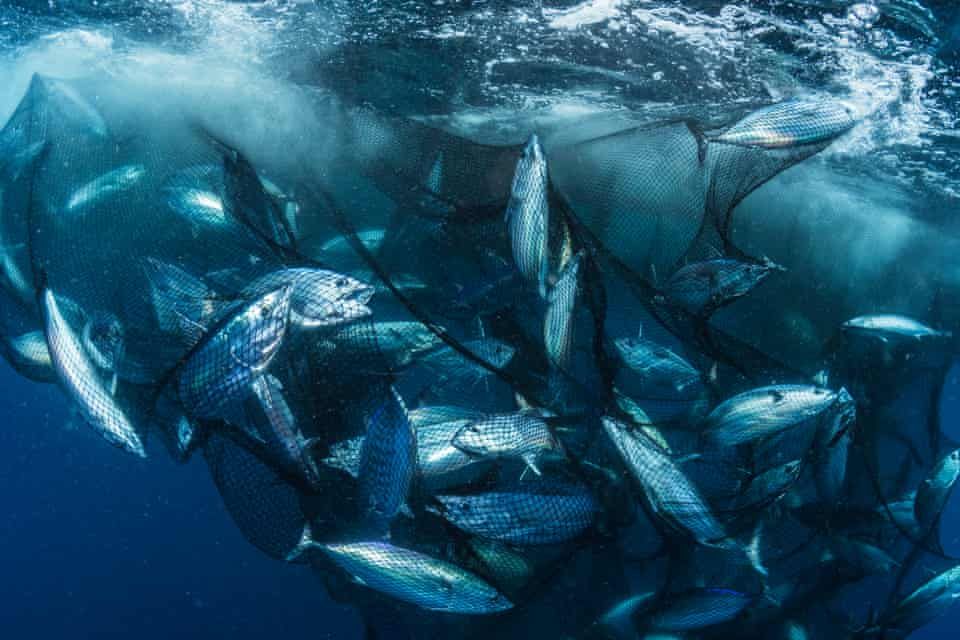
Target catch refers to the species that fishers intend to catch. For example, if a fishery targets tuna, tuna are the species expected to make up the catch.
However, fishing gear cannot always select only one species. During fishing, other species may also be caught. If those species are not part of the target, the catch may be categorised as bycatch.
Imagine that you are looking for one particular type of fish in the sea. You may have already determined the appropriate location, depth, and fishing gear. But the ocean does not work like a supermarket with neatly separated shelves. Different species can live in the same area or interact with the same fishing gear.
That is why bycatch can occur even when the target species is clearly defined.
What Counts as Bycatch?
Bycatch does not always mean animals that are immediately discarded back into the sea.
The concept of bycatch is broader and includes organisms caught but not the primary target of fishing activities. Literature on bycatch shows that the term can encompass various situations, including non-target catch and different biological consequences depending on the fishery and fishing gear involved.
This is important because we cannot assess the impact of bycatch simply by looking at whether an animal is eventually released.
An animal may be released back into the sea, but that does not necessarily mean it has emerged from the interaction without any consequences. Injury, exhaustion, or physical condition after capture can affect its chances of survival. On the other hand, some animals may be released in a condition that allows them to survive.
So, bycatch does not automatically mean death. However, when accidental capture results in injury or mortality, the impact becomes a more serious conservation concern.
How Does Bycatch Happen?
Fishing Gear and Accidental Capture
One important thing to understand is that not all fishing gear produces the same bycatch patterns.
The gear’s shape, how it operates, where it is used, and how it interacts with marine organisms can determine which species are likely to be caught incidentally.
Longlines, for example, use a mainline with many hooks. This gear can catch target species, but other animals attracted to the bait may also interact with the hooks.
Gillnets work differently. These nets can act as barriers to swimming animals, meaning non-target species may become entangled when they interact with the net.
Trawls pull nets through the water or near the seabed. Because the area interacting with the net can be relatively large, various non-target organisms may also enter the net.
Meanwhile, purse seines use nets to surround groups of fish. Under certain conditions, non-target organisms may become enclosed along with the target species.
So, when you ask, “Which fishing method causes bycatch?”, the answer is not as simple as pointing to a single type of gear. The impact depends on how the gear is used and which species are present in the fishing area.
Some Marine Animals Are More Vulnerable
Not all marine animals are equally likely to interact with fishing gear.
Habitat, body size, feeding behaviour, migration patterns, and how a species moves through the water can influence the likelihood of interacting with fishing gear.
Turtles are one easy-to-understand example. When longlines are used, turtles may be attracted to the bait and subsequently interact with the hooks. With net-based fishing gear, turtles can also become entangled or caught when swimming through areas where nets have been set.
Species that live in the same areas as the target fishery also have a greater chance of interacting with fishing gear. Therefore, bycatch is not simply a matter of fishing gear “catching the wrong animal”. It also relates to the overlap between fishing activities, animal behaviour, and habitat.
The Ecological Impact of Bycatch
Disrupting Marine Food Webs
To understand why bycatch can be an ecological concern, you need to view the ocean as a food web, rather than as a collection of species that exist independently.
A single organism can be a predator, prey, competitor, or part of several ecological relationships at the same time. When fishing mortality continuously removes individuals of a species, these changes can interact with relationships among other species.
For example, if a predator population experiences sufficient pressure, predator-prey relationships within the ecosystem may change. Conversely, losing an organism that serves as a food source can also affect species that depend on it.
Changing Population Dynamics
The impact of bycatch also needs to be considered at the population level.
A single animal caught accidentally does not necessarily have the same consequences as thousands of repeated interactions. When bycatch-related mortality continues, this pressure can change population size or structure, particularly in species with biological characteristics that slow recovery.
This is especially true for long-lived species with relatively low reproductive rates. Groups such as marine mammals, sea turtles, seabirds, and sharks can be particularly vulnerable to incidental mortality.
Effects That Ripple Through the Ecosystem
The ecological cost of fishing is not always visible in the number of fish successfully brought home. Other impacts may affect non-target species, alter populations, and, under certain conditions, interact with broader ecological processes.
However, we also need to be cautious.
Not every instance of bycatch automatically changes an entire ecosystem. The scale of the impact depends on the species affected, the number of animals caught, the mortality rate, the population’s condition, and the species’ position within the food web.
Which Marine Animals Are Affected by Bycatch?
Sea Turtles
Sea turtles are among the groups that frequently receive attention in discussions about bycatch because they can interact with various types of fishing gear.
In longline fisheries, for example, turtles may be attracted to bait and caught on hooks. With certain types of nets, they may also become entangled.
Sharks and Rays
Sharks and rays can also be caught as bycatch, particularly when fishing gear interacts with species that are not the primary targets.
This is a concern because some shark and ray species grow relatively slowly, reach sexual maturity at an older age, and produce a limited number of offspring. These characteristics can make population recovery more difficult when mortality increases.
Marine Mammals and Seabirds
Marine mammals and seabirds can also be caught as bycatch in certain types of fishing gear.
For seabirds, for example, interactions with fishing gear can occur when they are attracted to bait. Marine mammals can become entangled or interact with fishing gear in other ways.
Non-Target Fish and Other Marine Species
Bycatch is certainly not limited to animals that are visually appealing or popular in conservation campaigns. Various non-target fish and invertebrates can also be caught. In fact, the concept of bycatch itself arises from the fact that fishing gear cannot always perfectly select the organisms that fishers intend to catch.
However, bycatch does not occur evenly across the world’s oceans. Lewison et al. (2014) identified hotspots where bycatch of marine mammals, seabirds, and sea turtles is concentrated. Their findings also show that different fishing gear affects different groups of marine animals: gillnets are a major concern for marine mammals, while longlines pose significant risks to seabirds and sea turtles. Several identified hotspots are located in the Indo-Pacific.
Research in Indonesian waters shows that bycatch is also a local conservation concern. A study of small-scale fisheries in Gorontalo, northern Sulawesi, documented bycatch involving marine mammals, reef sharks, whale sharks, mobulid rays, and sea turtles. The findings showed that the species affected varied according to fishing location and gear type, highlighting the importance of developing bycatch mitigation measures suited to local fisheries (Mustika et al., 2021).
These patterns matter because they show that bycatch is not simply a widespread problem affecting marine animals at random. Its distribution can be mapped, and the interactions between fishing gear and vulnerable species can be identified. This makes it possible to target mitigation measures towards the areas and fishing practices where they are most needed.
How Can We Reduce Bycatch?
Making Fishing Gear More Selective
One of the main approaches to reducing bycatch is making fishing gear more selective.
The goal is not to make fishing gear catch everything in smaller quantities, but to better distinguish between target and non-target species.
Several proven examples demonstrate how changes to fishing gear can reduce bycatch:
- Turtle excluder devices (TEDs). These are grids fitted into trawl nets that allow shrimp to pass through while guiding turtles towards an escape opening. They have dramatically reduced turtle capture in fisheries that use them.
- Circle hooks. Changing the shape of a longline hook makes it more likely to catch in a turtle’s jaw rather than be swallowed. As a result, turtles that take the bait are more likely to survive.
- Bird-scaring streamer lines. These lines, fitted with coloured streamers and trailed behind a vessel, help keep seabirds away from baited hooks as they sink. In some fisheries, they have reduced albatross deaths to near zero.
Importantly, no single technology is automatically suitable for every fishery. Solutions need to be adapted to the target species, location, fishing method, and species that need protection.
Changing Fishing Practices
In addition to modifying fishing gear, changes to how and when fishing takes place can also help.
If scientists know that a non-target species is more frequently present in a particular area or during a certain period, they can use this information to adjust location, depth, timing, or fishing techniques.
This approach reduces the likelihood of overlap between fishing activity and vulnerable species.
Research on bycatch shows that mitigation should not focus on a single species or gear type. Because many animals can move across large areas and interact with different fisheries, a more coordinated approach can be important.
Better Fisheries Management
Data are also an important part of the solution.
Monitoring and observer programmes can help scientists understand how much bycatch occurs, which species are affected, and under what conditions these interactions take place.
This information can then be used to develop management measures, bycatch limits, regulations, and more effective mitigation strategies.
Reducing bycatch does not mean that we have to stop fishing.
Fishing provides food, income, and livelihoods for many communities. Therefore, a more realistic approach is to find ways to continue catching target species while reducing the impact on non-target species.
Fishers play an important role in this process because they understand field conditions: how fishing gear works, how seasonal changes affect catches, and what can realistically be applied in everyday fishing activities.
Effective solutions require collaboration between fishers, scientists, fisheries managers, and communities.
ALSO READ : What is Ocean Sound and Underwater Noise Pollution?
Why Reducing Bycatch Matters for the Future of Our Oceans
Bycatch reminds us that the impact of fishing is not always visible in what is successfully caught.
Behind every target catch, there is a possibility of interactions with other organisms. Some interactions may not result in long-term impacts, while others can cause injury or mortality. When these interactions occur repeatedly and on a large scale, their effects can put pressure on certain populations and, in certain contexts, affect food webs and ecosystem processes.
That is why sustainable fishing is not only about how much we catch.
We also need to consider what is caught alongside the target species, how significant the impact is, and how to reduce these interactions.
As a traveller, one way to support more responsible fishing practices is to ask where the seafood you eat comes from and how it was caught. Seafood certification schemes can also help consumers identify products assessed against sustainability criteria, including aspects of bycatch. These questions are particularly relevant when choosing seafood during a liveaboard trip, where the food served is another connection to the ocean.
For us at La Galigo, protecting the ocean means seeing it as an interconnected system of life. When you sail, dive, or simply enjoy the beauty of the ocean, you are entering an ecosystem that is far more complex than what can be seen from its surface.
Frequently Asked Questions About Bycatch
What is bycatch in fishing?
Bycatch refers to non-target organisms that are accidentally caught during fishing activities. For example, when fishers target tuna, they may also catch sea turtles, seabirds, sharks, or non-target fish. Bycatch does not always mean that the animal dies. The impact can vary depending on the species and the conditions of its interaction with fishing gear.
What animals are commonly caught as bycatch?
Various marine animals can become bycatch, including sea turtles, sharks and rays, marine mammals, seabirds, non-target fish, and invertebrates. The types of animals affected depend greatly on the fishing gear, location, and target fishery. Global studies have found different bycatch patterns across taxa and fishing gear.
Why is bycatch harmful?
Bycatch becomes a problem when accidental capture causes injury or mortality in non-target species. If mortality occurs repeatedly at scale, this pressure can contribute to population changes. Under certain conditions, population changes can also interact with food webs and broader ecological processes.
What fishing methods cause the most bycatch?
No single fishing method always produces the highest levels of bycatch under all conditions. Bycatch risk depends on gear type, target species, location, fishing effort, season, and the non-target species present in the area. Longlines, gillnets, and trawls, for example, have different patterns of interaction with marine megafauna.
How can bycatch be reduced?
Bycatch can be reduced through more selective fishing gear, changes to fishing practices, monitoring, data collection, regulations, and fisheries management. The most effective approach depends on the fishery. Therefore, solutions should be designed around each fishery’s ecological and operational conditions rather than applying one solution to every situation.
References
Hall, M. A. (1996). On bycatches. Reviews in Fish Biology and Fisheries, 6(3), 319–352.
Hall, M. A., Alverson, D. L., & Metuzals, K. I. (2000). By-catch: Problems and solutions. Marine Pollution Bulletin, 41(1–6), 204–219.
Lewison, R. L., Crowder, L. B., Wallace, B. P., Moore, J. E., Cox, T., Zydelis, R., McDonald, S., DiMatteo, A., Dunn, D. C., Kot, C. Y., Bjorkland, R., Kelez, S., Soykan, C., Stewart, K. R., Sims, M., Boustany, A., Read, A. J., Halpin, P., Nichols, W. J., & Safina, C. (2014). Global patterns of marine mammal, seabird, and sea turtle bycatch reveal taxa-specific and cumulative megafauna hotspots. Proceedings of the National Academy of Sciences of the United States of America, 111(14), 5271–5276.
Mustika, P. L. K., Erzini, K., Wonneberger, E., & Pasisingi, N. (2021). Marine megafauna bycatch in artisanal fisheries in Gorontalo, northern Sulawesi (Indonesia): An assessment based on fisher interviews. Ocean & Coastal Management, 208, Article 105606.
Gilman, E., Perez Roda, A., Huntington, T., Kennelly, S. J., Suuronen, P., Chaloupka, M., & Medley, P. (2020). Benchmarking global fisheries discards. Scientific Reports, 10, Article 14017.