
Among the thousands of fish species inhabiting the world’s oceans, there is one marine giant that almost always leaves divers, researchers, and travellers in awe: the whale shark, Rhincodon typus.
Often referred to as the gentle giant of the ocean, the whale shark is not only the largest fish on the planet, but also one of the main stars of marine ecotourism. Many people travel long distances to tropical destinations for one simple reason: to swim alongside this magnificent creature.
Although its size can rival a small bus, its behaviour is remarkably calm. Whale sharks are not aggressive towards humans. The combination of spectacular scale, beautiful body patterns, and seasonal appearances in tropical hotspots has made them one of the most sought-after bucket-list marine encounters.
Behind their surface charm lies a much deeper scientific story, from unique anatomy and cross-ocean migration patterns to modern conservation challenges.
Physical Characteristics of Whale Sharks
The whale shark holds the record as the largest living fish in modern oceans. The average adult measures around 10 to 12 metres in length, roughly the size of a minibus, and can weigh several tonnes.
Its body is elongated, with a broad, flattened head and an extremely wide terminal mouth positioned at the front. When divers see one up close for the first time, they often freeze in place, not from fear, but from sheer amazement.
The most iconic feature is the pattern of white spots and stripes across its bluish-grey body. This pattern is unique to each individual, much like a human fingerprint. Researchers even use photographs of these markings to identify and track individual whale sharks worldwide.
Despite a mouth that can open more than one metre wide, whale sharks are not hunters of large prey. They are filter feeders, meaning they filter seawater to capture plankton, krill, fish eggs, and larvae.
Their feeding behaviour is fascinating to observe. Research has documented several feeding methods:
- Ram feeding, swimming slowly with the mouth open
- Suction feeding, drawing in water and plankton
- Vertical feeding, positioning almost upright at the surface while feeding
This flexibility allows them to adapt to varying plankton conditions in the ocean.
Interestingly, although they belong to the shark family, whale sharks have extremely small teeth that are not used for feeding. This further reinforces their reputation as peaceful giants.
Where Do Whale Sharks Live?
Whale sharks are found throughout tropical and subtropical oceans worldwide. They prefer warm waters rich in plankton, as this is their primary food source.
Key distribution regions include:
- The Indian Ocean
- The Western Pacific Ocean
- The tropical Atlantic
- The Caribbean Sea
- Southeast Asia
Their preferred habitats typically include:
- Productive coastal waters
- Upwelling areas where nutrients rise from deeper waters
- Coral reef systems
- Open ocean areas near the surface
Good news for travellers: whale sharks frequently swim in relatively shallow zones, from the surface down to around 200 metres, and often appear near the surface. This makes even snorkelling encounters possible.
Whale Sharks Hotspots in Indonesia
Indonesia is not merely a migration route for whale sharks. It is one of the world’s best hotspots for encountering these gentle giants.
Tropical waters rich in plankton, extensive coastlines, and numerous traditional bagan fishing platforms create ideal conditions for whale sharks to feed and occasionally remain temporarily.
For travellers and divers, several key locations in Indonesia are known for high encounter potential.
- Cenderawasih Bay, Papua
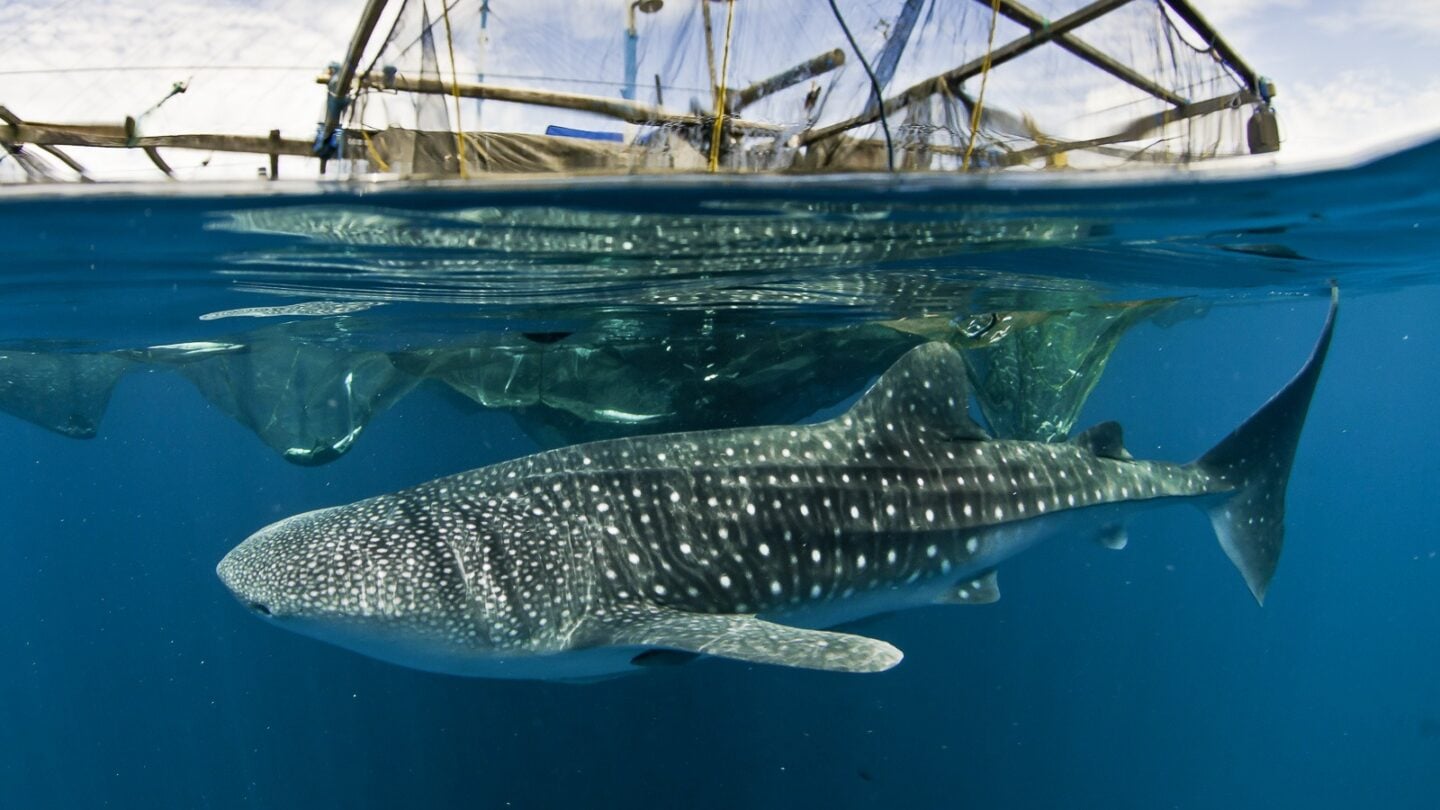
Cenderawasih Bay is often described as one of the most iconic whale shark locations in the world, and for good reason.
Here, whale sharks are seen relatively year-round, making encounters more predictable than in highly seasonal destinations.
One major attraction is their interaction with bagan fishing platforms, traditional fishing structures that attract plankton and small fish. Whale sharks often feed around these areas, creating close yet natural observation opportunities.
The clear water and high visibility add to the dramatic experience of swimming alongside these giants.
Best for:
Travellers seeking the most predictable encounters, underwater photographers, and those interested in research and conservation.
- Derawan, East Kalimantan
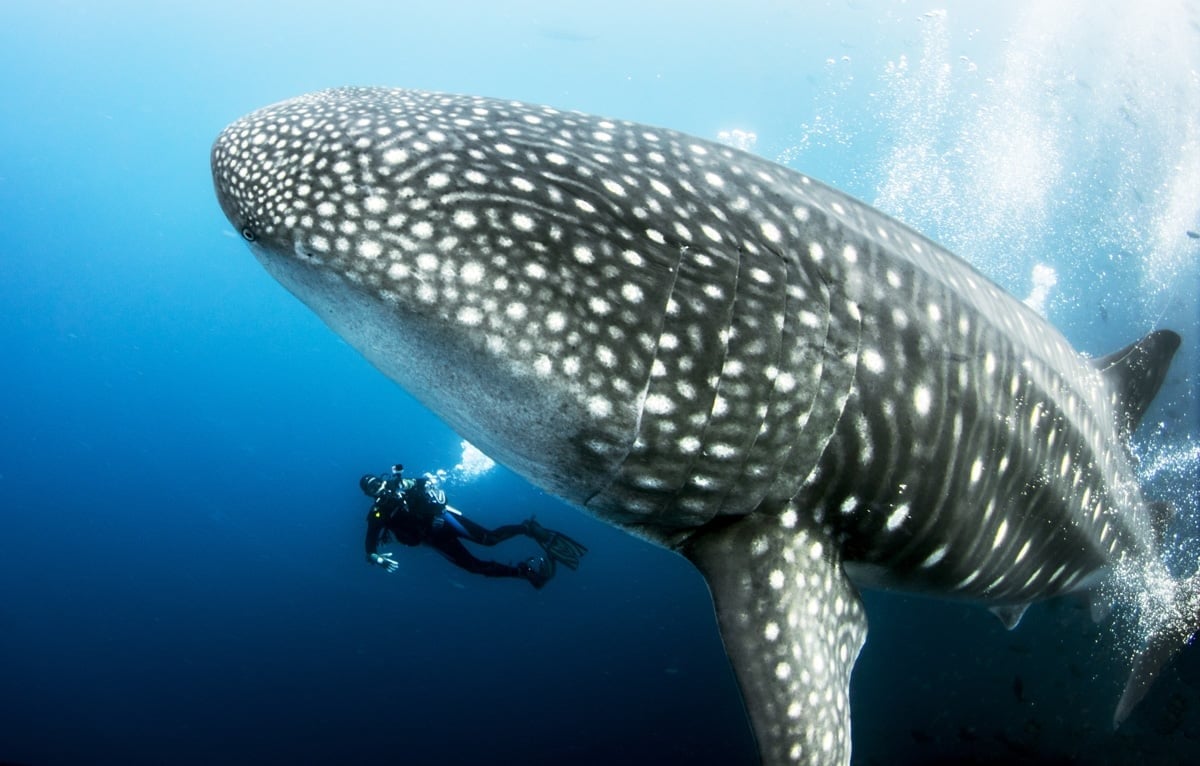
If Papua feels too remote, the Derawan Islands offer a more accessible alternative without compromising encounter quality.
Similar to Cenderawasih, whale sharks here are often seen near fishing platforms that serve as feeding sites.
Although sightings are more seasonal, they remain consistent during certain periods and can be incorporated into diving itineraries.
Derawan is also known for:
- Jellyfish lakes
- Manta rays
- Healthy coral reefs
This makes it a well-rounded marine destination.
Best for:
Domestic travellers and regional diving trips.
- Gorontalo, Sulawesi
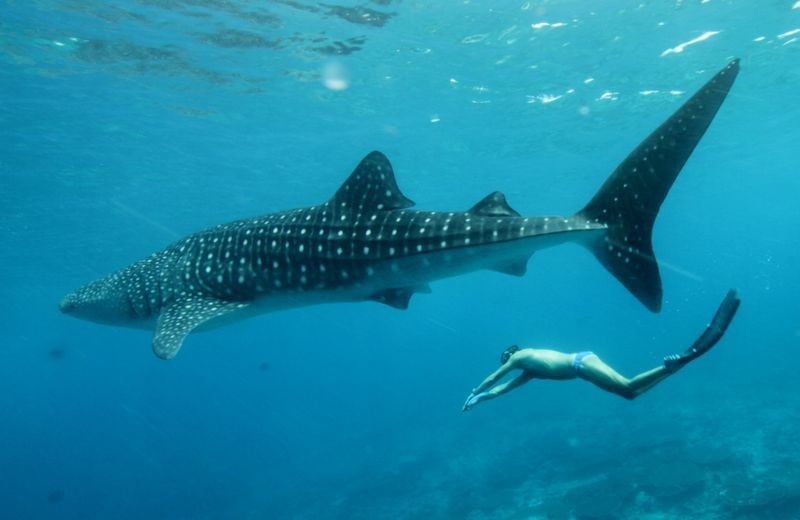
Encounters in Gorontalo tend to feel wilder and more natural.
Whale sharks here are not always associated with specific feeding sites or platforms. Sightings are more sporadic and may occur during regular dives or even while travelling between sites.
Because encounters in Gorontalo are not typically associated with feeding platforms, experiences here tend to feel more spontaneous and exploratory.
The waters of Gorontalo are also known for:
- Dramatic wall diving
- Giant sponge corals
- High macro biodiversity
Best for: Experienced divers seeking wild encounters without structured feeding sites.
- Saleh Bay, Sumbawa
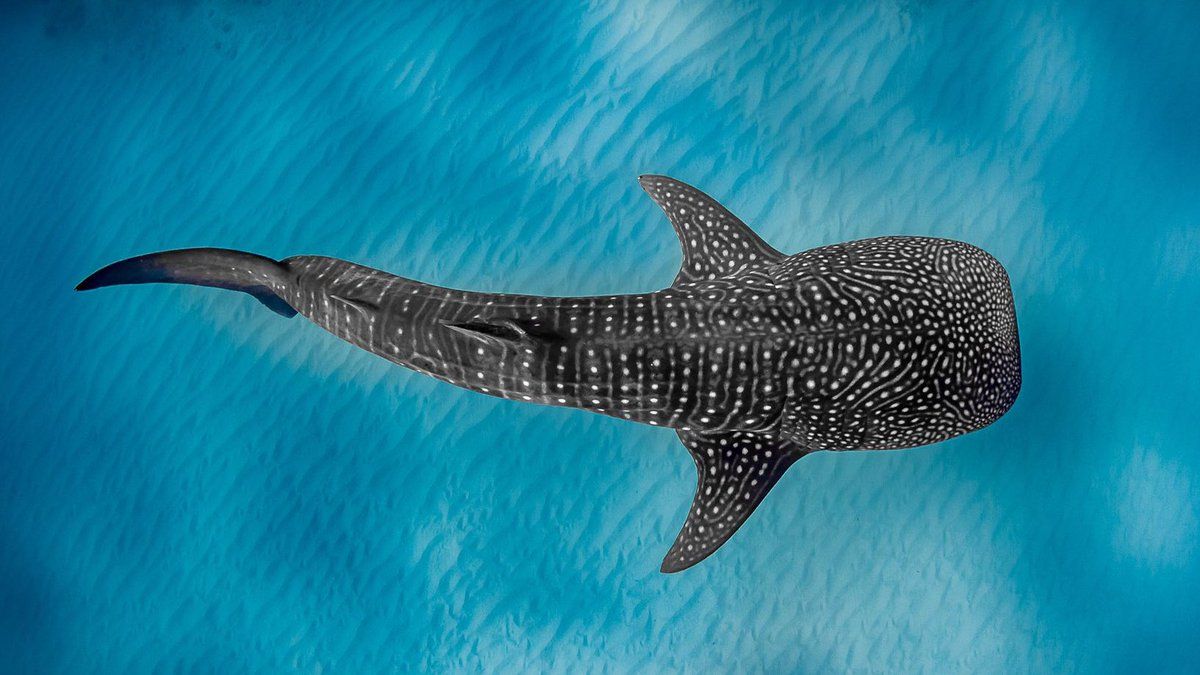
Saleh Bay in Sumbawa is a rising star on Indonesia’s whale shark map. Its relatively calm waters are suitable for both snorkelling and diving.
In recent years, the area has gained popularity due to stable encounter opportunities, particularly around local fishing platforms where whale sharks come to feed.
What makes Saleh Bay especially appealing is its strategic location. It is often included in extended liveaboard routes beyond the main Komodo area. This allows travellers to combine two iconic experiences in one journey: observing Komodo dragons on land and swimming with whale sharks at sea.
Some liveaboard operators design specific itineraries that combine Komodo exploration with an extension to Saleh Bay. For example, La Galigo Liveaboard offers extended routes tailored for travellers seeking deeper exploration beyond mainstream destinations. These journeys offer opportunities to observe whale sharks in their natural habitat, making the trip not only about landscapes and reefs but also about unforgettable encounters with tropical marine giants.
Best for:
Liveaboard travellers, Komodo extension trips, and those who want a whale shark encounter without travelling as far as Papua, yet still within an immersive marine expedition.
Read Also: What sharks can I see in Komodo?
Migration and Behaviour
Whale sharks are true ocean wanderers.
They undertake long-distance migrations, travelling thousands of kilometres across oceans in search of food and favourable environmental conditions.
Their movements are strongly influenced by:
- Seasonal plankton blooms
- Sea surface temperature
- Major ocean currents
- Overall marine productivity
Some individuals have even been recorded crossing national boundaries and entire ocean basins, highlighting the vast scale of their range.
In addition to horizontal migration, whale sharks perform diel vertical migration. Satellite tracking shows whale sharks perform complex vertical movements, sometimes diving deeper than 1,000 metres, likely following prey distribution and thermoregulation patterns.
Social Behaviour
Whale sharks are generally solitary animals. Unlike dolphins or certain shark species, they do not form permanent social groups.
However, under specific environmental conditions, they may gather in large numbers in the same area. This phenomenon is known as feeding aggregation, when multiple individuals assemble due to abundant food sources.
Some of the most famous aggregation sites worldwide include:
- Ningaloo Reef, Australia
- The Maldives
- Mexico, Isla Mujeres and Holbox
- Indonesia, including Cenderawasih, Saleh Bay, and Talisayan
Why Do They Gather?
The key factor is food, particularly plankton and fish eggs.
Whale sharks are opportunistic feeders. They follow large-scale food events such as:
- Plankton blooms
When nutrient levels increase due to upwelling or currents, plankton populations surge, creating a vast feeding opportunity. - Coral spawning
During mass coral spawning events, the water fills with protein-rich organic particles. - Fish spawning events
Some reef fish release large numbers of eggs, providing high-energy food sources.
During these periods, dozens or even hundreds of whale sharks may gather in a single area.
Do They Interact Socially?
Even during aggregations, they do not truly socialise as marine mammals do.
Aggregations are:
- Functional, focused on feeding
- Temporary, not long-term gatherings
- Non-hierarchical, without group leaders
Once the food source diminishes, individuals disperse and continue their migrations.
Without these aggregation events, spotting whale sharks would be significantly more difficult, given the vastness of the ocean.
Do Whale Sharks Have Predators?
Given their immense size, a common question arises: do whale sharks have predators?
The answer is very few.
Their large adult size makes them relatively free from natural predation. However, some opportunistic predators have been known to target juveniles, including:
- Orcas
- Tiger sharks
- Great white sharks
Such cases are rare and typically involve smaller, younger individuals.
Once they reach full size, adult whale sharks face very few natural predators, making them ecologically secure despite occupying a low trophic level as filter feeders.
Threats and Conservation Status
Despite their impressive size and minimal natural predators, whale sharks are highly vulnerable to human activities.
Global populations have declined over recent decades, and most threats stem from direct or indirect human interaction.
- Bycatch
Bycatch occurs when whale sharks are unintentionally caught in industrial fishing gear, such as:
- Purse seine nets
- Gillnets
- Longlines
Due to their enormous size, they can easily become entangled and struggle to free themselves. Many incidents result in:
- Serious injuries
- Extreme stress
- Death
The issue is compounded by underreporting. Many bycatch incidents are not officially recorded, meaning the true impact is likely much greater than available data suggests.
- Boat Strikes
Whale sharks often swim near the surface, especially while feeding on plankton. This makes them vulnerable to collisions with:
- Tourist boats
- Speedboats
- Fishing vessels
Propeller scars are frequently observed on adult individuals. These injuries can:
- Impair swimming ability
- Lead to infection
- Become fatal
In busy tourism hotspots, the risk of boat strikes increases significantly.
- Historical Hunting
Before global protection measures were introduced, whale sharks were commercially hunted in several countries.
Body parts that were utilised included:
- Meat for local consumption
- Fins for the shark fin trade
- Liver oil
Although many countries now prohibit whale shark hunting, the historical impact remains significant because whale sharks have:
- Slow growth rates
- Late sexual maturity
- Low reproductive output
This means populations recover very slowly.
- Unregulated Tourism
While ecotourism can economically support conservation, without regulation, it can have negative consequences.
Problematic practices include:
- Artificial feeding
- Touching or riding whale sharks
- Chasing them with boats
- Overcrowding by divers and snorkellers
Some studies suggest that intensive interaction with feeding platforms may influence natural behaviour patterns over time, including:
- Natural feeding behaviour
- Migration frequency
- Dependence on feeding sites
Over time, these changes can alter species behaviour.
Whale Sharks Are Classified as Endangered
Endangered status means a species faces a high risk of extinction in the wild.
This category is typically assigned by global conservation bodies such as the IUCN, the International Union for Conservation of Nature.
To qualify as Endangered, a species generally demonstrates:
- Significant population decline
- Shrinking habitat distribution
- Low reproductive rates
- Ongoing high levels of threat
For whale sharks, key contributing factors include:
- Global bycatch
- Historical hunting
- Boat strikes
- Habitat degradation
- Uncontrolled tourism
Because they reproduce slowly, the loss of even a single mature individual can have a substantial impact on the population.
What Endangered Status Means for Travellers
Every encounter carries conservation implications.
This means:
- How we swim matters
- Which operator we choose matters
- Tourism regulations matter
Responsible tourism supports:
- Conservation funding
- Population monitoring
- Habitat protection
Encountering a whale shark is not only a travel experience, but also an opportunity to contribute to species protection.
Read Also: 7 Species of Sharks You Should Get to Know
Why Divers Love Whale Sharks
For divers, whale sharks are not merely large animals. They are emotional experiences that are difficult to forget.
The reasons are simple:
Spectacular Size
Seeing a fish the size of a bus swimming beside you is a once-in-a-lifetime moment.
Peaceful Behaviour
They are non-aggressive and generally indifferent to divers.
Accessibility
They often appear near the surface, allowing even snorkellers to see them.
Photogenic Appearance
Their body patterns are extraordinary in underwater photography.
Predictable Seasonal Sightings
Certain locations have relatively stable seasonal appearances.
It is no surprise that whale shark encounters often become the highlight of liveaboard trips and dive expeditions.
Ethical Guidelines for Encounters
As tourism popularity grows, ethical interaction is crucial.
General guidelines include:
Maintain Distance
At least three to four metres.
Do Not Touch
Their skin is sensitive and covered with protective mucus.
Do Not Block Their Path
Allow them to swim freely.
Limit the Number of Divers
Overcrowding can cause stress.
Do Not Feed Them
Artificial feeding disrupts natural behaviour.
Responsible tourism is essential to ensure these encounters remain sustainable.
Verdict
The whale shark symbolises the wonder of tropical oceans, a gentle giant proving that size does not necessarily mean danger.
With enormous bodies, unique patterns, epic migrations, and very few natural predators, they occupy a special place in marine ecosystems and in the hearts of travellers.
Yet their vulnerability to human activity reminds us that every encounter carries responsibility.
Meeting a whale shark is not only a breathtaking visual experience, but also a reminder to protect the oceans so that future generations can continue to witness these gentle giants swimming freely across the seas.
FAQ
1. Are whale sharks dangerous to humans?
No. Whale sharks are known as gentle giants because of their calm and non-aggressive behaviour. They are filter feeders that consume plankton and small organisms, not large prey. As long as interactions are conducted ethically by maintaining distance and avoiding contact, swimming with whale sharks is considered safe.
2. How large do whale sharks grow?
Whale sharks are the largest fish in the world. Adult individuals typically measure between 10 and 12 metres in length, although some reports indicate larger sizes. They can weigh more than 15 tonnes, comparable to a small bus underwater.
3. Where do whale sharks live?
Whale sharks inhabit tropical and subtropical waters worldwide. They are commonly found in areas with high plankton productivity, including the Indian Ocean, Western Pacific, tropical Atlantic, and Southeast Asia, including Indonesia.
4. When is the best time to see whale sharks?
The best time depends on the location. Whale sharks follow food availability, so sightings are often seasonal. However, in hotspots such as Cenderawasih Bay, they may be seen almost year-round.
5. Do whale sharks migrate?
Yes. Whale sharks are highly migratory. They can travel thousands of kilometres across oceans, following plankton blooms, optimal sea temperatures, and major currents that carry food.
6. Do whale sharks have predators?
Adult whale sharks have almost no natural predators due to their immense size. However, juveniles may occasionally be targeted by opportunistic predators such as orcas, tiger sharks, or great white sharks.
7. Why do whale sharks gather in one location?
This phenomenon is known as feeding aggregation. They gather in areas with abundant food, such as plankton blooms or coral and fish spawning events. These moments often create spectacular encounter opportunities for divers.
8. Are whale sharks protected?
Yes. Whale sharks are classified as Endangered on global conservation lists. Their populations have declined due to bycatch, boat strikes, historical hunting, and tourism pressure.
9. What does “endangered” mean?
Endangered means a species faces a high risk of extinction in the wild. Slow reproduction and human-related threats make population recovery for whale sharks particularly slow.
10. Where are the whale shark hotspots in Indonesia?
Some of the best locations include:
- Cenderawasih Bay, Papua
- Talisayan and Derawan, East Kalimantan
- Gorontalo, Sulawesi
- Saleh Bay, Sumbawa
Each offers a different type of encounter, from feeding aggregations to wild sightings.
11. Can you snorkel with whale sharks?
Yes. Because they often swim near the surface, many encounters take place while snorkelling. Scuba diving is not always necessary.
12. How can you interact ethically with whale sharks?
General guidelines include:
- Maintain a minimum distance of three to four metres
- Do not touch
- Do not block their swimming path
- Do not feed them
- Limit the number of divers in the water
Responsible interaction helps protect the species.
13. Why are whale sharks important to marine ecosystems?
As large filter feeders, whale sharks help regulate plankton populations and maintain balance within the marine food web. Their presence also serves as an indicator of healthy tropical marine ecosystems.
14. Why are whale sharks a bucket-list encounter for divers?
Because of the combination of:
- Enormous size
- Peaceful behaviour
- Accessibility near the surface
- Highly photogenic appearance
- Relatively predictable seasonal sightings
Encounters with whale sharks often become the highlight of a diving journey.
References
Setyawan, E., et al. (2025). Whale shark research and conservation in Cenderawasih Bay, Indonesia. Bird’s Head Seascape.
Meyer, C. G., Araujo, G., Berumen, M. L., et al. (2022). Movement, behavior, and habitat use of whale sharks (Rhincodon typus) revealed by satellite tagging. Frontiers in Marine Science, 9, 793248.
Sequeira, A. M. M., Mellin, C., Meekan, M. G., Sims, D. W., & Bradshaw, C. J. A. (2014). Inferred global connectivity of whale shark (Rhincodon typus) populations. PLOS ONE, 9(10), e102060.
Pierce, S. J., & Norman, B. (2016). Rhincodon typus (whale shark): A review of its biology and ecology. Journal of Fish Biology, 88(1), 1–25.