
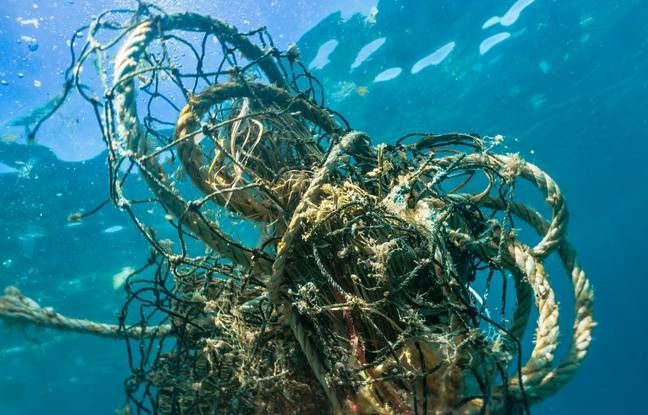
Imagine a fishing net no longer in use. No fisher pulls it, no boat operates it, and no human decides what it will catch. At first glance, the net may simply look like discarded waste left in the ocean. However, the problem is much bigger.
A lost or abandoned net can still perform the same function as when it was first used: catching and entangling marine organisms. This is known as ghost fishing.
At La Galigo, we see the ocean as an interconnected system. That is why the problem of ghost fishing does not stop with one fish or one turtle becoming entangled. In this article, we explore how fishing gear becomes “ghost gear,” why these nets can keep catching marine life, and how their impacts can grow from individual deaths into ecosystem-level problems.
The scale of the problem extends far beyond individual entanglement cases. A global study estimated that nearly 2% of fishing gear across five major gear types is lost to the ocean each year. This includes approximately 740,000 km of longline mainlines and more than 25 million pots and traps (Richardson et al., 2022). In the Great Pacific Garbage Patch, research has also estimated that 75–86% of floating plastic items larger than 5 cm originate from offshore fishing and aquaculture activities (Lebreton et al., 2022).
What Are Ghost Fishing Nets?
When Fishing Gear Becomes “Ghost Gear”
Ghost fishing nets are fishing nets that have been lost, abandoned, or discarded but can still catch or entangle marine organisms. Fishing gear can become lost when it is accidentally misplaced, for example, due to sea conditions or snagging. Gear becomes abandoned when it is left behind, while discarded gear is deliberately thrown away.
What makes it different from many other forms of marine debris is its remaining function. A plastic bottle drifting through the ocean can certainly become a pollutant, but it lacks a mechanism to keep catching fish. In contrast, a fishing net still has the mesh and structure designed to hold organisms. As a result, a lost net can become a source of unaccounted mortality once humans lose control of the gear.
What Is Ghost Fishing?
Ghost fishing occurs when fishing gear that has lost human control continues to catch or entangle organisms. This phenomenon is most common with passive gear such as nets, traps, and pots, which are designed to let organisms enter while making it difficult for them to escape.
The concept is closely related to bycatch, but the two are not identical. Bycatch usually occurs during fishing activity, when non-target species are caught alongside the target catch. Ghost fishing occurs when humans are no longer operating the gear, but the gear continues to catch organisms on its own.
The difference is simple: with bycatch, the problem occurs during the fishing operation; with ghost fishing, the problem can continue after the fishing operation has stopped.
How Do Ghost Fishing Nets Keep Catching Marine Life?
Entanglement and Trapping
The mechanism behind ghost fishing is actually easy to understand. When a marine animal swims or moves towards a net, its body, fins, legs, or other parts can enter the mesh and become entangled. The more the animal tries to free itself, the greater the likelihood that its body will interact with the net.
Fish are not the only animals affected. Literature on ghost gear has documented entanglement involving marine mammals, reptiles, and elasmobranchs such as sharks and rays. More than 5,400 individuals from 40 species have been recorded as becoming entangled in or associated with ghost gear.
The impacts can also involve other groups such as seabirds and crustaceans. In some cases, entangled animals may experience restricted movement, injuries, starvation, predation, or death because they cannot return to the surface to breathe.
The Ghost Fishing Cycle
What makes ghost fishing both fascinating and concerning is how it creates a cycle.
Lost net → marine animal becomes trapped → animal dies → carcass attracts other animals → more animals become trapped.
When an organism becomes trapped and dies inside the gear, its presence can attract predators or scavengers. Other animals then approach and may also become trapped. In this way, a single piece of gear can result in more than one mortality event.
How Ghost Fishing Nets Damage Marine Ecosystems
1. They Remove Marine Animals From the Ecosystem
The most direct impact is the death of organisms that would otherwise continue to play their roles within the ecosystem.
When fish, turtles, sharks, rays, marine mammals, or other organisms die from entanglement, one individual is removed from the system. One death does not automatically mean that an ecosystem has suffered major damage. However, the problem arises when mortality occurs repeatedly, and the gear remains active.
Several factors influence ghost-fishing mortality, including the amount of lost gear, the gear’s catching efficiency, its condition after it is lost, species abundance, and species vulnerability.
Why Repeated Mortality Matters
This is where cumulative mortality becomes important.
Imagine one net causing one or several deaths. The net then remains in the ocean and continues to interact with other organisms. A second death occurs, followed by a third, and then another. Each event may seem small on its own, but they can accumulate as long as the gear keeps catching organisms.
For species with vulnerable populations, low reproductive rates, or other human pressures, additional mortality can matter more.
2. They Disrupt Marine Food Webs
Marine ecosystems are not collections of animals living separately from one another. Each organism has relationships with other organisms as a predator, prey, competitor, herbivore, or consumer.
Therefore, when ghost fishing continually removes certain organisms, its effects can theoretically spread through interspecies relationships.
For example:
Ghost net → loss of fish → less prey available for predators → altered feeding relationships
This shows that the impact of ghost fishing does not necessarily stop with the animals directly entangled. When interconnected organisms and habitats are disrupted, broader ecological functions may also be affected.
3. They Damage Coral Reefs and Other Marine Habitats
Ghost fishing can also damage habitats, not just their inhabitants.
When nets or fishing gear become caught on underwater structures, waves and currents can cause physical abrasion or pressure on the habitat. Lost gear can damage benthic habitats through abrasion, plucking organisms, covering organisms with mesh, and moving material across the seafloor.
Ghost Nets and Coral Reefs
Coral reefs are important because their three-dimensional structures provide shelter, feeding areas, and breeding grounds for many organisms.
Coral mortality increases as the number of fishing lines entangled around branching hydrocorals increases. Because fish also use these coral structures, coral damage can alter interactions between corals and the fish that depend on them.
In other words:
Ghost gear → physical damage to coral → reduced habitat quality → affected ecological interactions
Beyond Coral Reefs
The physical impacts of lost fishing gear are not limited to coral reefs. Depending on the location and gear type, similar interactions can occur across various benthic habitats and coastal environments. That is why, when we discuss ghost fishing at La Galigo, we do not see it simply as a problem of “entangled animals”, but also as an issue of marine habitat integrity.
4. They Can Reduce Biodiversity
Biodiversity is related to the diversity of organisms and the different functions they perform within an ecosystem.
Ghost fishing can add pressure through mortality across different groups of organisms. When these events occur repeatedly, the ecological risk increases, especially if the affected species have specific vulnerabilities.
5. They Keep Polluting the Ocean as They Break Down
Another dimension of the problem should not be overlooked: modern fishing gear is often made from synthetic materials that are relatively persistent in the environment.
This means that even after its ability to catch organisms decreases, the gear may not disappear from the ocean immediately. Nylon and polypropylene nets do not biodegrade; they fragment into progressively smaller pieces of plastic. A net that has stopped catching animals remains in the ocean, gradually breaking down into smaller plastic fragments.
Therefore, ghost gear has two dimensions to the problem:
1. Fishing-related mortality
Gear can continue to catch or entangle organisms.
2. Persistent marine debris
Gear materials can remain as marine debris and fragment into smaller pieces of plastic, contributing to secondary microplastics even after their ability to catch organisms declines.
Why Are Ghost Fishing Nets So Difficult to Control?
They Can Move With Ocean Currents
Lost nets do not always remain exactly where they first entered the water. Currents, waves, and sea conditions can move fishing gear, so where it is found may not be where it was lost.
This movement makes its impact difficult to predict and can expand the area where marine life may potentially interact with the gear.
They Can Be Difficult to Detect
Nets below the surface are also not easy to find. Depth, visibility, seabed conditions, and the vast size of marine areas mean that detection and retrieval can require considerable resources.
The Problem Can Continue After the Original Fishing Activity Ends
Fishing activity may end, but the ecological impact of lost gear does not necessarily end.
As long as a net can entangle organisms and remains in the environment, harmful ecological interactions can continue.
Which Marine Animals Are Most Vulnerable to Ghost Fishing Nets?
Ghost fishing can affect a range of marine animals, from fish and sea turtles to sharks, rays, marine mammals, and seabirds.
In Indonesian waters, this issue is particularly relevant because the archipelago supports important populations of sea turtles and manta rays, while fishing gear lost or abandoned at sea can continue to threaten marine life around reefs and coastal habitats.
Fish and Commercial Species
Fish can become entangled when their bodies or body parts enter the mesh. Ghost fishing can also capture non-target species, meaning its impacts are not limited to fish that were originally targeted by the fishery.
Sea Turtles
Sea turtles are one of the groups frequently discussed in ghost gear literature because they can become entangled in netting. When trapped, their movement may be restricted, and they may face a risk of injury or drowning, particularly when they cannot reach the surface.
Ghost nets are one of the gear types most frequently associated with turtle entanglement.
Sharks and Rays
Sharks and rays can also become entangled in ghost gear. Their bodies and fins can make it difficult to escape from the mesh, particularly when the gear becomes increasingly tangled or the animal continues to move.
Marine Mammals and Seabirds
Marine mammals are an important group in discussions of ghost gear, particularly because their bodies can interact with nets, ropes, and other types of fishing gear.
Seabirds can also be affected when they interact with gear at the surface or gear carried into coastal areas. This once again shows that the impacts of ghost gear can extend beyond a single habitat or group of animals.
How Can We Prevent Ghost Fishing?
Prevent Fishing Gear From Being Lost
Prevention is always an important step. The less fishing gear that is lost, the less gear could potentially become ghost gear.
Good fishing practices, proper gear management, attention to weather conditions, and appropriate deployment and retrieval procedures can help reduce the risk of gear loss.
Mark and Track Fishing Gear
Gear marking can help identify owners and improve accountability. When gear is lost, clear identification can also make reporting and retrieval easier.
The goal is simple: do not let lost gear become anonymous in the ocean.
Retrieve Lost Fishing Gear
Once gear has been lost, retrieval can help stop potential ghost fishing and reduce the risk of further entanglement.
The effectiveness of gear-retrieval programmes depends on location, gear type, environmental conditions, and operational costs. In some contexts, retrieval programmes may not always be the most cost-effective management option compared with preventive measures.
Improve Fishing Gear Design
Gear design can also help. The goal is not only to make gear more effective when used, but also to reduce its impact when lost.
Provide Better Disposal and Recycling Options
Not all discarded fishing gear needs to end up in the ocean. Take-back systems, proper disposal facilities, and recycling where possible can reduce the amount of gear deliberately discarded or abandoned.
Ultimately, the solution requires a combination of responsible fishing practices, accountability, prevention, retrieval, and fishing gear waste management.
Can Removing Ghost Nets Help Restore Marine Ecosystems?
When a ghost net is successfully removed, the source of mortality from that gear can be stopped. The risk of further entanglement is also reduced, and physical pressure on habitats can be removed if the gear was previously caught on coral or other benthic structures.
However, removal does not solve the entire problem.
Imagine removing one net from the ocean today while new gear continues to be lost during each fishing season. We would simply continue chasing the same problem.
That is why a stronger approach is:
Prevention + retrieval + responsible fishing practices
Prevention reduces the amount of new gear entering the ocean. Retrieval addresses gear that has already been lost. Meanwhile, responsible fishing practices help ensure that fishing as a whole creates fewer risks for marine ecosystems.
ALSO READ: La Galigo’s Commitment to Ocean Conservation: A Greenfin’s Journey
Final Thoughts
Ghost fishing nets remind us that the impact of human activities in the ocean does not always end when people leave the area.
A lost fishing net can continue to entangle organisms, cause repeated mortality, and, under certain conditions, create a ghost fishing cycle. Its effects can then extend from individual animals to broader ecological relationships.
If you encounter ghost gear while diving, do not attempt to remove it yourself. Instead, note its location and depth, take photographs if it is safe to do so, and report the sighting to your dive guide. Removing ghost gear can be dangerous and should be left to appropriately trained teams.
Your observations can also contribute to marine conservation through citizen science. Photographs and location information, including GPS coordinates where available, can help document ghost gear sightings, improve monitoring, and provide useful data for researchers and conservation initiatives.
At La Galigo, we believe that understanding the ocean means understanding how every part of it is connected. For those of you who enjoy the underwater world, this perspective matters: protecting ecosystems is not only about safeguarding the animals you can see while diving, but also about recognising and reporting threats that continue to operate when you are no longer there.
Ghost nets are not simply waste left behind in the ocean. They are fishing gear that has lost its human controller, but may not have lost its ability to capture marine life.
FAQ
What is ghost fishing?
Ghost fishing is the process in which lost, abandoned, or discarded fishing gear continues to capture or entangle marine organisms without human control.
Why are ghost fishing nets dangerous?
Because nets can continue to entangle marine animals after losing their operational function for fishers, their impacts can include injury, starvation, predation, drowning, and mortality, as well as habitat damage.
What animals are affected by ghost fishing nets?
Fish, turtles, sharks, rays, marine mammals, seabirds, crustaceans, and other organisms can be affected, depending on the gear type and habitat.
How long can a ghost fishing net keep fishing?
No single duration applies to all nets. How long ghost fishing continues depends on the gear’s condition and the environment. Fishing activity may decrease when gear becomes damaged, covered by organisms, or buried, but under certain conditions, its impacts can continue for an extended period.
How do ghost nets damage coral reefs?
Ghost gear can become caught on coral structures and cause physical damage. Research on branching hydrocoral found that more entangled fishing lines were associated with higher coral mortality and changes in feeding behaviour among certain herbivorous fish.
Are ghost fishing nets a type of marine pollution?
Yes. Ghost gear is part of marine debris and can contribute to pollution because modern fishing gear often contains persistent synthetic materials. However, ghost gear has an additional characteristic that distinguishes it from ordinary marine debris: the gear can still capture organisms.
How can ghost fishing be prevented?
Prevention can involve better gear management, reducing the risk of gear loss, marking and tracking gear, retrieving lost gear, improving gear design, and providing better disposal and recycling systems.
Can ghost fishing nets be removed from the ocean?
Yes. Various retrieval and removal programmes can remove lost gear. However, removing lost gear must be combined with prevention efforts so the problem does not recur.
What should I do if I find a ghost net while diving?
If you encounter a ghost net while diving, do not attempt to remove it yourself, as this can pose an entanglement risk and create additional hazards. Instead, note its location and depth, take photographs if it is safe to do so, and report the sighting to your dive guide. Removing ghost gear should be left to appropriately trained teams. Photographs and GPS coordinates can also help support marine debris monitoring and citizen science initiatives.
References
Beneli, T. M., Pereira, P. H. C., Nunes, J. A. C. C., & Barros, F. (2020). Ghost fishing impacts on hydrocorals and associated reef fish assemblages. Marine Environmental Research, 161, 105129.
Brown, J., & Macfadyen, G. (2007). Ghost fishing in European waters: Impacts and management responses. Marine Policy, 31(4), 488–504.
Do, H.-L., & Armstrong, C. W. (2023). Ghost fishing gear and their effect on ecosystem services—Identification and knowledge gaps. Marine Policy, 150, 105528.
Lively, J. A., & Good, T. P. (2019). Ghost fishing. In C. Sheppard (Ed.), World seas: An environmental evaluation: Volume III: Ecological issues and environmental impacts (pp. 183–196). Academic Press.
Stelfox, M., Hudgins, J., & Sweet, M. J. (2016). A review of ghost gear entanglement amongst marine mammals, reptiles and elasmobranchs. Marine Pollution Bulletin, 109(1), 228–242.
Lebreton, L., Royer, S.-J., Peytavin, A., Strietman, W. J., Smeding-Zuurendonk, I., & Egger, M. (2022). Industrialised fishing nations largely contribute to floating plastic pollution in the North Pacific subtropical gyre. Scientific Reports, 12, Article 12666.
Richardson, K., Hardesty, B. D., Vince, J., & Wilcox, C. (2022). Global estimates of fishing gear lost to the ocean each year. Science Advances, 8(41), eabq0135.