
If you already dive with a camera, you know that good composition alone is not always enough underwater. Even when the subject is perfect, your image can still look flat if your lighting cannot keep up with depth, distance, subject movement, or water conditions.
That is why underwater strobes are one of the most important upgrades for serious underwater photography. They help restore colour, add contrast, freeze movement, and separate your subject from the background.
But not every strobe is built for the same type of diving or photography. A compact strobe may be enough for macro and travel light setups, while a larger dual-strobe system gives you better coverage for reefscapes, mantas, divers, and close-focus wide-angle shots.
In this article, you will know how to compare different types of underwater strobes, understand the difference between underwater photography strobes and flashes, and choose a setup that makes sense for liveaboard diving in places like Komodo or Raja Ampat.
Table of Contents
Why Your Strobe Choice Matters on a Liveaboard Trip
When you are diving from a liveaboard, your camera setup needs to work across different conditions, not just one dive site. On the same trip, you may shoot wide angle reefs in the morning, manta rays in blue water, macro subjects on a night dive, and fast-moving reef action in current.
That variety is exactly why your strobe choice matters.
A good underwater strobe setup should help you:
- Restore natural colour at depth
- Control shadows and contrast
- Reduce backscatter with better positioning
- Freeze moving subjects
- Light wide reef foregrounds
- Keep your setup manageable during current, tender entries, and multiple dives per day
On a La Galigo trip, you are not relying on one rushed dive to get the shot. With multiple dives site in indonesia, you have more opportunities to test your strobe position, review your images between dives, and refine your settings for the next site.
That is one of the biggest advantages of liveaboard diving for underwater photographers: more time in the water, more variety in shooting conditions, and more chances to improve your results throughout the journey.
What Are Underwater Strobes?
Underwater strobes are external flashes designed for underwater photography. They release a short, powerful burst of light when you take a still photo.
That burst of light helps restore the reds, oranges, and yellows that water absorbs as you go deeper. It also helps add definition to reef texture, fish scales, coral structures, and foreground subjects.
Unlike video lights, strobes do not provide continuous light. They fire only when you take the shot. This makes them especially useful for still photography because they can deliver stronger light in a very short moment, helping you freeze motion and create cleaner detail.
Most underwater strobes are triggered through either:
- Fibre optic cables
- Electronic sync cords
- Optical triggers inside the housing
For most travelling underwater photographers, fibre optic systems are popular because they are simple, lightweight, and easier to maintain. Electronic sync cords can work well too, but they require careful attention to o-rings, contacts, and corrosion prevention.
READ ALSO: How to Make Sure Your Underwater Camera Housing Doesn’t Flood
Underwater Strobes vs Video Lights vs Built-In Flash
Before you compare different types of underwater strobes, it helps to understand where strobes fit compared to other lighting options.
Built-In Camera Flash
Your built-in flash can help in very close situations, but it is limited underwater. Because the light comes from very close to the lens, it often lights up particles between your camera and subject. This creates backscatter, especially in plankton-rich or silty conditions.
Built-in flash is best treated as a backup, not your main lighting solution.
Video Lights
Video lights are useful for filming, focus assist, and close-range stills. They let you see the light before taking the shot, which makes them easier to understand visually.
However, video lights usually have less reach than strobes for still photography. They can also be less effective for freezing motion in fast-moving scenes.
Underwater Strobes
Underwater strobes are the better choice when your main goal is still photography. They provide stronger bursts of light, better colour restoration, and more control for macro, wide-angle, and close-focus wide-angle images.
For underwater photographers who want more consistent image quality across several dives, strobes give you more creative control than relying on ambient light or video lights alone.
Main Types of Underwater Photography Strobes and Flashes
There is no single best strobe for every photographer. The right option depends on what you shoot, how you travel, and how much gear you are comfortable managing underwater.
1. Compact Underwater Strobes
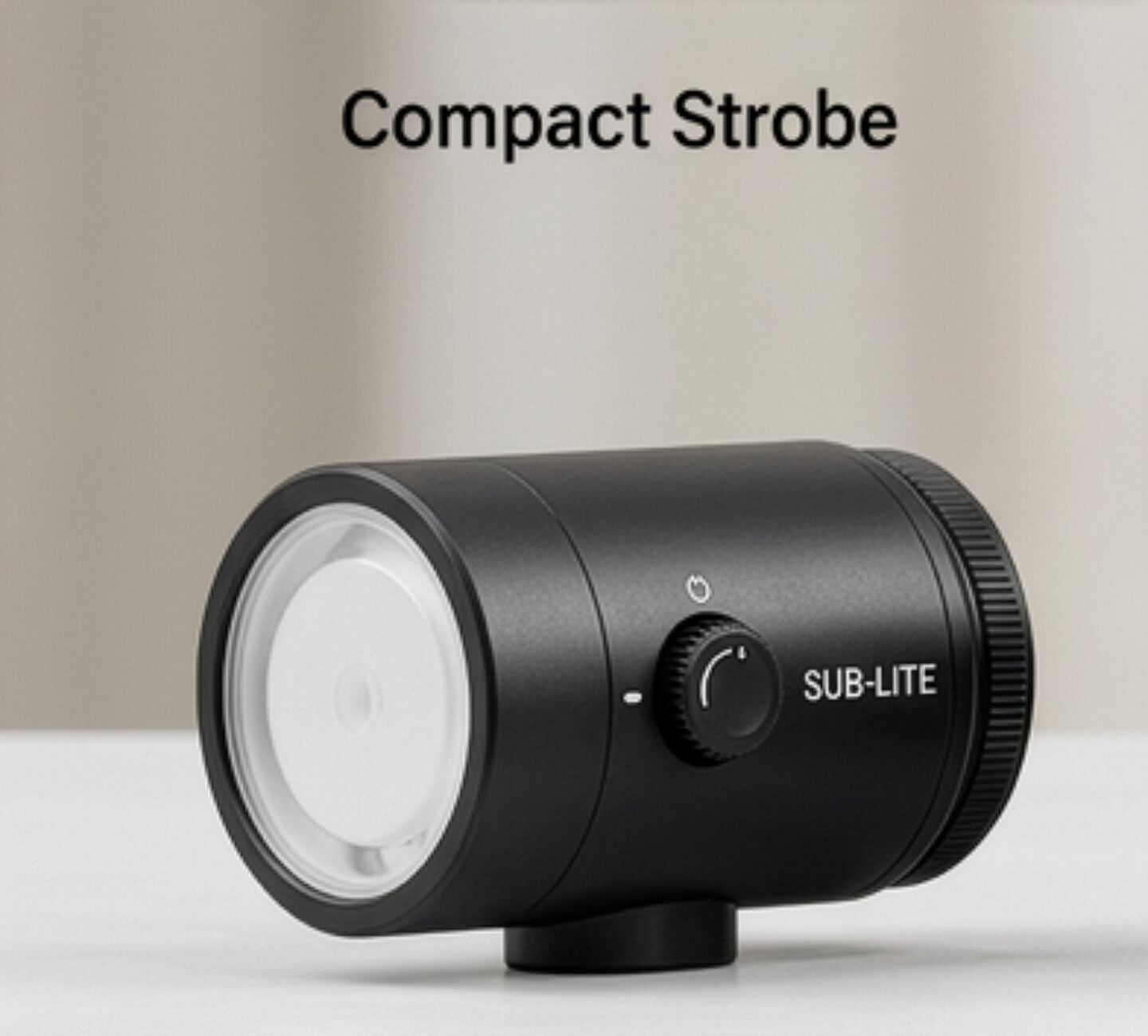
Compact underwater strobes are smaller, lighter, and easier to travel with. They are a practical choice if you use a compact camera, mirrorless setup, or a travel-light rig.
They are especially useful if you want to keep your camera system manageable during tender entries, current dives, or long travel days. A compact strobe can work well for macro, fish portraits, reef details, and closer subjects.
However, compact strobes usually have less power and narrower coverage than larger models. If you want to shoot big reef scenes, large animals, or close-focus wide-angle compositions, you may eventually want more output or a dual-strobe setup.
Best for you if:
You want a lighter rig for macro, reef details, fish portraits, and travel-focused diving.
Watch out for:
Limited beam coverage and lower power for wide-angle scenes.
2. Full Size Underwater Strobes
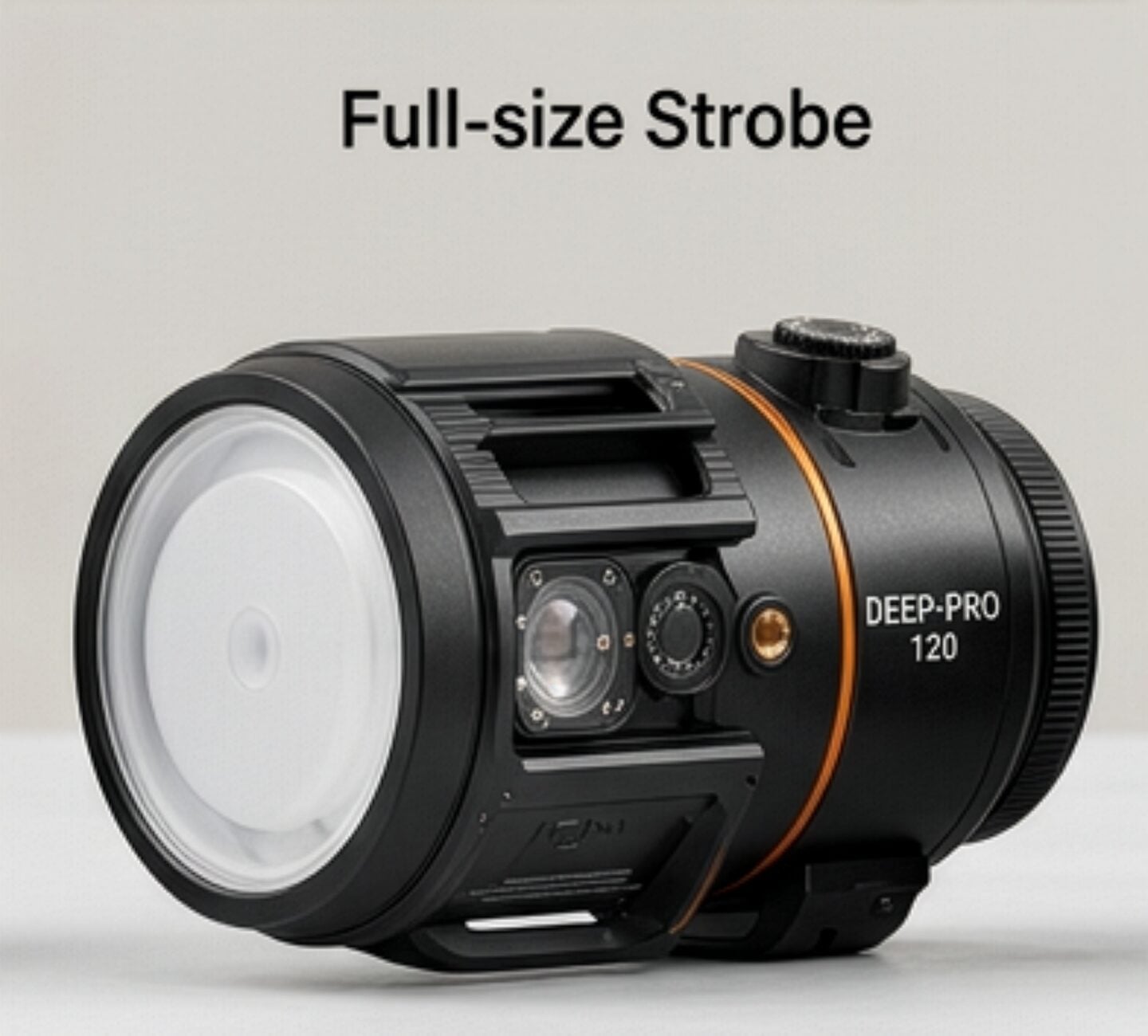
Full-size underwater strobes are built for more demanding underwater photography. They usually offer stronger output, wider beam coverage, faster recycle times, and more control.
These are useful when you shoot wide-angle scenes in Komodo or Raja Ampat, where you may want to light a coral foreground while keeping rich blue water in the background. They also make more sense when you shoot divers, mantas, reef walls, schooling fish, or large marine life.
The trade-off is size and handling. Full-size strobes add bulk, drag, and weight to your rig. That does not mean you should avoid them. It means your setup should be balanced, secure, and easy for you to control during the dive.
Best for you if:
You shoot reefscapes, mantas, sharks, divers, large subjects, or close-focus wide-angle images.
Watch out for:
Extra drag, luggage weight, and the need for stronger buoyancy control.
3. Wide Angle Strobes
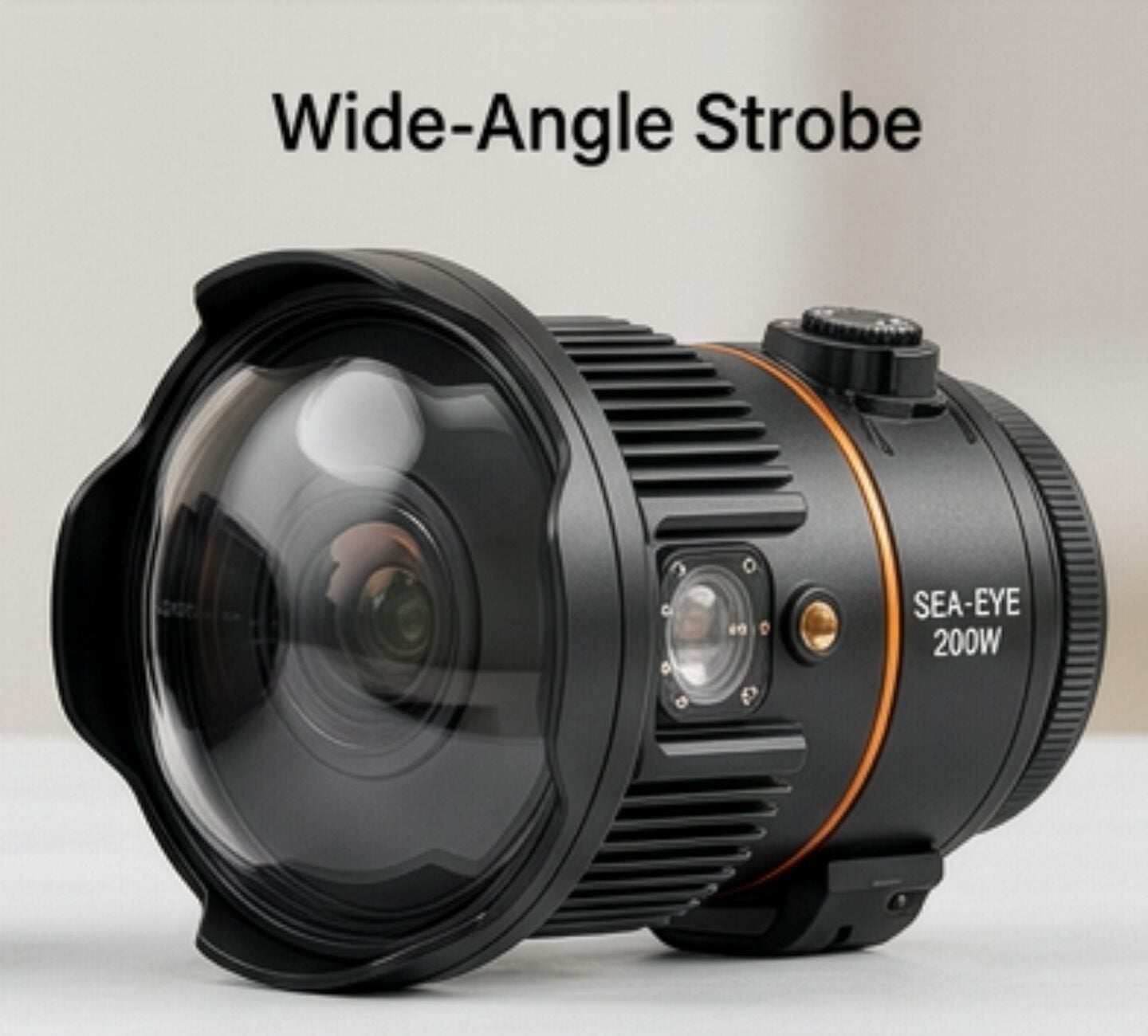
Wide-angle strobes are designed to cover a broader scene. They usually have a wider beam angle and enough power to light foreground reef, divers, or larger marine life without creating a harsh hotspot.
If you are shooting mantas, reefscapes, sea fans, schooling fish, or divers in the frame, beam angle becomes important. A narrow beam can leave the edges of your image underlit, while a wide beam helps create a more even spread of light.
For wide angle photography, your strobe position matters as much as strobe power. Pointing your strobes directly forward can light up the water column and increase backscatter. A better approach is to position your strobes wider and angle them slightly outward, using the edge of the beam to light your subject.
Best for you if:
You want strong wide-angle images with reef foregrounds, mantas, divers, or large marine life.
Watch out for:
Poor positioning. Even powerful strobes can create backscatter if they are aimed into the water between your lens and subject.
READ ALSO: 6 Underwater Wide Angle Photography Techniques
4. Macro Focused Strobes
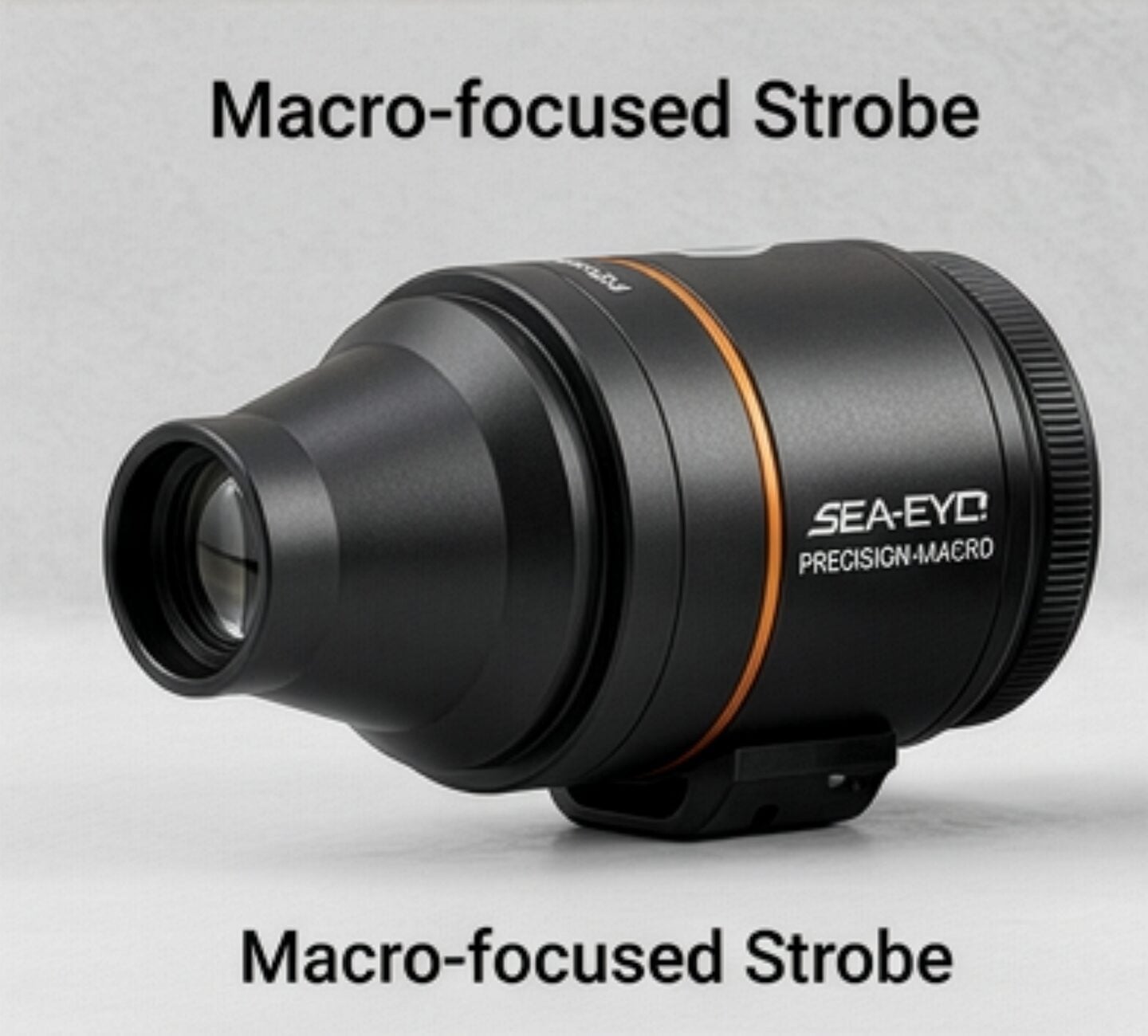
Macro photography does not always require maximum strobe power. What you need is control.
When you shoot nudibranchs, shrimp, crabs, pygmy seahorses, small reef fish, or other close subjects, your strobes are usually positioned close to the port and set at lower power. The goal is not to flood the scene with light. The goal is to shape the subject carefully without harsh reflections or blown highlights.
A single strobe can work well for macro, especially if you want a cleaner, simpler setup. Two strobes give you more control over shadows, but they also add task loading. If you shoot supermacro, a snoot can also help isolate your subject and create a more dramatic black background.
Best for you if:
You enjoy macro, muck-style subjects, night dives, small reef life, and controlled close-up compositions.
Watch out for:
Overpowering small subjects or flattening the image with too much even light.
READ ALSO: 6 Underwater Macro Photography Techniques
5. TTL Strobes
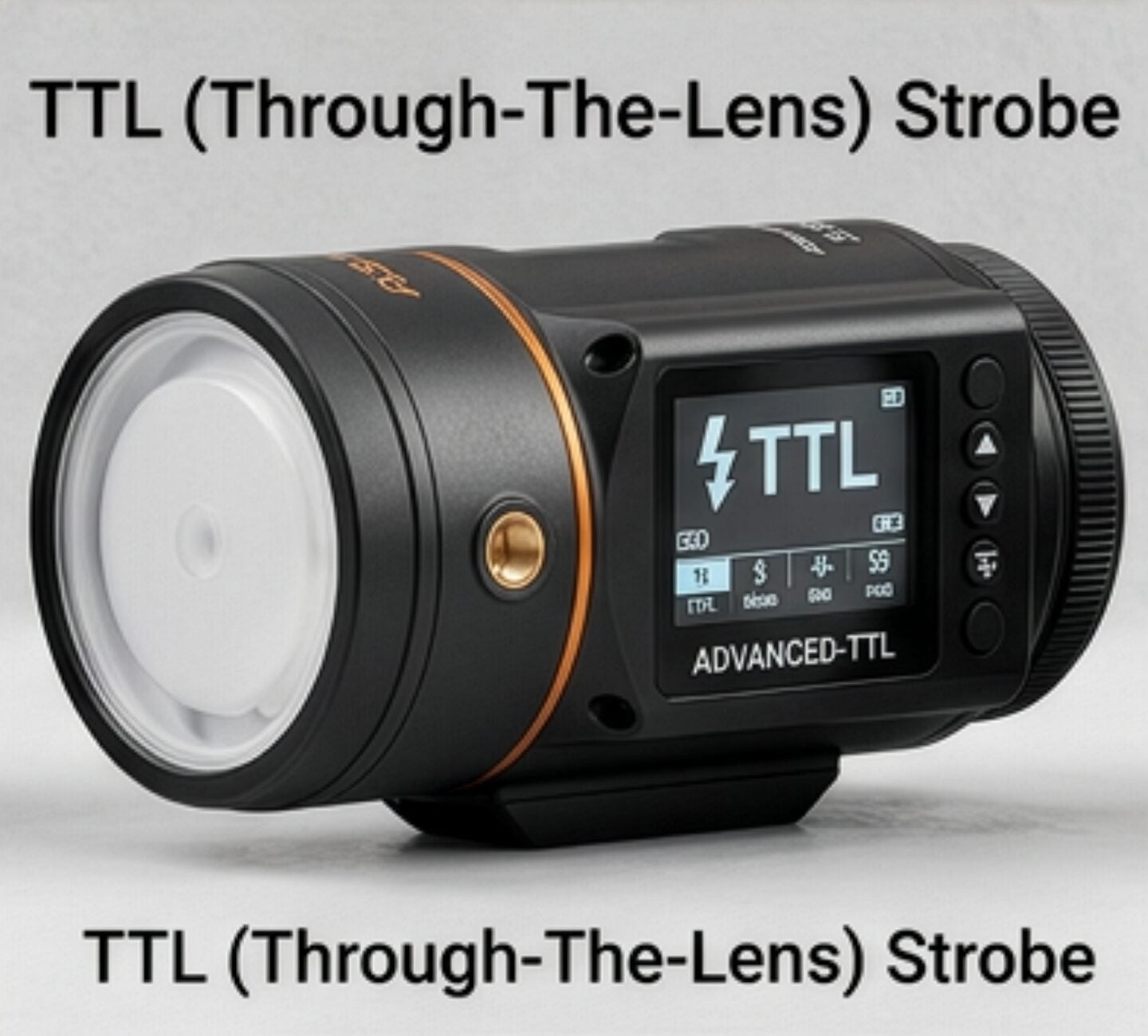
TTL means “Through The Lens.” With TTL, your camera and strobe system work together to estimate the amount of flash needed for the exposure. If you want to explore underwater photography training and techniques further, PADI also provides underwater photography resources for divers.
TTL can be useful when your subject distance changes quickly, such as when fish move in and out of frame or when you are shooting in changing conditions. It can also help if you want faster shooting without adjusting strobe power manually on every frame.
However, TTL is not perfect. Reflective sand, dark backgrounds, open blue water, or very contrasty scenes can confuse the system. Compatibility also depends on your camera, housing, trigger, and strobe combination.
Best for you if:
You want faster exposure support when shooting moving subjects or changing scenes.
Watch out for:
Inconsistent exposure in tricky lighting conditions or incompatible camera-housing-strobe combinations.
6. Manual Underwater Strobes
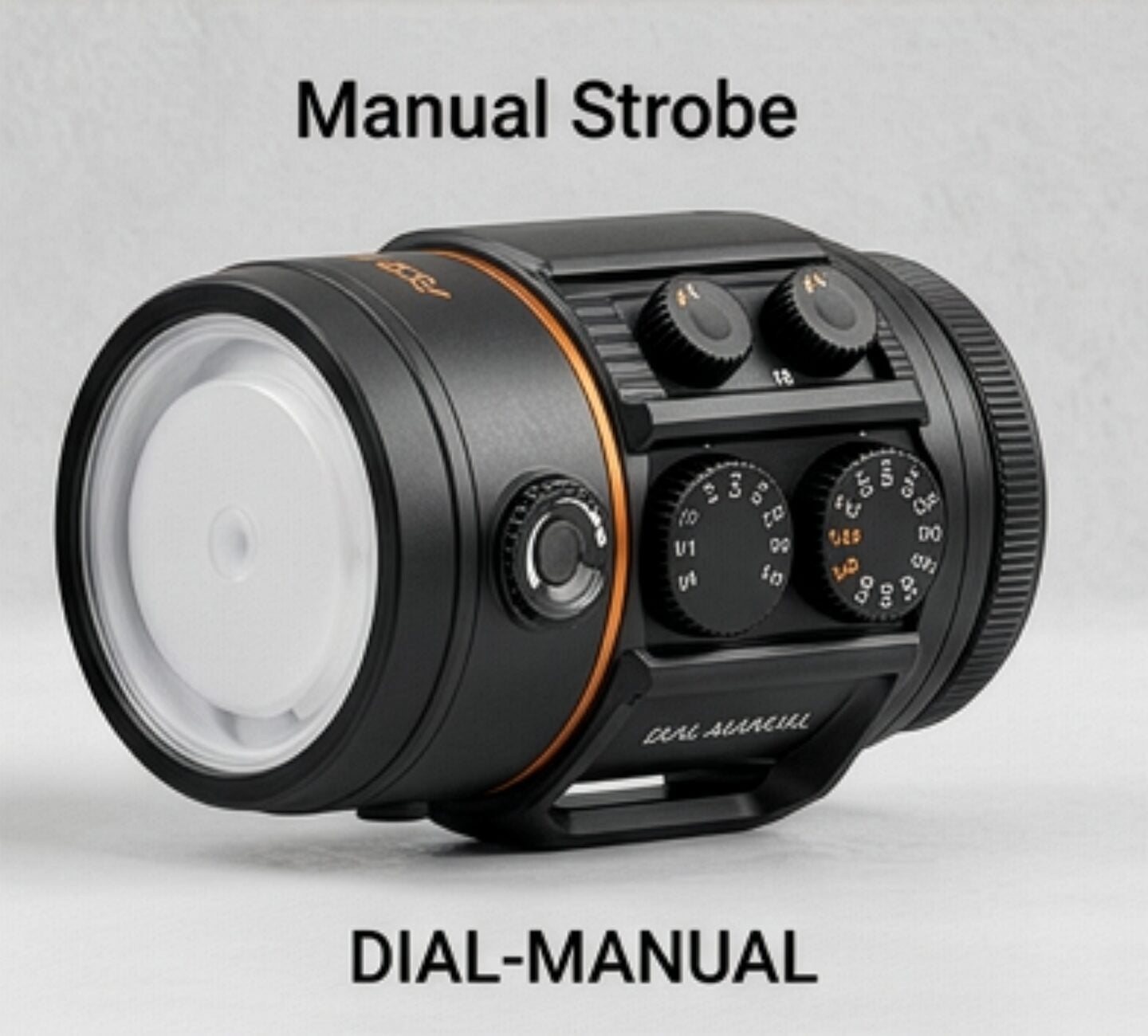
Manual strobes let you control flash power yourself. This gives you more consistency once you understand how distance, aperture, ISO, shutter speed, and strobe angle affect your final image.
Manual control is especially useful when your composition is repeatable. For example, if you are shooting a reef foreground, a diver portrait, or a macro subject from a fixed distance, manual strobe power helps you keep your lighting predictable.
Many experienced underwater photographers prefer manual control because it gives them more creative consistency.
Best for you if:
You want full control over exposure and already feel comfortable adjusting settings underwater.
Watch out for:
The learning curve, especially in current or fast-moving scenes.
One Strobe vs Two Strobes: Which Setup Should You Bring?
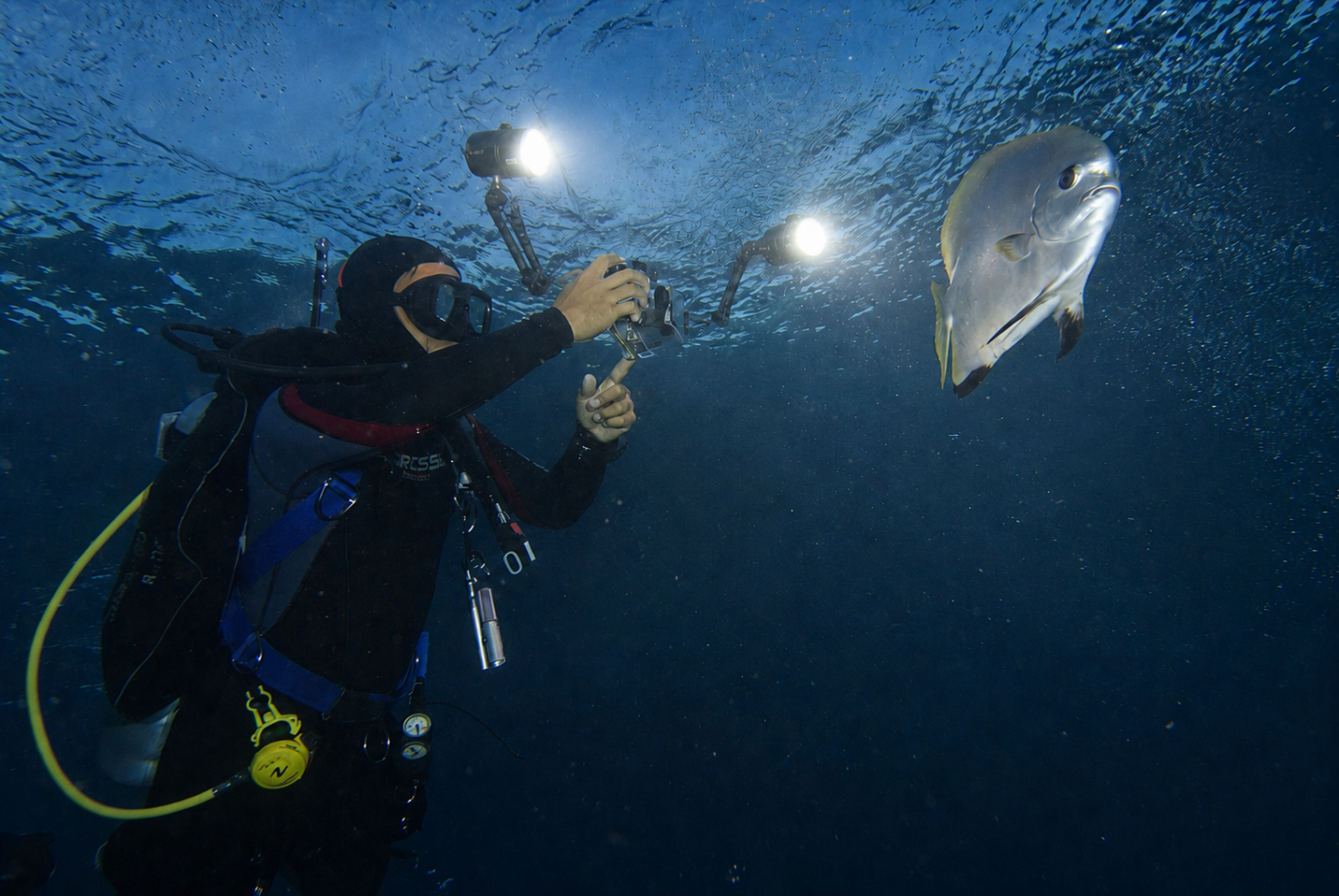
A single strobe can still be a smart choice. It keeps your rig lighter, reduces drag, and works well for macro, fish portraits, and travel-light setups. If you mainly shoot close subjects, one strobe can produce strong results.
Two strobes give you better coverage for wide-angle photography. They help light a larger foreground, reduce harsh shadows, and create a more balanced look across the frame. For reefscapes, mantas, divers, and close-focus wide-angle, dual strobes are usually the stronger option.
Choose one strobe if you want:
- A lighter travel setup
- Less drag during current dives
- A simpler rig for macro
- Easier handling during tender entries
Choose two strobes if you want:
- Better wide-angle coverage
- More balanced lighting
- More control over shadows
- Stronger reef foregrounds
- Better results with large subjects
For liveaboard diving, the best setup is not always the biggest one. It is the setup you can handle confidently across multiple dives per day.
How to Compare Different Types of Underwater Strobes
When you compare different types of underwater strobes, do not look only at price. A strobe needs to fit your camera system, diving style, travel habits, and the type of images you want to create.
Power Output
More power helps when you shoot wide-angle scenes, large subjects, or bright shallow water. It also gives you more flexibility when your subject is farther from the camera.
For macro, you usually do not need the most powerful strobe. Lower power and precise control often matter more.
Beam Angle
A wider beam is useful for reefscapes, large animals, and diver portraits. It helps avoid harsh hotspots and gives you more even coverage.
A narrower beam can work for macro, but it may struggle with wide-angle scenes.
Recycle Time
Recycle time is how quickly your strobe is ready to fire again after a shot.
Fast recycle time matters when you shoot moving subjects, action sequences, or repeated frames. If your strobe recycles slowly, you may miss the moment.
Battery System
Some underwater strobes use AA batteries, while others use proprietary rechargeable batteries.
AA batteries are easier to replace while travelling, but proprietary batteries may offer better performance depending on the model. For liveaboard trips, think about charging time, spare batteries, and how you will rotate batteries between dives.
Buoyancy, Drag, and Travel Weight
A powerful strobe is not useful if your rig becomes uncomfortable to dive with.
When you travel with underwater strobes, think about luggage weight, underwater balance, arm length, float arms, and how the rig behaves in current. A well-balanced setup helps you stay focused on the shot without sacrificing trim or awareness.
Fibre Optic vs Electronic Sync
Fibre optic systems are popular because they are simple and travel-friendly. They are also easier to maintain because they do not involve electrical contacts exposed to saltwater.
Electronic sync cords can be reliable, but they require careful cleaning, drying, and o-ring care.
Control Layout
Large, easy-to-turn knobs matter underwater. This becomes even more important when you are wearing gloves, diving in current, or adjusting settings quickly between subjects.
Recommended Strobe Setups for Komodo and Raja Ampat
Komodo and Raja Ampat both offer a mix of wide-angle, macro, drift diving, reefscapes, and large marine life. Your setup should be flexible enough to handle that variety.
For Manta and Wide-Angle Reef Photography
Use two wide-beam strobes on longer arms. Position them away from the housing and angle them slightly outward to avoid lighting particles in front of the lens.
This setup works well for mantas, reef slopes, sea fans, schooling fish, and diver portraits.
For Macro and Night Diving
Use one or two strobes with precise manual control. Keep the power lower and focus on clean positioning. If you shoot small subjects, consider using a snoot for more creative lighting.
A focus light can also help your camera lock onto small or low-contrast subjects.
READ ALSO: Night Diving Tips: Rules, Equipment, Unique Sealife
For Current or Drift Dives
Keep your setup streamlined. Secure your fibre optic cables, avoid loose accessories, and make sure your arms are tightened enough to hold position without becoming difficult to adjust.
Currently, the best strobe setup is one you can manage without fighting your camera rig.
READ ALSO: What is Drift Diving?
For Multi-Day Liveaboard Diving
Bring enough batteries, chargers, spare o-rings, fibre optic cables, and cleaning tools. Label your batteries if needed so you can rotate them properly between dives.
A liveaboard trip gives you repeated opportunities to refine your settings, but only if your gear is ready for each dive.
Common Strobe Mistakes to Avoid
Placing Your Strobes Too Close to the Lens
This increases backscatter because the light hits particles directly in front of the camera. Move your underwater strobes away from the housing and angle them carefully.
Pointing Your Strobes Straight Forward
This is one of the most common wide-angle mistakes. Instead of lighting your subject cleanly, you light the water column.
Angle your strobes slightly outward and use the edge of the beam.
Using Too Much Power
More light is not always better. Too much power can blow out sand, coral, fish scales, or pale subjects.
Start lower, check your highlights, and adjust gradually.
Shooting Too Far From the Subject
Even with strobes, water still reduces contrast and clarity. Get close when it is safe, respectful, and environmentally responsible.
Do not chase or crowd marine life for the shot. Your best images come from good positioning, patience, and controlled movement.
Ignoring Trim and Awareness
A larger camera rig requires better awareness, especially around coral, reef slopes, and current. Keep your buoyancy stable and avoid letting your strobes, fins, or camera arms touch the reef.
- Wrong: strobes pointed straight forward, lighting particles in front of lens
- Right: strobes placed wider and angled slightly outward
This section needs an educational graphic more than a standard dive photo.
Quick Decision Guide: Which Underwater Strobe Setup Is Right for You?
Choose compact strobes if you want a lighter rig for macro, fish portraits, travel, and easier handling.
Choose full-size strobes if you shoot reefscapes, divers, mantas, sharks, or close-focus wide-angle.
Choose wide-beam strobes if you want better coverage for large scenes and foreground reef.
Choose TTL strobes if you want faster exposure support when subjects move quickly.
Choose manual strobes if you want consistent lighting and full creative control.
Choose one strobe if you mainly shoot macro or want a streamlined travel setup.
Choose two strobes if wide-angle photography is a priority.
Why a La Galigo Liveaboard Helps You Improve Your Strobe Technique
Underwater strobe technique improves through repetition. You need time to test your position, review your results, adjust your settings, and try again.
That is where a La Galigo liveaboard gives you a clear advantage.
Instead of planning your photography around one or two isolated dives, you get multiple dives across carefully selected sites in Komodo or Raja Ampat. This gives you more chances to practise different lighting setups across real conditions: reef slopes, blue water, macro subjects, night dives, current, and wide-angle scenes.
You can start the day testing your strobe angle on reef foregrounds, adjust your setup after reviewing your images, and refine your lighting again on the next dive. For underwater photographers, that kind of repeated access makes a real difference.
If your goal is to come home with stronger images, not just more images, choosing the right liveaboard itinerary matters as much as choosing the right strobe.
Final Thoughts
Underwater strobes can completely change the way your dive photos look. They restore colour, add depth, control shadows, and help your subject stand out from the background.
But choosing the right underwater strobes is not just about buying the most powerful models. It is about matching your setup to the way you dive.
If you shoot macro, you may value precision and control more than maximum output. If you shoot wide-angle reefs, mantas, or divers, you will likely benefit from two wide-beam strobes. If you travel often, weight, battery management, and rig balance matter just as much as technical specs.
For Komodo and Raja Ampat, flexibility is key. You may move from wide-angle reef scenes to macro subjects within the same trip, so your lighting setup should support the kind of images you want to create across multiple dives.
A well-planned La Galigo liveaboard gives you the time, location variety, and repeated dive opportunities to make the most of your underwater photography strobes and flashes. Bring the right setup, keep your rig manageable, and use each dive to refine your light.
Reference
Jensen, G. C. (2018). Photographing crustaceans underwater. Journal of Crustacean Biology, 38(1), 119–123.
Chiang, J. Y., & Chen, Y.-C. (2012). Underwater image enhancement by wavelength compensation and dehazing. IEEE Transactions on Image Processing, 21(4), 1756–1769.
Luchinin, A. G., Dolin, L. S., & Kirillin, M. Y. (2018). Comparative evaluation of signal-to-noise ratio and resolution of underwater imaging systems with artificial illumination. Applied Optics, 57(21), 6083–6088.