
Raja Ampat is not a destination you remember for just one big encounter.
You may come here dreaming of manta rays, colourful reefs, and huge schools of fish. And yes, those encounters are part of the experience. But what often makes the trip unforgettable is the variety you discover from dive to dive. One dive may feel wide and cinematic, with reef slopes full of movement. The next may slow you down completely as your guide points out something smaller than your thumbnail.
This is where the destination becomes more than a place you visit. It becomes a journey you experience day by day, especially when you have enough time to explore different dive sites.
READ ALSO: Top 5 Raja Ampat Dive Sites – Part 1
That contrast is what makes this archipelago special. Raja Ampat marine life is extraordinarily diverse, with colourful reef fish, intricate coral formations and fascinating creatures hidden among the reefs. For divers, that variety means every descent offers something different. You are not just repeating the same type of reef again and again. You are moving through a destination with many moods, details, and surprises.
Among the many moments you may experience in Raja Ampat, four encounters are especially good at showing the destination’s quieter, stranger, and more surprising side: ghost pipefish, pygmy seahorses, wobbegong sharks, and cuttlefish.
Ghost Pipefish: Hidden Wonders of Raja Ampat Marine Life
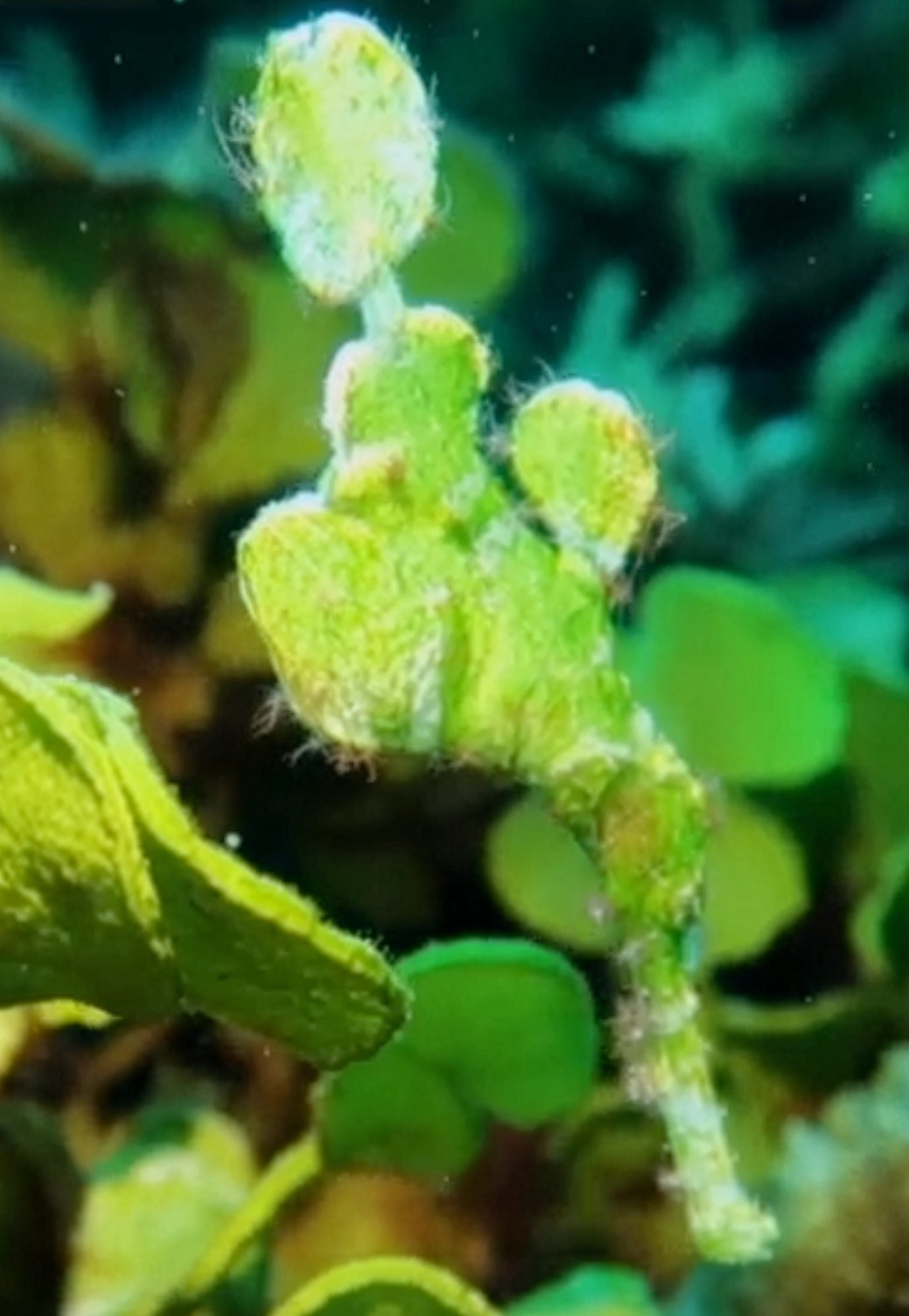
A ghost pipefish encounter is one of those underwater moments that rewards patience.
You can easily swim past it if you rush. But when you slow down, let your eyes adjust to the reef, and follow your guide’s signal, the shape begins to appear.
Encountering a ghost pipefish is rarely about dramatic action. Instead, it invites you to slow down, observe the reef and appreciate the extraordinary details hiding in plain sight. You may be hovering beside soft coral, crinoids, or seagrass when your guide signals you over. At first, you may see nothing. Then the shape appears: a delicate fish drifting almost like a loose piece of reef.
This may be the moment when the underwater world teaches you to look a little closer.
Ghost pipefish are a highlight because they change your pace underwater. Instead of chasing the next dramatic scene, you start noticing textures, shadows, and movement. The reef stops being a backdrop and becomes a puzzle.
This is also why the region is so rewarding for underwater photography. While dramatic wide-angle scenes capture much of the attention, smaller subjects like ghost pipefish add another layer to your diving experience. With La Galigo, your Raja Ampat journey is built around variety. Over several days, you have time to experience different reef environments, from wide-angle scenery to slower detail-focused dives where your guide can help you notice the hidden subjects that are easy to miss when the pace is rushed.
Pygmy Seahorses: Tiny Encounters That Feel Huge
Finding a pygmy seahorse can make a whole dive feel memorable.
They are tiny, beautifully camouflaged, and usually found with the help of guides who know where to slow down and look carefully. The experience is not just about seeing the animal. It is about the suspense of finding it after your guide points it out.
You stare at the fan coral. You look again. Then suddenly, there it is.
That tiny discovery can become one of the most memorable moments of your entire trip.
Pygmy seahorses are especially memorable because they reveal just how much extraordinary detail is hidden within these vibrant reefs. With the right guide and enough patience, a small sea fan can become one of the most exciting parts of your dive.
The best way to enjoy this kind of encounter is to keep it calm. Stay neutrally buoyant, give the sea fan enough space, and let your guide help manage the moment. You will enjoy the sighting more when you are not rushing for the shot.
Wobbegong Sharks: Raja Ampat’s Strangest Shark Encounter
Not every memorable shark encounter involves something fast and dramatic passing through the blue.
Sometimes, the surprise is hiding under a ledge. You look closer, and the patterned shape in front of you is not part of the reef at all. It is a wobbegong shark.
That is the charm of the wobbegong shark.
Often called a carpet shark because of its flattened body and patterned appearance, the wobbegong is one of Raja Ampat’s most distinctive sightings. These sharks are ambush predators that use camouflage to blend into the reef or seafloor.
The experience feels completely different from seeing reef sharks pass in open water. You are not watching a shark patrol the blue. You are discovering a hidden resident of the reef, tucked into the landscape almost like it belongs there.
These encounters remind us that some of the most extraordinary marine life is not always obvious at first glance. Some of the best sightings happen when you slow down near overhangs, bommies, and coral-covered slopes.
Cuttlefish: An Underwater Performance of Colour and Movement
Cuttlefish can transform an otherwise quiet dive into one of the most visually fascinating moments of your trip.
They are curious, expressive, and visually fascinating. One moment they may hover calmly above the reef, and the next they may shift colour, texture, or posture. It can feel less like spotting an animal and more like watching a performance unfold in front of you.
They may not be the first species you think about before booking Raja Ampat, but they can easily become one of the encounters you talk about after the trip. You do not need to be a macro specialist to appreciate their behaviour, and you do not need a biology lesson to enjoy watching a cuttlefish react to its surroundings.
If you bring a camera, cuttlefish can be especially rewarding because they create strong visual moments without needing perfect visibility or huge schools of fish. Sometimes, one expressive subject is enough.
READ ALSO: 6 Underwater Macro Photography Techniques
Why Raja Ampat Is More Than Its Famous Big Encounters
Raja Ampat is often described through big numbers: coral species, fish species, islands, dive sites, and biodiversity records. Those numbers matter, but they do not fully explain the feeling of diving there.
The real highlight is variety.
Ghost pipefish make you slow down.
Pygmy seahorses make you look closer.
Wobbegong sharks make the reef feel mysterious.
Cuttlefish make each encounter feel alive and unpredictable.
Together, these encounters show why Raja Ampat is not only for wide angle scenes or manta moments. It is for you if you enjoy variety, patience, and the feeling that every dive can reveal something different.
This is where La Galigo’s Raja Ampat experience becomes especially valuable. The region is spread across a large area, and each part of the journey can bring a different kind of dive experience. Over several days with La Galigo, you have the time, route variety, and guided pace to enjoy Raja Ampat beyond a single highlight: wide reef scenes, slower macro moments, strange shark encounters, and the hidden details that make the trip feel complete.
READ ALSO: Liveaboard Diving: Everything You Need to Know Before Booking a Trip to Raja Ampat
How to Enjoy These Raja Ampat Highlights Responsibly
The best way to enjoy these extraordinary marine encounters is to stay relaxed, patient, and close to your guide.
Good buoyancy and controlled finning help you get more out of the dive, especially when the best sightings are hidden around sea fans, ledges, soft coral, or bommies. Your guide will help you slow down at the right moments, so you can enjoy the encounter without rushing or disturbing the reef.
For pygmy seahorses and ghost pipefish, patience usually gives you the best view. For wobbegong sharks, space makes the encounter calmer and more enjoyable. For cuttlefish, the best moments often happen when you simply pause and let the behaviour unfold naturally.
Raja Ampat feels even more rewarding when you dive it with care. With good buoyancy, patience, and guidance from the team, you can enjoy these encounters while keeping the reef experience calm and natural.
Final Thoughts
You may arrive dreaming of manta rays, dramatic reefs, and huge schools of fish.
You may leave remembering a tiny pygmy seahorse, a camouflaged ghost pipefish, a strange looking wobbegong shark, or a cuttlefish changing colour in front of you.
That is the beauty of diving here.
The beauty of this extraordinary archipelago lies in its diversity. From majestic manta rays to tiny camouflaged creatures, every dive can reveal something entirely unexpected.
If you want your Raja Ampat journey to feel complete, give yourself enough time to experience both sides of the destination: the famous wide-angle scenes and the quiet hidden details. With La Galigo, you can experience Raja Ampat as a full journey, not just a collection of separate dive sites. Each dive adds a new layer to the story you bring home.
Ready to experience Raja Ampat beyond the obvious highlights? Explore La Galigo’s Raja Ampat liveaboard itinerary and start planning the trip that lets you experience the big, small, strange, and unforgettable sides of the archipelago.
READ ALSO: Liveaboard Diving in Raja Ampat with La Galigo
References
Allen, G. R., & Erdmann, M. V. (2009). Reef fishes of the Bird’s Head Peninsula, West Papua, Indonesia. Check List, 5(3), 587–628.
Hanlon, R. T., Chiao, C.-C., Mäthger, L. M., Barbosa, A., Buresch, K. C., & Chubb, C. (2009). Cephalopod dynamic camouflage: Bridging the continuum between background matching and disruptive coloration. Philosophical Transactions of the Royal Society B: Biological Sciences, 364(1516), 429–437.
Hanlon, R. T., & Messenger, J. B. (2018). Cephalopod behaviour (2nd ed.). Cambridge University Press.
Reijnen, B. T., van der Meij, S. E. T., & van Ofwegen, L. P. (2011). Fish, fans and hydroids: Host species of pygmy seahorses. ZooKeys, 103, 1–26.